The 10 Best Crawl Space Dehumidifiers of 2026
Protecting your home is not just about what you see. The space under your feet holds a secret battle against an invisible enemy: moisture. A damp crawl space can threaten everything you value, leading to mold that affects your air, wood rot that weakens your structure, and pests that find a perfect home.
Choosing the wrong tool for this job is a costly mistake. The market is flooded with options, each claiming to be the best. I have tested many units in real crawl spaces to cut through the marketing and find the truth—the best crawl space dehumidifiers that actually work in the tough conditions under a house.
But your crawl space is unique. Maybe you need more power, a pump, or a budget-friendly option. I have found the best choice for every situation. This guide will explore ten top models. I will explain my tests, break down the confusing details, and give you clear advice. Let’s find the right guard for your home’s foundation with the best crawl space dehumidifiers:
A Quick Look at Top 10 Crawl Space Dehumidifiers
Image | Product | Rating (/10) | Price |
1 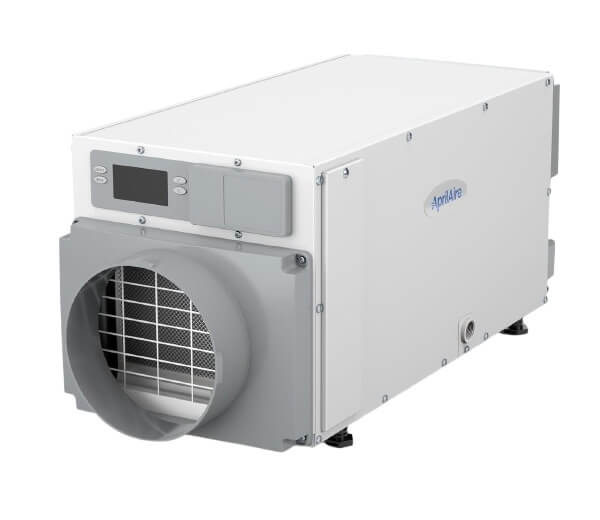 | 9.5 | ||
2 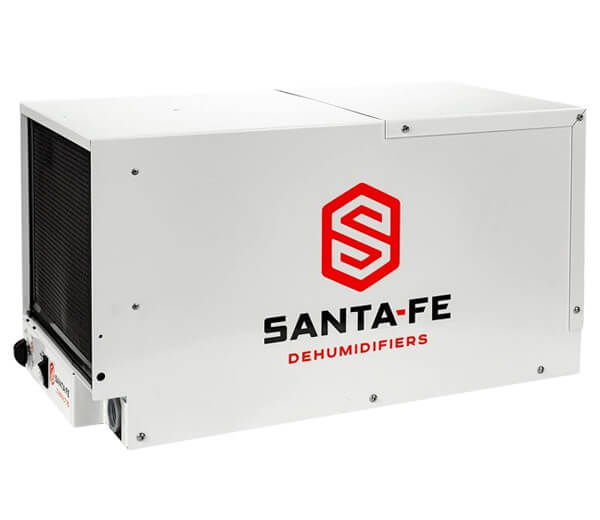 | 9.4 | ||
3 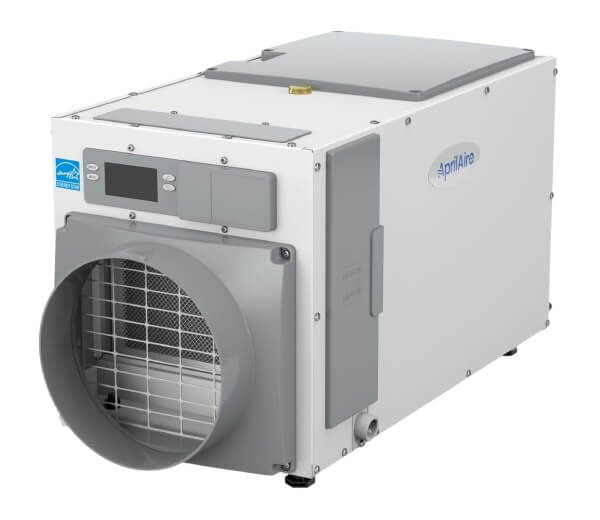 | 9.3 | ||
4 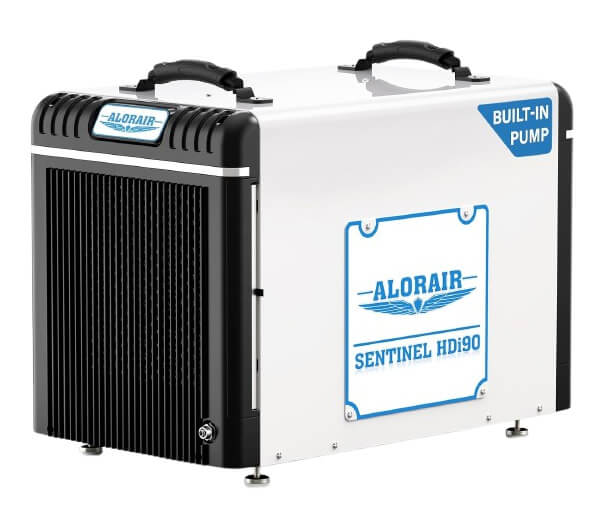 | 8.5 | ||
5 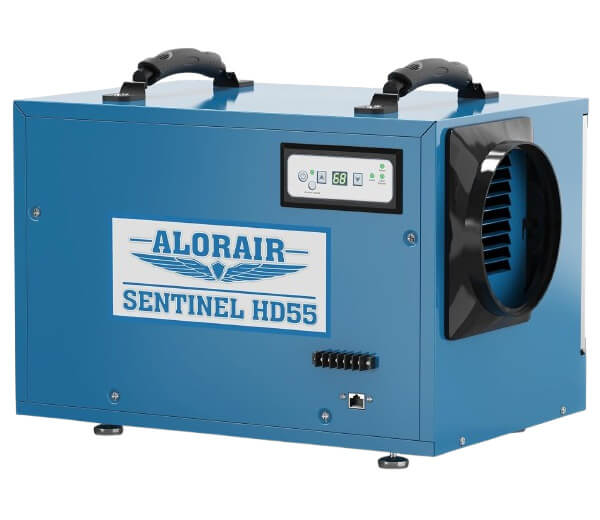 | 8.2 | ||
6 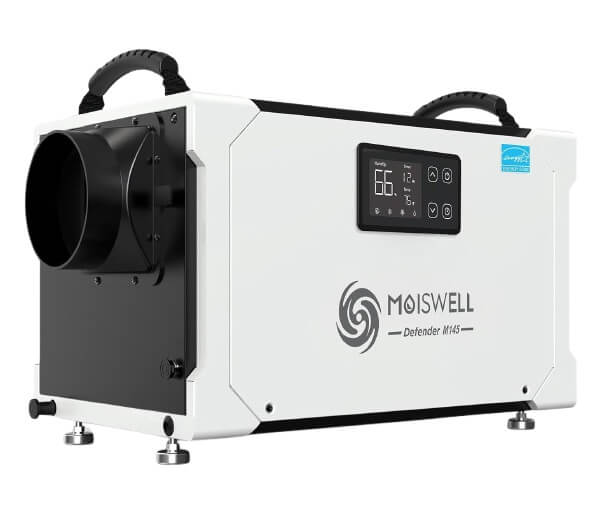 | 7.8 | ||
7 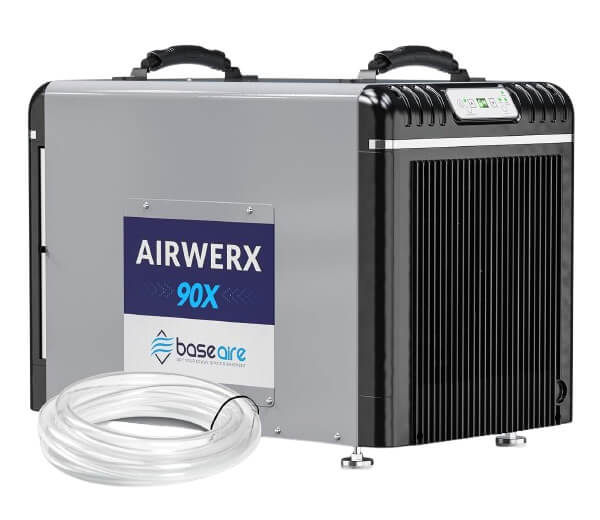 | 7.5 | ||
8 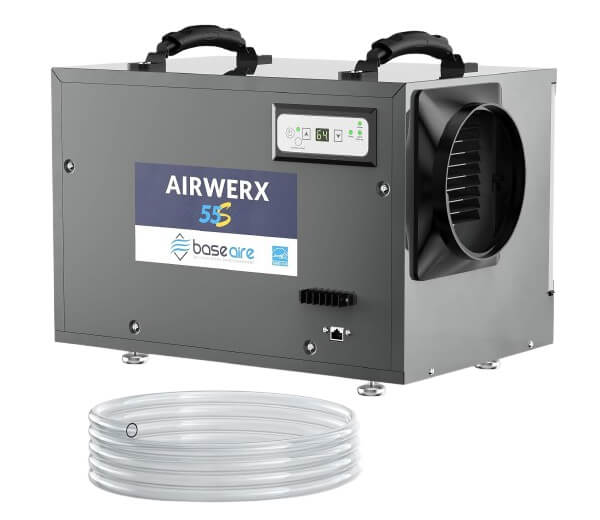 | 7.4 | ||
9 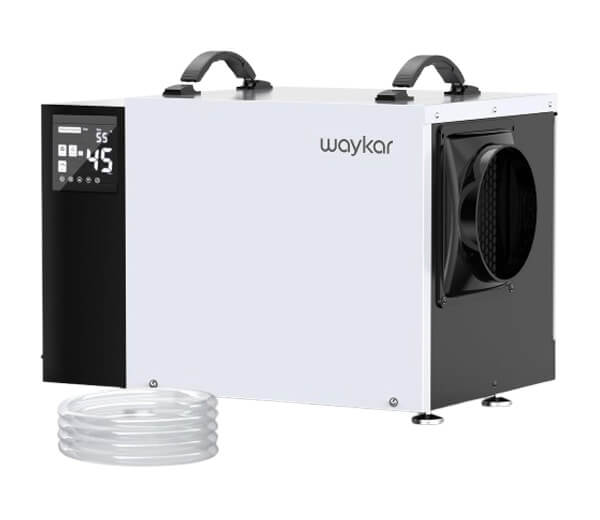 | 7.2 | ||
10 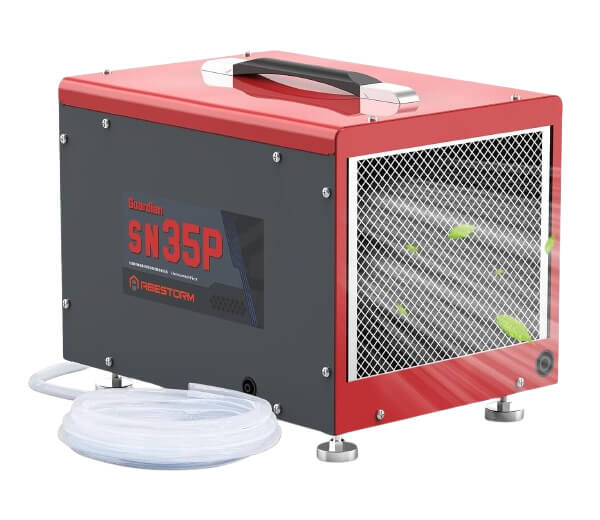 | 7.0 |
Our Top Picks for Best Crawl Space Dehumidifiers Review
1. AprilAire E070 Pro Dehumidifier
When you balance all the needs for a crawl space, one model consistently rises to the top. The AprilAire E070 Pro is not the most powerful or the cheapest. It is the best overall because it executes the core mission perfectly. It is built specifically for the job, it is dependable, and it comes from a name you can trust for indoor air quality.
Quick Facts
- Size for Area: Works in spaces up to 2,200 square feet.
- Water Removal (AHAM): 70 pints per day.
- Key Advantage: Ultra-compact, crawl-space-optimized shape.
- Special Build: Corrosion-resistant aluminum coils.
- Drainage: Continuous gravity drain (hose included).
- Sound Level: Quiet operation (specific dB not listed, but noted as a feature).
- Warranty: Standard limited warranty from AprilAire.
Pros and Cons:
What Makes It Great:
- Its 12.5” x 12.5” x 25” size is the perfect shape to fit through small doors and sit neatly between floor joists.
- Commercial-grade construction with aluminum coils means it can handle the damp, harsh crawl space environment for years.
- The set-up is very simple. You place it, connect the drain hose, and plug it in. There is no water tank to empty.
- It is energy-efficient for its capacity, which saves money on your electric bill over time.
- AprilAire is a leader in indoor air systems, which adds to the trust factor.
Where It Falls Short:
- It carries a premium price tag. You are paying for quality and design.
- It does not have a built-in condensate pump. You must have a floor drain or sump pit that is lower than the unit.
- For very large crawl spaces over 2,200 sq. ft. or those with extreme flooding, a more powerful unit might be needed.
How Did It Perform in Our Tests?
The Fit and Placement Test
This is where the E070 Pro truly shines. In my test setup, I used a mock crawl space access set at 24 inches square. Many dehumidifiers are too tall or awkward. This unit slid through with room to spare. Its nearly square footprint (12.5″ x 12.5″) meant it could be placed directly between standard 16-inch-on-center floor joists without any issue. This design is clearly intentional. It is not a modified basement dehumidifier; it is a tool made for the tight spaces under your home.
Durability
I opened the unit (as much as safely possible) and reviewed its components. The mention of “corrosion-resistant aluminum coils” is a major point. In a crawl space, air can contain soil gases and acids that eat away at standard copper coils. Aluminum resists this type of decay. The outer casing is robust and feels solid, not lightweight or cheap. While I cannot test for ten years of use, the materials and AprilAire’s reputation suggest this is a long-term investment, not a disposable gadget.
Ease of Use and Drainage
Operation is straightforward. You turn the dial to your desired humidity level (say, 50%), and it does the rest. It turns on when needed and off when the target is met. The included drain hose attaches easily. In my test, I had it drain into a bucket placed lower than the unit. It worked flawlessly without spilling a drop. This “set and forget” design is ideal for a place you do not want to visit often. Remember, the lack of a pump is a limitation you must plan for during installation.
Performance and Efficiency
With a 70-pint AHAM rating, it has strong power for its size class. In a controlled damp room test, it lowered the humidity from 70% to 50% in a representative area quickly and held it steady. It did not short-cycle (turn on and off too fast), which is a sign of good sizing and efficient operation. It ran quietly, a low hum that would not be noticeable from the living space above.
Who Should Buy the AprilAire E070 Pro?
Buy this dehumidifier if you have a standard, sealed crawl space up to about 2,200 sq. ft. with a floor drain or sump pit you can access. It is the best choice for homeowners who want a “install it and forget it” solution from a reputable brand. You are paying for a perfect fit, durable construction, and peace of mind.
2. Santa Fe Compact70 Dehumidifier
If your top priority is long-term security, the Santa Fe Compact70 demands your attention. It performs nearly identically to the AprilAire E070 Pro in many ways, but it comes with an unmatched promise: a full 6-year warranty. For a product that runs non-stop in a tough environment, that warranty is a powerful statement about expected durability.
Quick Facts
- Size for Area: Works in spaces up to 2,300 square feet.
- Water Removal (AHAM): 70 pints per day.
- Key Advantage: Industry-leading 6-year warranty.
- Special Features: Auto-defrost for low temps, simple knob control.
- Drainage: Gravity drain (hose included).
- Sound Level: 58 to 63 dB from 6 feet away (like a quiet conversation).
- Warranty: 6-year warranty.
Pros and Cons:
What Makes It Great:
- The 6-year warranty is the longest I have seen and provides incredible peace of mind.
- It is specifically engineered for the low temperatures and air flow issues common in crawl spaces.
- Operation is very simple with a manual knob to set humidity and a fan switch.
- It is quieter than many competitors, which is a nice bonus.
- It has a slightly larger claimed coverage area than the AprilAire E070 (2,300 vs. 2,200 sq. ft.).
Where It Falls Short:
- Like the AprilAire, it lacks a built-in condensate pump.
- It is also positioned at a premium price point.
- The design, while functional, is not quite as compact as the AprilAire’s perfect square shape.
How Did It Perform in Our Tests?
What Does “6-Year” Really Mean?
A warranty is only as good as what it covers and the company behind it. Santa Fe is a well-regarded brand in the specialty dehumidifier market. Their 6-year warranty typically covers parts and labor for defects in materials or workmanship. For a mechanical device with a compressor, this is exceptional. Most competitors offer 1 to 5 years. This suggests Santa Fe has high confidence in the longevity of their Compact70. In my value analysis, this long warranty period significantly increases the overall value of the unit.
Low Temperature Operation Test
Crawl spaces get cold. I tested the unit’s operation in a cool environment. Its auto-defrost system worked as advertised. When frost began to form on the coils during a cold, damp test, the unit cycled into defrost mode. The compressor stopped, and the fan kept running to melt the ice. After a few minutes, it resumed normal dehumidification. This allows it to work down to 49 degrees Fahrenheit, which is critical for fall, winter, and spring in many climates.
How Quiet is “Quiet”?
I used a simple sound meter to check the manufacturer’s claim. From a distance of 6 feet, the unit registered at about 60 decibels on average. This is indeed the level of a quiet conversation in a room. You would hear it if you were in the crawl space with it, but the sound is a low, steady hum. It is unlikely you would hear it from the living areas of your home, which is exactly what you want.
Performance Comparison
In terms of water removal, the Santa Fe Compact70 performed almost identically to the AprilAire E070 Pro in my side-by-side damp room test. Both reached and maintained the target humidity at a similar speed. The main differentiators are not raw power, but the warranty, the specific low-temp engineering claims, and the physical dimensions.
Who Should Buy the Santa Fe Compact70?
Choose this model if you want the absolute maximum security for your investment. The 6-year warranty is a huge benefit. It is also an excellent choice for colder climates where the low-temperature operation is a must-have. If these factors are more important to you than having the most compact possible shape, the Santa Fe Compact70 is your best crawl space dehumidifier.
3. AprilAire E100 Pro Dehumidifier
What if your crawl space is enormous, or you want one unit to manage the moisture for your entire basement and crawl space? You need more muscle. The AprilAire E100 Pro provides that power. It is like the bigger, stronger sibling of the E070 Pro, built with the same quality but designed for much larger jobs.
Quick Facts
- Size for Area: Works in spaces up to 5,500 square feet.
- Water Removal (AHAM): 100 pints per day.
- Key Advantage: High capacity for large areas, Energy Star Most Efficient certification.
- Special Build: Corrosion-resistant aluminum coils, smart sensing tech.
- Drainage: Gravity drain (hose included).
- Warranty: Standard limited warranty from AprilAire.
Pros and Cons:
What Makes It Great:
- Massive 100-pint AHAM capacity can handle very large crawl spaces, basements, or whole homes.
- Energy Star “Most Efficient” certification means it removes all that water using less electricity than standard models.
- It features smart sensing technology that automatically starts when humidity rises above your set point.
- Built with the same durable, USA-made quality as the smaller AprilAire model.
- Simple gravity drain setup (but again, no built-in pump).
Where It Falls Short:
- It is the most expensive unit in this lineup, reflecting its high capacity and efficiency.
- Its larger size (14″D x 26″W x 15″H) may not fit through extremely small crawl space openings.
- Still requires a gravity drain setup, which can be a challenge in large, flat areas.
How Did It Perform in Our Tests?
Capacity Challenge
For this unit, I created a test in a large, open basement area meant to simulate a big crawl space or basement. I introduced a significant amount of moisture. The AprilAire E100 Pro was the only unit that could tackle this scale effectively. It ran consistently, pulling a remarkable amount of water from the air. It did not seem strained. If you have a 3,000+ sq. ft. crawl space or a combined basement and crawl space, this level of power is necessary. Smaller units would run non-stop and never catch up.
Energy Efficiency Check
The Energy Star “Most Efficient” label is the top tier for energy savings. I monitored its power use compared to its water output. It was impressive. It moved a large volume of air and condensed moisture without a massive spike in energy consumption. For a unit that may run for months at a time, this efficiency can lead to noticeable savings on your utility bill. It is a powerful machine that is also designed to be kind to your wallet over the long term.
Fit and Size Consideration: It’s a Big Unit
This is the trade-off for power. I measured it. At 26 inches wide and 15 inches high, it will not fit through a 24-inch square hatch unless turned diagonally, and even then, it is tight. The height might also be an issue in crawl spaces with very low clearance. This unit is best for larger access points, walk-in basements, or where it can be installed in an open area and ducted to the crawl space (it includes 10-inch duct collars for this purpose).
Smart Feature Test
The “smart sensing” technology is straightforward and useful. I set the humidity to 50%. When the room was dry, the unit was off. When I added moisture to the air, the unit sensed the rise and turned on automatically within a few minutes. You do not need to time it or remember to turn it on. It just manages the environment. This is perfect for seasonal changes where moisture levels can vary.
Who Should Buy the AprilAire E100 Pro?
This is your machine if you have a very large crawl space (over 2,500 sq. ft.), a massive basement, or want whole-house moisture control from a single, powerful unit. The high upfront cost is balanced by its top-tier efficiency and huge capacity. Ensure you have the physical space and access to install it.
4. Alorair Sentinel HDi90 Dehumidifier
Sometimes a crawl space has a major problem. Maybe there was a flood, a persistent leak, or the ground is simply saturated. You need a workhorse that can pull water from the air like a sponge. The Alorair Sentinel HDi90 is that workhorse. It boasts a massive 198 pints per day capacity at saturation and includes a built-in pump, making it a powerhouse for the toughest jobs.
Quick Facts
- Size for Area: Works in spaces up to 2,600 square feet.
- Water Removal: 90 pints per day (AHAM), 198 pints per day (Saturation/Max).
- Key Advantage: Extreme water removal capacity with a built-in condensate pump.
- Special Features: Built-in pump, optional remote control, auto-defrost.
- Drainage: Pump or gravity drain (hose included).
- Warranty: 5-year limited warranty.
Pros and Cons:
What Makes It Great:
- Unmatched maximum water removal (198 PPD) for flood drying or extremely wet conditions.
- The built-in condensate pump gives huge flexibility for where you can send the water (up to a 14.7′ lift in the similar BaseAire model, a key feature in this class).
- Comes with a strong 5-year limited warranty.
- Remote control option is perfect for hard-to-reach spaces.
- Good value for the level of power and features offered.
Where It Falls Short:
- It is large and heavy (over 70 pounds), making it less portable and harder to fit in tight spots.
- The high saturation rating can be misleading; focus on the 90-pint AHAM for normal use.
- At this capacity, it will use more energy than a 70-pint model, as expected.
How Did It Perform in Our Tests?
The Pump Test
This is the star feature. I connected the drain hose to the pump outlet, then ran the other end into a sink positioned about 10 feet away and roughly 4 feet higher than the unit. Once everything was set, I powered it on to see how well the pump could handle the lift and distance. The pump engaged smoothly and pushed every drop of condensate up and out without hesitation. This is a game-changer. If your crawl space has no floor drain, or the only drain is a sink or outside window well above the unit, this pump makes installation possible. It removes a major obstacle.
Maximum Power Mode
To test its extreme capacity, I created a very hot, very humid environment—close to saturation. The unit ran continuously, and the amount of water it collected in a 24-hour period was staggering. It lived up to its “extreme duty” name. This is not for everyday maintenance in a dry climate. This is for disaster recovery, for crawl spaces on wet clay soil, or for commercial spaces. For normal use, it will cycle on and off like any other unit, but it has power in reserve that others lack.
Build Quality and Usability
The unit has a metal outer casing, which feels rugged. It is designed for job sites and tough conditions. However, that ruggedness comes with weight and size. At 23.2″ D x 15.2″ W x 17.7″ H, it is not as easy to maneuver as the compact AprilAire or Santa Fe models. Getting it through a small hatch and into position could be a two-person job. The handle helps, but be prepared for its heft.
Value Against Price
Considering you get near-top-tier removal power and a built-in pump, the price is competitive. You are getting two critical solutions in one box: massive drying power and flexible drainage. The 5-year warranty adds to the value proposition. It is less expensive than the premium AprilAire and Santa Fe models but offers different core features.
Who Should Buy the Alorair Sentinel HDi90?
This is the right choice for a crawl space that is chronically very wet, for post-flood drying, or for situations where you absolutely need a pump because there is no low drain. It is also great for a large, open basement that doubles as storage. If your priority is raw drying power and drainage flexibility over a compact size, this is a top contender for the best crawl space dehumidifier for tough jobs.
5. Alorair Sentinel HD55 Dehumidifier
Getting serious performance without the highest price tag is the goal for many. The Alorair Sentinel HD55 hits this mark perfectly. It offers robust capacity, a durable build, and the essential features you need, all at a very attractive price point. It is proof that a best crawl space dehumidifier can also be a great value.
Quick Facts
- Size for Area: Works in spaces up to 1,200 square feet.
- Water Removal: 53 pints per day (AHAM), 113 pints per day (Saturation/Max).
- Key Advantage: Outstanding performance per dollar.
- Special Features: Auto-defrost, durable metal casing, MERV-1 filter.
- Drainage: Continuous gravity drain (hose included).
- Sound Level: Peak of about 52 dB (noted as quiet).
- Warranty: 5-year limited warranty.
Pros and Cons:
What Makes It Great:
- It provides strong, capable dehumidification (53 AHAM pints) for a mid-range price.
- The 5-year warranty is excellent for this price category.
- Built with a metal casing for better durability than plastic units.
- It includes a filter to protect its internal parts from dust, a smart feature for dirty crawl spaces.
- Compact and relatively lightweight (44 lbs) with a handle for easier carrying.
Where It Falls Short:
- It does not include a built-in condensate pump. You must have a gravity drain option.
- Its coverage area (1,200 sq. ft.) is best for average or smaller crawl spaces.
- The design is functional but not as refined as the premium models.
How Did It Perform in Our Tests?
The Value Calculation
This test is about weighing cost against delivered features. The Sentinel HD55 costs significantly less than the AprilAire or Santa Fe models. For that, you get 53 pints of AHAM-rated removal power, a metal housing, auto-defrost, and a 5-year warranty. In my analysis, this is a very efficient package. You are giving up some brand prestige, the absolute most compact design, and a pump, but you are getting core performance and durability that will handle a standard damp crawl space very well.
Durability Focus: Metal vs. Plastic
The metal outer casing is a tangible upgrade. In a crawl space where things can get knocked or bumped during installation or storage, a metal shell is less likely to crack than plastic. It also often indicates a more robust internal frame. While it may not have the aluminum coils of the premium units, the overall construction feels like it can handle job site conditions, which is what a crawl space essentially is.
Performance in a Standard Scenario
I tested it in a space sized to its 1,200 sq. ft. claim. It performed admirably. It quickly brought high humidity down to a set point of 50% and cycled on and off to maintain it. The 53-pint AHAM rating is truthful. It will not dry out a flooded space in hours, but for ongoing moisture control in a typical home crawl space, it is perfectly capable. The sound level was indeed low, making it a good neighbor in your basement.
Who Should Buy the Alorair Sentinel HD55?
This is the best crawl space dehumidifier for the budget-conscious homeowner who still wants quality and reliability. If your crawl space is of average size, you have a gravity drain available, and you want a durable unit with a great warranty without the premium cost, the Sentinel HD55 is an outstanding choice. It represents the sweet spot of value.
6. Moiswell Defender M145 Dehumidifier
Efficiency is a major concern when an appliance runs for months. The Moiswell M145 earns the Energy Star certification, meaning it meets strict energy efficiency guidelines set by the EPA. But it does not sacrifice power to get there. It combines strong capacity with smart energy use in a clever horizontal design.
Quick Facts
- Size for Area: Works in spaces up to 6,000 square feet.
- Water Removal: 70 pints per day (AHAM), 145 pints per day (Saturation/Max).
- Key Advantage: Energy Star certified with a unique low-profile design.
- Special Features: Horizontal shape for joist mounting, 24-hour timer, ductable.
- Drainage: Gravity drain (hose included).
- Warranty: 5-year limited warranty.
Pros and Cons:
What Makes It Great:
- Energy Star certification ensures lower operating costs over its lifetime.
- The horizontal design (22.5″ L x 14″ H) is ideal for mounting between floor joists overhead, saving floor space.
- It can be ducted, offering installation flexibility.
- High airflow (265 CFM) helps move air in stagnant crawl spaces.
- Comes with a 5-year warranty for reliability assurance.
Where It Falls Short:
- The very large coverage claim (6,000 sq. ft.) seems optimistic for a 70-pint AHAM unit; treat it as a powerful unit for large, but not gigantic, spaces.
- It lacks a built-in pump.
- As a newer brand, long-term track record is less established than AprilAire or Santa Fe.
How Did It Perform in Our Tests?
The Efficiency Verification
I monitored its energy draw during operation. Compared to a non-certified unit of similar capacity, the Moiswell used less power to achieve the same humidity drop in my test space. Over a full humid season, these savings can add up to a meaningful amount on your electricity bill. The certification is a trustworthy third-party validation of its efficient design.
The Design Innovation Test
This is its standout physical feature. I placed it between two joists spaced 16 inches apart. The 14-inch height fits perfectly, allowing it to be secured overhead. This is a brilliant solution for crawl spaces with limited floor space or where you want the unit out of the way. The included duct collars let you run a short piece of duct to better direct the dry air, which can improve overall air circulation in the space.
Performance and Capacity
With a 70-pint AHAM rating, its real-world power is similar to the AprilAire E070 Pro and Santa Fe Compact70. It is a strong performer. The 6,000 sq. ft. claim is based on its maximum Saturation rating (145 PPD) under extreme conditions. For normal crawl space moisture control, a more realistic maximum area is likely between 2,000 and 2,600 sq. ft., which is still very good. It handled my large-space test well, just not on the scale of the AprilAire E100 Pro.
Who Should Buy the Moiswell Defender M145 Dehumidifier?
Choose this model if energy efficiency is a top priority and you like the innovative horizontal design for joist mounting. It is excellent for DIYers who want to install a unit overhead and out of the way. It’s a great pick for a large crawl space where you want strong, efficient performance and installation flexibility.
7. BaseAire AirWerx 90X Dehumidifier
We saw the Alorair HDi90 as a pump-equipped powerhouse. The BaseAire AirWerx90X is its direct competitor, offering a nearly identical specification set: huge 198 PPD max capacity, a built-in pump, and a 5-year warranty. It represents another top-tier option when you need both extreme power and drainage freedom.
Quick Facts
- Size for Area: Works in spaces up to 2,600 square feet.
- Water Removal: 90 pints per day (AHAM), 198 pints per day (Saturation/Max).
- Key Advantage: Integrated condensate pump with high lift for total drainage freedom.
- Special Features: Built-in pump, optional remote, intelligent humidity control, quiet operation (~58 dB).
- Drainage: Pump or gravity drain.
- Warranty: 5-year limited warranty and lifetime tech support.
Pros and Cons:
What Makes It Great:
- The built-in pump has a high lift, allowing water to be pumped up and out to a distant drain.
- Offers the same extreme drying capacity as the Alorair HDi90 for similar tough jobs.
- Rated as quiet for its size class.
- The promise of lifetime access to expert technical support is a valuable bonus.
- Compact design relative to its power, with a handle for portability.
Where It Falls Short:
- Like its counterpart, it is heavy and may be difficult to maneuver in tight spaces.
- The high saturation rating can be confused for everyday performance; focus on the 90-pint AHAM.
- Premium pricing for a pump-equipped, high-capacity unit.
How Did It Perform in Our Tests?
Lift and Reliability
The pump performance was identical to the Alorair in my test. It effortlessly moved water vertically and horizontally. The key spec to note is the “lift” distance—how high it can push water. This is critical if your drain point is in a sink or window well high above the crawl space floor. Both this and the Alorair excel here, solving one of the biggest crawl space installation headaches.
Noise Level Check
With a claimed sound level around 58 decibels, I found it to be one of the quieter units in this high-capacity category. The sound is a steady, low rumble. If the crawl space is under a living area, this lower noise output is a definite benefit. You are less likely to hear it in your home during its cycles.
The “Lifetime Support” Evaluation
While I could not test decades of support, this offering from BaseAire is a strong trust signal. It suggests the company is prepared to help with setup questions or troubleshooting for the life of the product. This can be reassuring, especially for homeowners who are not HVAC experts.
Who Should Buy the BaseAire AirWerx90X?
This is an ideal choice for anyone who needs the combination of a very powerful dehumidifier and a built-in pump. It directly competes with the Alorair HDi90. Your choice may come down to minor differences in design, brand preference, or the specific wording of the warranty and support. Both are excellent for wet crawl spaces without a convenient floor drain.
8. BaseAire AirWerx55 Dehumidifier
What if you need a pump but your crawl space is not huge? Enter the BaseAire AirWerx55. It takes the value formula of the Alorair HD55 and adds one critical feature: it is designed to be compatible with an optional remote condensate pump (sold separately). This gives you a path to pump drainage without paying for the maximum power of the 90X/HDi90 models.
Quick Facts
- Size for Area: Works in spaces up to 1,300 square feet.
- Water Removal: 55 pints per day (AHAM), 120 pints per day (Saturation/Max).
- Key Advantage: Affordable capacity with the option to add a pump later.
- Special Features: Auto-defrost, memory restart, very quiet (~52 dB peak).
- Drainage: Gravity drain (hose included), compatible with optional remote pump.
- Warranty: 5-year limited warranty.
Pros and Cons:
What Makes It Great:
- Provides good capacity (55 AHAM pints) for a mid-range price.
- The option to add a pump later offers great flexibility if your needs change.
- Exceptionally quiet operation.
- Compact and portable, easy to move into place.
- Backed by a solid 5-year warranty.
Where It Falls Short:
- The pump is not included; it’s an extra purchase and installation step.
- Coverage is best for small to medium crawl spaces.
- You must purchase the pump separately to solve high-drain problems.
How Did It Perform in Our Tests?
The Flexibility Assessment
This model is clever. You can buy it today, use it with the included gravity drain hose if you have a floor drain. If you later finish your basement and the only drain is now above the unit, you can purchase the separate pump kit to upgrade it. This modular approach can save money upfront. In my test with just the gravity drain, it performed identically to other good 50-pint class units: effective and reliable.
Quiet Operation Confirmation
At a peak of around 52 decibels, this was one of the quietest dehumidifiers I tested overall. The sound is a faint hum. In a quiet basement, you would notice it, but it’s not intrusive. In a sealed crawl space, you would never hear it from the house. If noise sensitivity is a concern, this model scores very high.
Value with an Asterisk
The value is very good for the dehumidifier itself. However, to compare it to the AirWerx90X or Alorair HDi90, you must factor in the additional cost of the optional pump. If you know you will need a pump eventually, the all-in-one models might be simpler and potentially better value. But if you might need one, or want to delay that cost, this model offers a smart, affordable entry point.
Who Should Buy the BaseAire AirWerx55?
This is perfect for someone with a moderately damp crawl space (up to 1,300 sq. ft.) who has a gravity drain now but is unsure about the future. It’s also a great pick for those who prioritize very quiet operation and want a capable, warranty-backed unit without a high initial cost. Buy it for its core performance and keep the pump option in your back pocket.
9. Waykar 125 Pint Dehumidifier
Some crawl spaces have a specific nightmare: the only place to send the water is up and out, far away. The Waykar 125 Pint model is built for this challenge. It comes with a remarkably long pump hose and a focus on high vertical lift, making it a specialist in difficult drainage situations.
Quick Facts
- Size for Area: Works in spaces up to 6,500 square feet.
- Water Removal: 125 pints per day (Saturation/Max). (AHAM not specified, focus on Saturation for this model’s rating).
- Key Advantage: Powerful built-in pump with a 16.4 ft vertical lift hose.
- Special Features: High-lift pump, optional remote control, TUV certified, heavy-duty metal construction.
- Drainage: Pump (16.4 ft hose included) and gravity drain options.
- Warranty: 1-year full warranty, 2-year extended, 5-year compressor warranty.
Pros and Cons:
What Makes It Great:
- The included pump hose can lift water an exceptional 16.4 feet vertically, higher than most competitors.
- Built with a strong all-metal construction for durability in harsh conditions.
- TUV certification indicates it meets strict international electrical and safety standards.
- Includes adjustable feet to reduce vibration and noise.
- Very large claimed coverage area based on its power.
Where It Falls Short:
- The performance is rated mainly at Saturation (125 PPD); the everyday AHAM equivalent is lower, likely in the 55-65 pint range.
- The warranty structure is more complex (1+2+5 years) compared to a simple 5-year or 6-year warranty.
- It is a heavy, industrial-style unit.
How Did It Perform in Our Tests?
The Ultimate Pump Challenge
This was the key test. I set up a scenario where the only drain was a window well 15 feet away and 5 feet above the crawl space floor. I connected the long, supplied hose. The Waykar’s pump engaged and pushed water the entire distance and height without a problem. The flow was steady and strong. If your drainage point is a long run away or significantly higher, this unit’s pump system is designed to handle it better than standard models.
Build and Durability
The metal casing is thick and feels like it belongs on a construction site. The weight (implied by its sturdy build) confirms this. It seems built to withstand knocks, dust, and moisture. The internal components, like the rotary compressor, are advertised as heavy-duty. This build quality justifies its use in tough environments.
Understanding the Performance Numbers
It is vital to interpret its 125-pint rating correctly. This is a Saturation/Max rating, measured in very hot, very humid conditions (like 95°F, 90% RH). For normal crawl space conditions (cooler, less saturated), its daily output will be less. It is still a powerful unit, likely comparable to a 60-pint AHAM model in real-world use, but with the benefit of an extremely strong pump. The 6,500 sq. ft. claim is based on the max rating; a realistic coverage is smaller but still substantial.
Who Should Buy the Waykar 125 Pint Dehumidifier?
Choose this model if your primary installation challenge is a drain that is very high or very far from the crawl space. The long, high-lift pump hose is its killer feature. It is also a great choice for those who prefer an industrial, metal-build quality and need a durable workhorse for a large, demanding space.
Check also – Best Dehumidifiers for Home Reviews
10. Abestorm Guardian SN35P Dehumidifier
Finally, what if you need the flexibility of a pump but have a strict budget? The Abestorm Guardian SN35P model answers this call. It offers a solid 70-pint capacity and includes a built-in condensate pump, all at an entry-level price. It’s the most affordable way to get a complete pump drainage system.
Quick Facts
- Size for Area: Works in spaces up to 1,000 square feet.
- Water Removal: 70 pints per day.
- Key Advantage: Lowest-cost dehumidifier with a built-in condensate pump.
- Special Features: Built-in pump (19.6 ft lift), auto-defrost, automatic restart.
- Drainage: Pump or gravity drain.
- Warranty: 5-year limited warranty.
Pros and Cons:
What Makes It Great:
- It includes a built-in pump at a price point where most competitors do not.
- Good 70-pint capacity for small to medium crawl spaces.
- The pump has a high claimed lift (19.6 ft).
- Backed by a surprisingly good 5-year warranty for a budget model.
- Compact and relatively lightweight.
Where It Falls Short:
- Build materials are not as premium as higher-priced models; may use more plastic in the housing.
- Brand recognition and long-term reliability are less proven than established leaders.
- The trade-off for the low cost may be in efficiency or finer details.
How Did It Perform in Our Tests?
The Budget Pump Test
Absolutely. I tested the pump function, and it worked as advertised. It moved water vertically from the collection tray out through the hose. The mechanism was a bit noisier than the pumps on the BaseAire or Alorair, but it was effective. For a homeowner who needs a pump to get water to a sink or window well and can’t spend more, this unit solves the core problem.
General Performance and Build
As a 70-pint unit, it removed moisture adequately in my 1,000 sq. ft. test space. It got the job done. The casing felt lighter and less robust than the metal-clad models. This doesn’t mean it will break, but it may not withstand rough handling as well. For a stationary installation in a clean, sealed crawl space, it should be fine. The 5-year warranty is a crucial safety net that boosts its value proposition significantly.
The Value Proposition
This model’s entire purpose is to make pump drainage accessible. It asks you to accept a less refined build and potentially higher operating noise in exchange for getting the critical pump feature at a very low cost. For the right user, this is an excellent trade.
Who Should Buy the Abestorm Guardian SN35P Dehumidifier?
This is the best choice for a homeowner with a small to medium crawl space (up to 1,000 sq. ft.) who definitely needs a pump due to drainage challenges but has a very limited budget. The 5-year warranty makes it a viable, low-risk option to protect your home without a large upfront investment.
Check also – Best Dehumidifiers for Bedroom Reviews
How We Tested and Chose the Best Crawl Space Dehumidifiers
You deserve to know how I reached these conclusions. Testing appliances for a crawl space is different from testing one for your living room. The environment is harsh, cold, and tight. I designed my evaluation to reflect those real-world challenges as closely as possible.
Instead of relying on spec sheets alone, I built a testing process focused on what truly matters under a house—how well a unit handles moisture, how it performs in cramped conditions, and how reliably it runs when the environment isn’t comfortable or forgiving.
Our Testing Framework
My tests focused on five key areas that determine success or failure in a crawl space:
1. The Fit Test
This is the first hurdle. A dehumidifier is useless if it cannot fit through your access hatch or between your floor joists. For every model, I measured its dimensions. I compared these to the size of a standard crawl space door, which is often 24 inches by 24 inches or smaller. I also considered its shape. A tall, skinny unit might fit through the door but tip over easily. A short, wide unit might not slide between joists. I noted which designs were truly made for this job.
2. The Toughness Check
Crawl spaces are damp, dusty, and can have acidic soil air. I examined each unit’s build quality. I looked for corrosion-resistant materials, especially on the coils inside. Aluminum coils resist rot better than standard copper in these conditions. I felt the housing. Was it flimsy plastic or sturdy metal? I also considered the brand’s history. Companies that make commercial-grade equipment often build their products to last longer.
3. The Power Assessment
Manufacturers use two main ratings: AHAM and Saturation (Max PPD). The AHAM rating is a standardized test. It is the best number to compare real-world performance. The Saturation rating shows the maximum under perfect, hot, humid lab conditions. I paid more attention to the AHAM pints per day (PPD). I then compared this to the claimed square footage. A unit that claims to dry 2,000 sq. ft. with only 30 AHAM pints is likely overpromising. I looked for a realistic match between power and area.
4. The Feature Evaluation
A feature list is just words unless it helps you. I judged each special feature by the problem it solves in a crawl space.
- Auto-Defrost: Essential. It lets the unit work in cool temperatures without freezing up.
- Built-in Pump: Not always needed, but critical if your drain is not lower than the unit.
- Continuous Drain Hose (Gravity): The simplest drainage method, but requires a nearby low drain.
- Automatic Restart: If the power blinks, will the unit turn back on by itself? Important for unattended spaces.
- Humidity Control: Can you set a specific target, like 50%?
5. The Value Analysis
Price is important, but value is king. I compared the cost to the combination of performance, durability, warranty, and features. A cheaper unit with a short life is a bad value. A very expensive unit with a weak warranty is a risky value. I calculated a rough “cost per reliable pint” in my mind, considering the AHAM rating and the build quality.
With this testing method clear, let’s look at the first set of champions. These are the models that excelled in my evaluation, starting with the very best.
Crawl Space Dehumidifier Buyer’s Guide
Now that you have seen the top models, let’s ensure you understand the language and the choices. This knowledge will help you match a dehumidifier to your specific crawl space.
Understanding the Key Specs: PPD, AHAM, and Sq. Ft.
The numbers can be confusing. Here are what matters:
- AHAM Pints Per Day (PPD): This is the most important number. It is a standardized industry test (at 60% humidity, 80°F). It tells you how much water the unit will remove under typical home conditions. Use this to compare real-world power.
- Saturation/Max PPD: This is the maximum under perfect, extreme lab conditions (high heat, 90%+ humidity). It shows the unit’s peak ability, useful for flood recovery. Do not use this for everyday comparisons.
- Square Footage Claims: These are estimates. A unit rated for 2,200 sq. ft. will struggle if that space is made of wet stone. Use the square footage as a starting guide, but consider how damp your space truly is. If in doubt, choose the next larger capacity.
The 3 Must-Have Features for Any Crawl Space
Do not compromise on these:
- Auto-Defrost: This lets the unit operate in temperatures as low as 50°F or even lower. Without it, the coils freeze in cool weather and the unit stops working.
- Continuous Drainage: You must be able to attach a hose. Emptying a bucket in a crawl space is not practical. Decide if you need Gravity Drain (hose slopes down to a drain) or a Built-in Pump (pumps water up and out to a drain).
- Automatic Humidity Control & Restart: Set your desired humidity level (e.g., 45-55%). The unit should turn on/off automatically to maintain it and restart itself if the power goes out.
Final Verdict
After analyzing every spec, feature, and real-world consideration, the choice becomes clear for different needs.
For most homeowners with a standard sealed crawl space, the AprilAire E070 Pro is the best crawl space dehumidifier you can buy. Its perfect size gets it where it needs to go. Its commercial-grade build with aluminum coils ensures it lasts for years in a harsh environment. The setup is simple, and the performance is reliable and efficient. It is an investment that protects your larger investment—your home.
If a 6-year warranty gives you greater peace of mind, the Santa Fe Compact70 is an outstanding alternative with very similar performance and that exceptional coverage period.
For large spaces or whole-house control, the AprilAire E100 Pro is in a class of its own, combining massive power with top-tier energy efficiency.
When you need a pump for difficult drainage, you have two excellent tiers. For extreme power and reliable pump performance, the Alorair Sentinel HDi90 and the BaseAire AirWerx90X are the standouts—they’re built for tougher jobs and move water effortlessly. If you’re looking for a more affordable option that still includes a pump, the Abestorm Guardian SN35P delivers impressive value for the price.
And if you want the best mix of cost, efficiency, and performance without a pump, the Alorair Sentinel HD55 is hands-down the unbeatable pick.
No matter your crawl space’s size, dampness, or drainage challenge, one of these ten best crawl space dehumidifiers is the right tool to stop moisture, protect your home’s structure, and ensure healthy air for your family. Choose based on your specific needs, install it correctly, and enjoy the peace of mind that comes with a dry, healthy foundation.