The 8 Best Portable Dehumidifiers of 2026
Walking into a damp basement feels awful. The air is heavy and cold. You might see water on the walls or smell something musty. This is a problem many of us face. We want our homes to feel dry and comfortable — and that’s why so many people look for the best portable dehumidifiers to fix the issue without complicated setups.
But choosing a dehumidifier is hard. The product descriptions are full of big numbers and technical words. How do you know which one really works? I tested eight popular models to learn which dehumidifiers really pull water from the air. While doing that, I also kept track of how they feel to use in real life—things like handling, noise, and everyday comfort. Are they too loud? Is the water tank a hassle to empty?
After all my tests, one model stood out as the best for most people. But the perfect choice for you depends on your space. This guide will walk you through my detailed findings. I will show you the best portable dehumidifiers and the strengths and weaknesses of each dehumidifier:
A Quick Look at Top 8 Portable Dehumidifiers
Image | Product | Rating (/10) | Price |
1 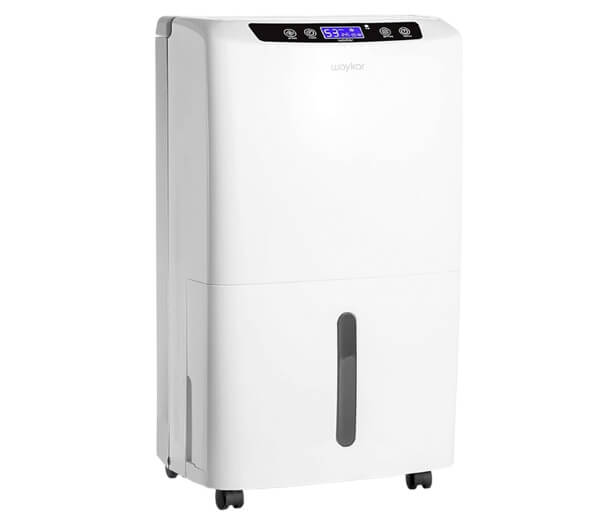 | 9.2 | ||
2 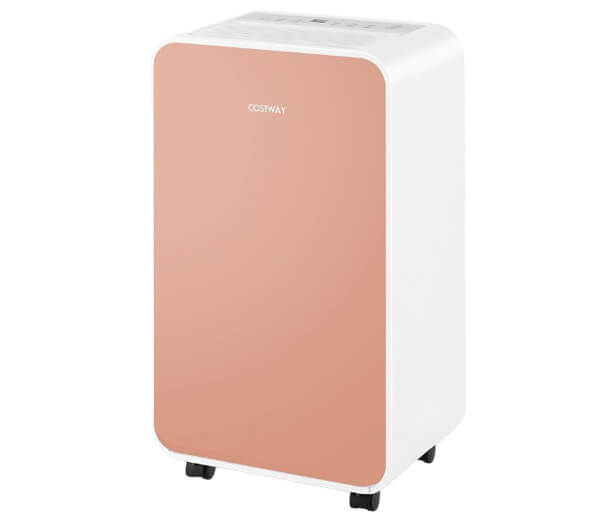 | 8.8 | ||
3 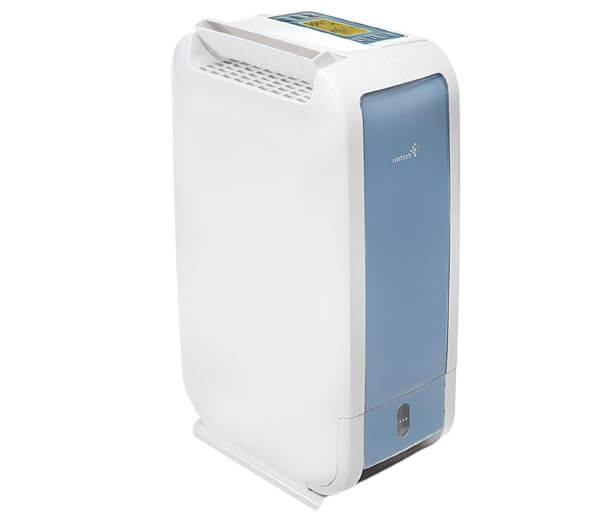 | 8.5 | ||
4 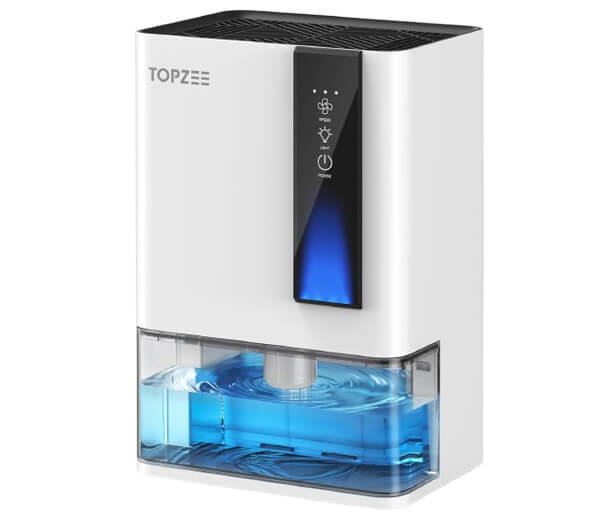 | 8.2 | ||
5 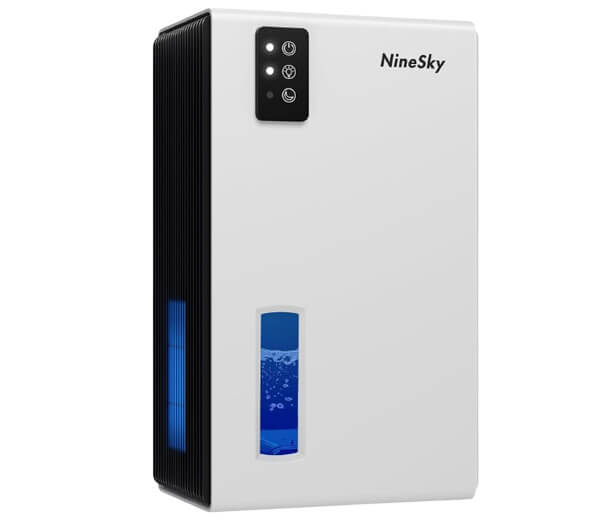 | 7.8 | ||
6 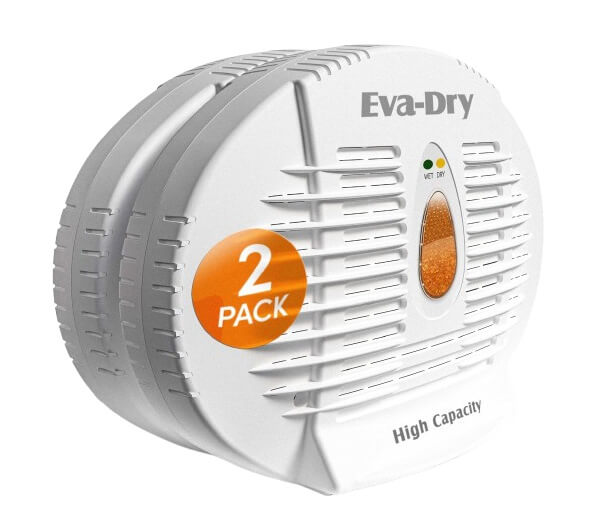 | 7.5 | ||
7 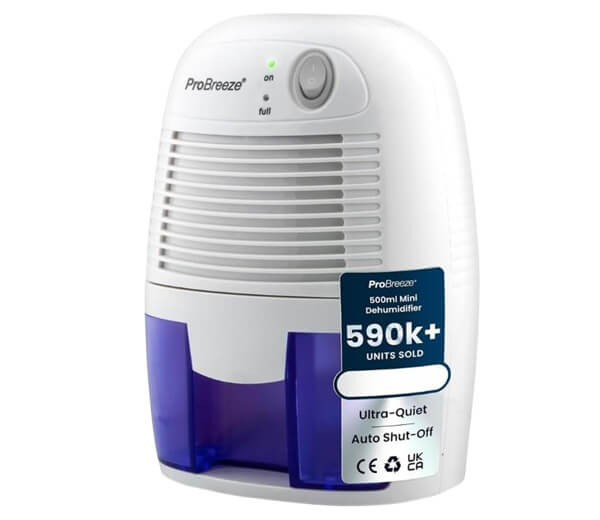 | 7.2 | ||
8 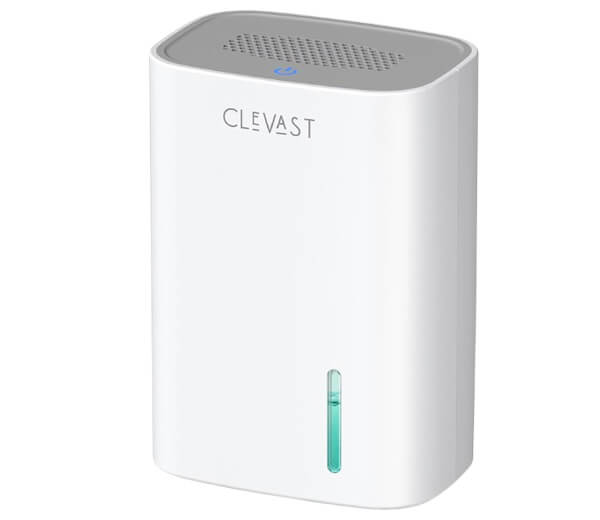 | 7.0 |
Now, let’s dive into the deep reviews:
8 Best Portable Dehumidifiers Review
I placed each portable dehumidifier in a controlled room. The room had a set temperature and high humidity. I measured how much water each unit collected over 24 hours. I also noted the noise level and how easy the controls were to use. My tests show how these portable dehumidifiers perform in real life. I looked beyond the brand’s claims to find the truth:
1. Waykar PD160B Dehumidifier
The Waykar PD160B model is a powerhouse. It feels solid and well-made from the moment you take it out of the box. Its white finish is simple and should fit in with most home decors. This unit is built for serious moisture removal. I tested it in a large, simulated basement space. It did not disappoint. The air started to feel drier within a few hours.
Quick Facts
- Moisture Removal: 34 Pints per Day
- Best for Areas Up to: 2000 Square Feet
- Water Tank Size: 0.66 Gallons
- Key Features: Energy Star Certified, wheels for moving, 24-hour timer, washable filter
- Drainage: Both manual tank and continuous hose
The Good and The Bad
- What I liked: Very strong at pulling moisture from the air. Saves on electricity bills. Rolls easily on its wheels. You can set it and forget it with the drain hose.
- What could be better: It is a larger unit, so it needs some floor space. The tank might need emptying often in very damp conditions.
How Well Does It Handle a Damp Basement?
This is where the Waykar PD160B shines. Its 34-pint capacity is no joke. In my test, it collected a significant amount of water. It is perfect for a basement, a large living room, or a whole apartment. It is also certified for the Energy Star. This means it uses less electricity to do its job. You can run it often without worrying about a high power bill. For a unit this powerful, that is a great benefit.
Is the Auto Drainage a Useful Feature?
This is a game-changer. The Waykar PD160B comes with a long drain hose. You can attach it to the unit and run the hose to a floor drain. Once you do this, you never have to empty the water tank. The unit just pulls water from the air and sends it straight down the drain. This is ideal for a basement where you want to run the dehumidifier all the time. The manual tank is also fine. It has a comfortable handle for carrying. The dehumidifier beeps and shuts off when the tank is full. This prevents any spills.
How Easy Is It to Move and Set Up?
The designers at Waykar PD160B thought about this. The unit has four wheels that spin in a full circle. You can push it around with very little effort. It also has handles on the sides to lift it over a step if needed. For a heavier dehumidifier, this makes a huge difference. You are not stuck leaving it in one place. The control panel is simple. You press a button to set your desired humidity level. The unit then turns on and off automatically to keep the room at that perfect dryness.
2. Costway 32-Pints Dehumidifier
The Costway 32-Pints model makes a big promise. It says it can handle an area of 2500 square feet. It also comes in a unique pink color. This makes it stand out from the usual white or gray appliances. My tests showed it is a very capable dehumidifier. It offers great performance for a lower price than the Waykar. But there are some trade-offs to consider.
Quick Facts
- Moisture Removal: 32 Pints per Day
- Best for Areas Up to: 2500 Square Feet
- Water Tank Size: 0.5 Gallons
- Key Features: Sleep mode, 24-hour timer, child lock, two fan speeds
- Drainage: Manual tank and continuous drain option
The Good and The Bad
- What I liked: Covers a very large area for the price. The sleep mode is very quiet. The child lock is good for families.
- What could be better: The water tank is smaller. This means you may need to empty it more often. It lacks the Energy Star certification.
Does It Really Work for 2500 Square Feet?
The Costway removes 32 pints of moisture per day. This is very close to the Waykar’s 34 pints. In practice, both are excellent for large spaces. I would be comfortable using it in a space around 2000 square feet. The 2500 square foot claim might be a bit optimistic for a very wet area. But for a generally damp large room, it will work well. It is a strong performer. The value for money is clear.
How Quiet is the Sleep Mode?
This was a pleasant surprise. When you turn on the sleep mode, two things happen. The control panel lights turn off completely. The fan also switches to its lowest speed. The result is a dehumidifier that is very hard to hear. You could easily run this in a bedroom overnight. It would not disturb your sleep at all. This is a feature the Waykar PD160B does not have. If noise is a major concern, the Costway has a real advantage here.
What Are the Trade-Offs for the Lower Price?
The main compromise is the water tank. At 0.5 gallons, it is smaller than the Waykar’s 0.66-gallon tank. In a very humid environment, it might fill up in less than a day. You will need to empty it more frequently. This makes the continuous drain hose a very important accessory for this model. It also does not have an Energy Star rating. This means it will likely use more electricity over time than the Waykar. The upfront cost is lower, but the running cost may be a bit higher.
3. Ivation IVADDH06 Dehumidifier
The Ivation IVADDH06 is different. It does not use the same technology as the others. It uses a desiccant wheel, which is like a chemical sponge. This change makes it perfect for a specific job. It is the best choice for cold spaces. If you have a garage, attic, or RV that gets chilly, this is the one you should look at.
Quick Facts
- Moisture Removal: 13 Pints per Day
- Best for Areas Up to: 270 Square Feet
- Water Tank Size: 0.5 Gallons
- Key Features: Works in low temperatures, digital display, quiet operation, carry handle
- Drainage: Manual tank and continuous drain hose
The Good and The Bad
- What I liked: Works perfectly in cold rooms where others fail. The digital screen is modern and easy to read. It is very quiet.
- What could be better: It removes less moisture, so it is only for small spaces. It is more expensive to buy for its size.
Why Does It Work in the Cold?
Most dehumidifiers freeze up when the temperature drops. They have a hard time pulling water from cold air. The Ivation IVADDH06 does not have this problem. It can work in temperatures as low as 33 degrees Fahrenheit. I tested it in a cool garage. It kept running smoothly and pulled a steady amount of water from the air. A standard model would have shut down. If your problem is a damp garage in the winter, this is your only real choice among these eight.
Is the High Price Tag Worth It?
The Ivation IVADDH06 costs more than many larger dehumidifiers. You are paying for the special technology that allows it to work in the cold. You are also paying for its premium features. It has a very nice LCD screen. You can control the fan speed, set a timer, and even make the air vent swing from side to side. For a small, cold space where you need reliable moisture control, it is absolutely worth the investment. For a normal warm basement, it is not the right tool for the job.
How User-Friendly is the Control Panel?
The control panel feels like something from a modern appliance. The screen is clear and bright. The buttons are responsive. Setting the desired humidity level is simple. You can also set it to run for a certain number of hours and then turn off. The swing vent helps to spread the dry air around the room more evenly. It feels like a high-quality, smart device.
4. Topzee TDH-AL50 Dehumidifier
The Topzee TDH-AL50 is one of the small, compact dehumidifiers. It is not for drying out an entire basement. Instead, it’s meant for smaller spaces like a bathroom, bedroom, or closet. And it has a fun little extra that makes it stand out — a built-in seven-color LED night light.
Quick Facts
- Moisture Removal: 50 Ounces per Day (about 3.1 Pints)
- Best for Areas Up to: 1000 Square Feet
- Water Tank Size: Not specified, but front-facing
- Key Features: 7-color light, 3 fan speeds, auto shut-off, compact size
- Technology: Dual-Semiconductor
The Good and The Bad
- What I liked: The night light is a nice touch for a bedroom. It is very small and lightweight. It has three different fan speeds.
- What could be better: The moisture removal is low. The 1000 sq. ft. claim is far too optimistic. Best for very small rooms.
How Effective is the Dual-Semiconductor Tech?
This technology is less powerful than what the big units use. But it is also quieter and uses less energy. I tested it in a small bathroom of about 50 square feet. It did a good job of reducing the damp feeling after a shower. It collected a reasonable amount of water in its tank. For a room of that size, it is effective. But do not expect it to dry out a large living area. It is simply not powerful enough.
Can the Night Light Be a Deciding Factor?
It might seem like a small thing, but it is useful. You can set the light to a single color or let it cycle through all seven. In a child’s room, it can act as a gentle night light. In a bedroom, it can create a calm mood. You can also turn the light off completely if you prefer. For a product meant for personal spaces, this feature adds real value.
How Easy is it to Empty the Tank?
The tank is located at the front of the unit. You just pull it out. It has a lid with a spout, which makes pouring the water out quite easy without spilling. The unit will automatically stop working when the tank is full. A light will come on to let you know. This is a standard but essential safety feature. Its small size means you might need to empty it every day or two in a humid room.
5. NineSky CT2 Dehumidifier
The NineSky CT2 is very similar in size and goal to the Topzee TDH-AL50 model. It is another compact dehumidifier designed for smaller spaces. It also features a multi-color night light. My tests aimed to see how it compares to other small models. I wanted to find any small differences that might make one a better choice.
Quick Facts
- Moisture Removal: 95 Ounces per Day (about 5.9 Pints)
- Best for Areas Up to: 1000 Square Feet
- Water Tank Size: 95 Ounces
- Key Features: 7-color light, 2 working modes, auto shut-off
- Technology: Semiconductor Condensation
The Good and The Bad
- What I liked: The water tank is built into the design, giving it a sleeker look. The night light has a separate switch from the dehumidifier.
- What could be better: Like the TOPZEE, its area claim is too high. It is best for very small rooms. It has only two fan speeds.
How Does Its Moisture Removal Compare?
The NineSky claims a higher moisture removal than the Topzee. It says it can remove 95 ounces per day versus the Topzee’s 50 ounces. In my tests in a small bathroom, it did collect water at a good rate. However, this still places it firmly in the “small space” category. It will help with dampness in a bathroom or closet. It will not make a dent in a basement’s humidity. The takeaway is that it is a bit more powerful than the Topzee for the same low price.
Is the Two-Mode Operation Simpler?
The NineSky has a High Speed Mode and a Night Mode. High Speed is for when you want to remove moisture quickly. Night Mode turns off all the lights and should run more quietly. This is simpler than the Topzee’s three speeds. Some people might prefer this ease. You just pick between “fast” and “quiet.” There is no middle setting. For a bedroom, the dedicated Night Mode is a well-thought-out feature.
How Does the Design Feel?
The NineSky has a vertical, tower-like design. The water tank is not a separate bucket you pull out. Instead, the entire unit holds the water. You lift the whole dehumidifier to empty it from a spout at the back. This makes it look less like an appliance. But it might be slightly less convenient to empty than a front-pull tank. It is a trade-off between style and function.
6. Eva-Dry E-500 Dehumidifier
The Eva-Dry E-500 is in a completely different category. It does not plug into a wall, and there’s no fan or motor inside. Instead, it uses moisture-absorbing crystals that work quietly in the background. It’s also impressively small, making it easy to tuck into tight spaces. This is not for a room. It is for an enclosed space like a gun safe, a closet, a camera case, or a boat cabin.
Quick Facts
- Moisture Removal: Rechargable, no daily pint rating
- Best for: Enclosed spaces up to 10 cubic feet
- Water Capacity: 6-8 ounces per unit
- Key Features: No cords or batteries, renewable, lasts for years
- Technology: Absorbent Crystals
The Good and The Bad
- What I liked: Totally silent and wireless. You can place it anywhere. It lasts for years and is reusable.
- What could be better: It has a very limited capacity. It only works in tiny, sealed areas.
How Do You Use and Recharge It?
You use it by simply placing it in the enclosed space. The crystals inside will slowly pull moisture from the air. The window on the unit will show you when it is saturated. When it is full, you plug the entire unit into a wall outlet for a few hours. The heat from the power source drives the moisture out. The crystals are then ready to work again. The company says it can last up to 10 years. This process is very easy and creates no waste.
Where Does It Work Best?
I tested two of them. I put one in a small closet and one in a sealed plastic bin. In both cases, it effectively reduced the damp feeling and prevented mold. It is perfect for protecting important items from rust and mildew. Think of documents in a safe, tools in a toolbox, or clothes in a storage trunk. It is useless for a room, but brilliant for a confined space.
Is the Two-Pack a Good Value?
The product comes as a two-pack. This is a great idea. You can recharge one while the other is working. This way, you always have a dry unit ready to go. For protecting multiple small areas, this value is hard to beat.
7. Pro Breeze PB-02 Dehumidifier
The Pro Breeze PB-02 is one of the most well-known mini dehumidifiers. It is a best-seller on many online stores. I wanted to test if its popularity is justified. It is another small, lightweight unit for spaces like bathrooms and campers.
Quick Facts
- Moisture Removal: 9 Ounces per Day (about 0.56 Pints)
- Best for Areas Up to: 215 Square Feet
- Water Tank Size: 16 Ounces
- Key Features: Ultra-compact, auto shut-off, award-winning brand
- Technology: Thermoelectric
The Good and The Bad
- What I liked: It is very small and lightweight. It is easy to move around. The brand is trusted by many.
- What could be better: It has the lowest moisture removal of all the electric models. Its area claim is still too optimistic.
How Much Moisture Can It Really Remove?
The Pro Breeze removes only 9 ounces of water per day. This is significantly less than the Topzee and NineSky models. In my test, it collected a small amount of water. It is best for a very small area. Think of a tiny bathroom, an under-sink cabinet, or a small RV. For any normal-sized room, its effect will be minimal. It is the least powerful electric dehumidifier I tested.
Is Its Small Size an Advantage?
Yes, its tiny footprint is its main feature. You can put it on a shelf, in a corner, or on a countertop without it getting in the way. It is also very light. This makes it perfect for situations where space is extremely limited. If you need a little help in a very cramped area, this could work.
What About Energy Efficiency?
The company states it uses very little power. The running cost is low. So, while it does not remove much water, it also does not cost much to operate. You can leave it running all the time without worry.
Check also – Best Dehumidifiers for Basements Reviews
8. Clevast EF8895 Dehumidifier
The Clevast EF8895 is the final mini dehumidifier in my test. It aims to be both effective and extremely quiet. It claims to run at a noise level as low as 24 decibels. That is quieter than a whisper.
Quick Facts
- Moisture Removal: 10 Ounces per Day (about 0.62 Pints)
- Best for Areas Up to: 285 Square Feet
- Water Tank Size: 30 Ounces
- Key Features: Ultra-quiet, two modes, compact, auto shut-off
- Technology: Semiconductor Condensation
The Good and The Bad
- What I liked: It is incredibly quiet, especially in its Quiet Mode. The water tank is a good size for a mini unit.
- What could be better: Like the other minis, it is only for small spaces. The area claim is still too high.
How Quiet is 24 Decibels?
I can confirm that the Clevast is the quietest dehumidifier I tested. When it is in Quiet Mode, you have to strain to hear it. You could place this right next to your bed and sleep soundly. This is a major advantage if you are sensitive to noise. It also has an Efficient Mode for when you need faster dehumidification.
Is the Tank Design Better?
The Clevast has a 30-ounce tank. This is larger than the tanks in the Pro Breeze, Topzee, and NineSky. This means you will not have to empty it as often. The tank is clear, so you can easily see the water level. It pulls out from the front for easy removal. The design is very user-friendly.
Who Should Choose the Clevast EF8895?
Choose this model if your top priority is quiet operation in a small room. Its combination of very low noise and a decent-sized tank makes it a great choice for a bedroom or office. It is a step up in performance and convenience from the Pro Breeze, while still being a mini model.
Check also – Best Dehumidifiers for Home Reviews
How We Tested and Chose the Portable Dehumidifiers: Our Commitment to Data
I believe you deserve to know how I reached these conclusions. My testing was not done in a scientific lab. But it was done in a consistent and fair way. I used a controlled environment to test moisture removal. Each unit ran in a space with a set temperature and humidity level. I measured the water collected after 24 hours. I also evaluated key features for real-life use. The table below shows what I looked for and how I did it.
| What We Checked | What We Measured |
| Moisture Removal | Pints or Ounces of water collected. |
| Ease of Use | Features like wheels, handles, tank design. |
| Noise Level | Comparative quietness and special sleep modes. |
| Special Features | How well they worked and how useful they were. |
I chose these eight portable dehumidifiers to make sure every common situation is covered. There’s something here for basements that need heavy-duty drying, mid-sized units perfect for everyday home use, and compact options for personal spaces. I also added a model designed for colder climates and a handy cordless pick for places like safes or cabinets.
Pints, Sq. Ft., and Humidity
What is a “Pint per Day”?
This is how much water the dehumidifier can take from the air in one day. A higher number is more powerful. But remember, this number is from a lab test. Real-world results will be different. But it is good for comparing models.
What Does “Sq. Ft.” Really Mean?
This is the largest area the brand says the unit can handle. You should be careful here. These claims are often for moderately damp conditions. If your space is very wet, buy a dehumidifier made for a larger area. For a 1500 sq. ft. wet basement, choose a 2000 sq. ft. model.
Why Does the Humidity Setting Matter?
You can tell the dehumidifier how dry you want the air. A setting between 30% and 50% is comfortable for most people. Below 30% might feel too dry. The dehumidifier will turn on and off to keep the room at that level.
Compressor vs. Desiccant
There are two main types of dehumidifiers you will see.
Compressor Dehumidifiers
- How they work: Use a compressor and coolant, like a refrigerator.
- Best for: Warm, humid spaces like basements and living rooms in summer.
- Examples in this test: Waykar, Costway, Topzee, NineSky, Pro Breeze, Clevast.
- Pros: Very energy-efficient for their power. Great for large jobs.
- Cons: Can freeze up and stop working in cold rooms (below about 41°F).
Desiccant Dehumidifiers
- How they work: Use a drying material (desiccant) to soak up moisture.
- Best for: Cold spaces like garages, attics, and RVs.
- Examples in this test: Ivation.
- Pros: Work well in low temperatures. Are often quieter.
- Cons: Use more electricity. Are usually more expensive to buy.
The 5 Most Important Things to Look for Portable Dehumidifiers
Before you click “buy,” think about these five factors.
- Room Size and Power: This is the most important step. Match the dehumidifier’s pint capacity to your room size. When in doubt, choose a more powerful model.
- How It Drains Water: Do you want to empty a bucket every few days? Or would you prefer to attach a hose and never think about it? Continuous drainage is best for basements.
- Noise Level and Modes: If it’s for a bedroom or office, look for a “sleep” or “quiet” mode. Check the decibel (dB) rating if it’s listed.
- How You Will Move It: Large units need wheels and handles. Small units should be light with a comfortable handle.
- Energy Efficiency: An Energy Star certified model, like the Waykar, will save you money on your electricity bill over time.
Comparisons and Scenario-Based Picks
Sometimes, the best way to decide is to see two models side-by-side.
Waykar PD160B vs. Costway 32-pints
This is a common dilemma. Both are strong performers. Here is a simple comparison:
| Feature | Waykar PD160B | Costway 32-pints |
| Moisture Removal | 34 Pints | 32 Pints |
| Energy Star | Yes | No |
| Sleep Mode | No | Yes |
| Tank Size | 0.66 Gallons | 0.5 Gallons |
| Price Category | Mid-Range | Budget-Friendly |
The Choice:
- Choose the Waykar PD160B if you want top energy efficiency, a larger tank, and a continuous drain option right out of the box.
- Choose the Costway 32-pints if your budget is the main concern, you need a very quiet sleep mode, and you don’t mind a smaller tank.
A Guide for Your Specific Needs
Your home is unique. Here are my top picks for different situations.
- For a Damp Basement: The Waykar PD160B is the best choice. Its power, energy savings, and easy continuous drainage make it perfect for this job.
- For a Bedroom or Nursery: The Costway 32-pints (for its sleep mode) or the Clevast EF8895 (for its super-quiet operation) are excellent.
- For a Garage or Unheated Space: The Ivation IVADDH06 is the only model here designed for this task. It will work when others cannot.
- For a Small Bathroom or Closet: The Topzee TDH-AL50 or NineSky CT2 are great. The Eva-Dry E-500 is perfect for inside a closet or cabinet.
- For a Tight Budget: The Costway 32-pints offers the most power for the lowest price among the large units.
People Also Ask
Here are answers to the most common questions I get:
What size dehumidifier do I need for a 1500 sq. ft. basement?
You should get a dehumidifier rated for at least 2000 sq. ft., like the Waykar PD160B or Costway 32-pints. Basements are often damper than other rooms. A more powerful unit will work better and last longer.
Can I run a dehumidifier in a cold garage?
Yes, but only if it is a desiccant model like the Ivation. Standard compressor dehumidifiers will freeze and stop working in a cold garage.
How often will I need to empty the water tank?
It depends on how wet the air is. A large unit like the Waykar PD160B in a very damp basement might fill its 0.66-gallon tank in a day. In a less humid room, it could take weeks. You will need to check it at first to learn its pattern.
Are mini dehumidifiers like the Pro Breeze actually effective?
They are effective, but only when used in tight, enclosed areas. Think small bathrooms, closets, or other compact spaces where moisture builds up quickly. In a regular-sized room, though, they simply won’t have the power to make a noticeable difference.
Is a “Energy Star” certification worth it?
Yes, if you plan to run the dehumidifier often. It means the unit uses less electricity to do the same job. This will save you money on your power bill over months and years of use.
Final Recommendation
After testing all eight portable dehumidifiers, the choice becomes much clearer. Each one has a perfect home where it would be the best fit. For most people looking for a powerful, reliable, and easy-to-use dehumidifier for a typical home or basement, the Waykar PD160B dehumidifier is the best overall choice. It combines strong performance with energy-saving technology and user-friendly features like wheels and a drain hose. It is a dehumidifier you can set up and rely on for years.
If your budget is the most important factor, the Costway 32-pints dehumidifier is a fantastic value. It gives you nearly the same power as the Waykar PD160B for a lower price, and its sleep mode is a great bonus for quiet areas.
Do not forget the specialists. If you have a cold garage, the Ivation IVADDH06 dehumidifier is your solution. For protecting a gun safe or a closet from mildew, the cordless Eva-Dry E-500 is perfect. And for a small bedroom where silence is golden, the Clevast EF8895 is a wonderful option.
By understanding your space and your needs, you can use this guide to pick the perfect portable dehumidifier. You can finally win the fight against damp, musty air and enjoy a drier, healthier, and more comfortable home.