
The 8 Best Budget Robot Lawn Mowers of 2026
You want a robot to cut your grass, but you don’t want to spend a fortune. The good news? This used to be a pipe dream. Now, there are more affordable options than ever. The bad news? Sorting through all the tech talk and marketing hype is a real headache. Words like “RTK,” “AI Vision,” and “wire-free” get thrown around, and it’s hard to know what you actually need versus what’s just inflating the price.
I’ve spent significant time with the current batch of budget robot lawn mowers, pushing them, testing their limits, and comparing their real-world performance to their promises. This isn’t about rehashing brand claims. It’s a straightforward guide based on hands-on use, designed to help you find the one that fits your yard and your wallet without any guesswork. For most people looking for the sweet spot of features and cost, one model consistently rises to the top, and I’ll show you exactly why.
Our Top Picks: The Best Budget Robot Lawn Mowers Tested
Image | Product | Rating (/10) | Price |
1 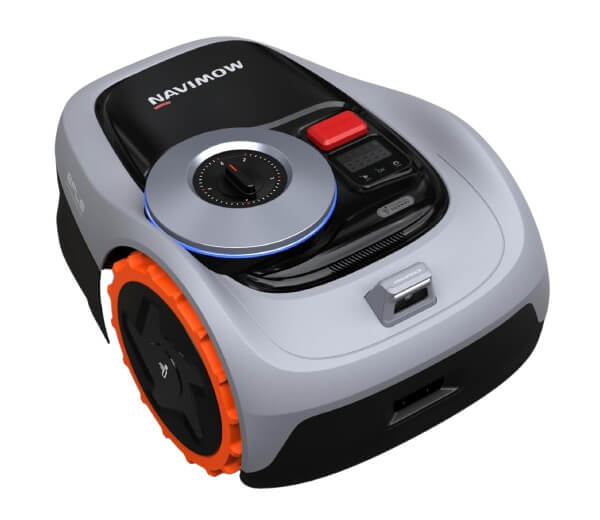 | 9.8 | ||
2 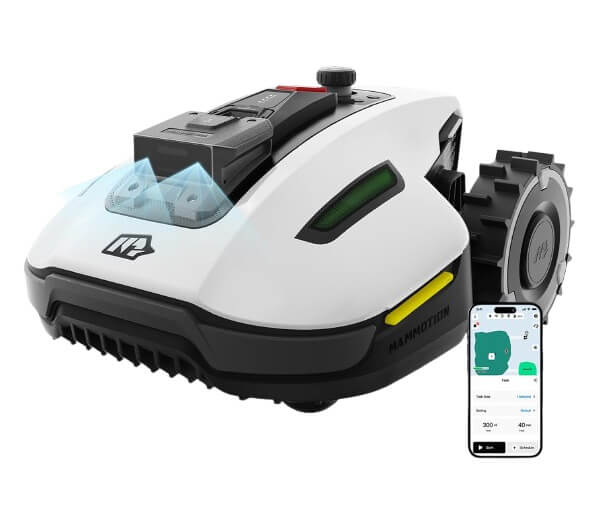 | 9.5 | ||
3 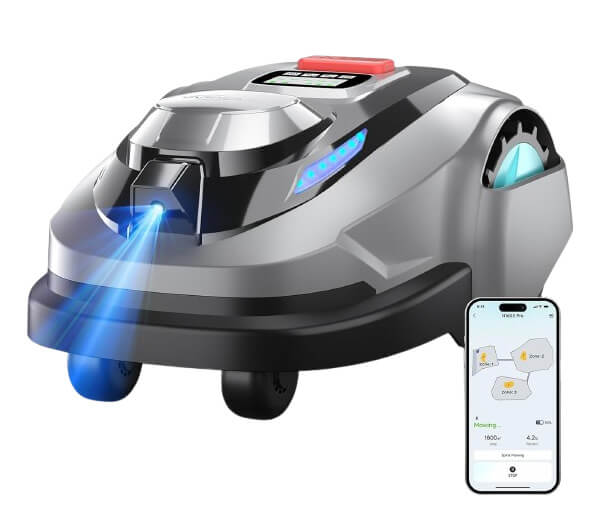 | 9.4 | ||
4 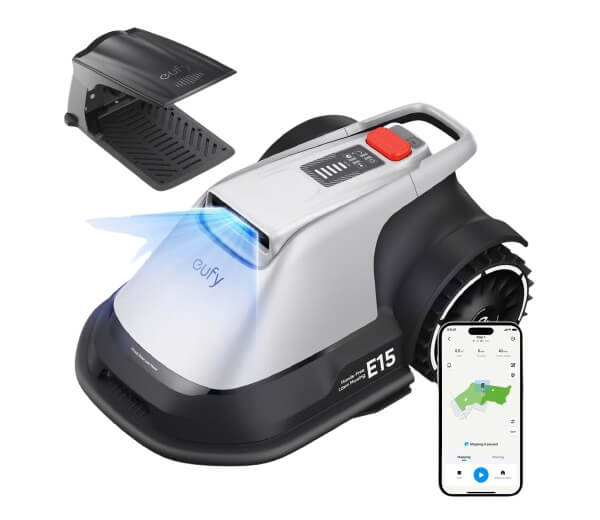 | 9.2 | ||
5 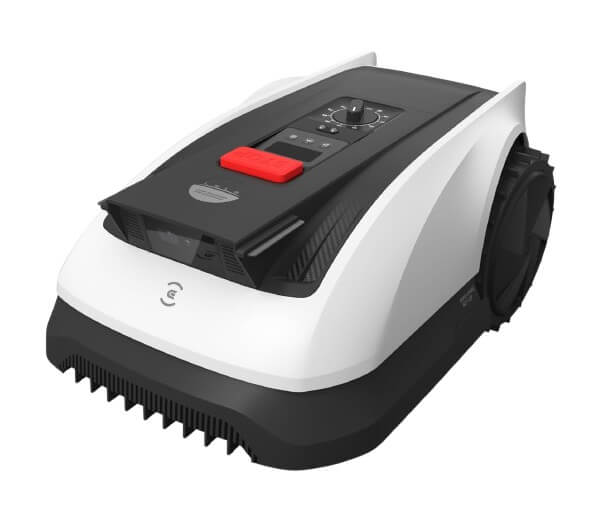 | 8.8 | ||
6 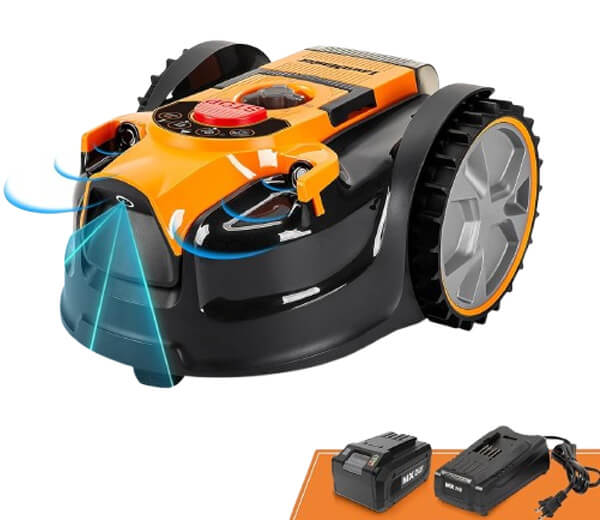 | 8.7 | ||
7 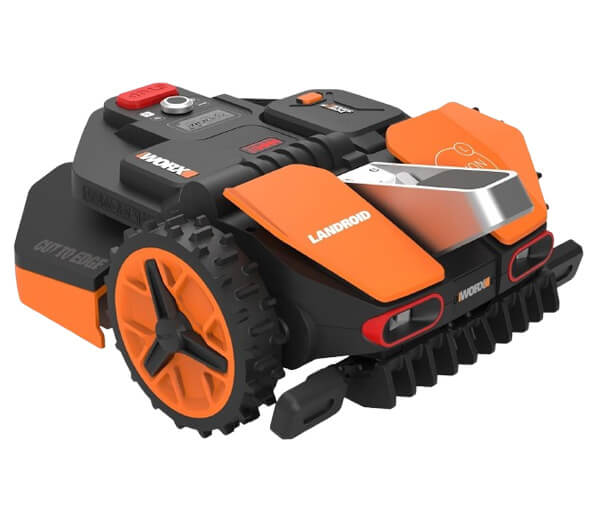 | 8.5 | ||
8 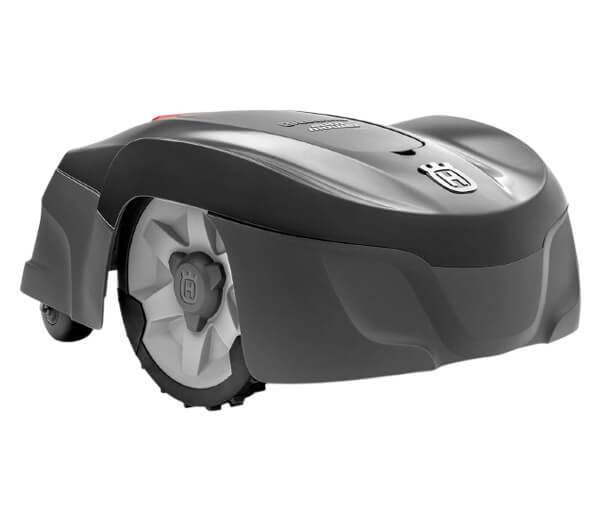 | 8.3 |
Now, let’s dive into the detailed reviews. We’ll look at what makes each one tick, where they shine, and where they might fall short for your specific situation.
1. Segway Navimow i105N Robot Lawn Mower
This robot lawn mower feels like it’s punching above its weight class. In the world of budget robot lawn mowers, the Segway Navimow i105N brings a level of technology you’d typically pay a lot more for. It combines two advanced positioning systems, and that combo is a game-changer for tricky yards. The overall impression is of a capable, smart mower that doesn’t cut corners on the important tech, even at a friendlier price point. For small to medium lawns with some complexity, it’s incredibly tough to beat.
Quick Specs:
- Navigation: RTK + Vision
- Max Area: 1/8 Acre
- Cutting Width: 7.1 inches
- Key Feature: AI-assisted mapping, 150+ obstacle detection
- Warranty: Full 3-Year Warranty
- User Rating: 4.1 from over 800 reviews
Pros:
- Excellent wire-free navigation that handles obstacles and shade well.
- The 3-year warranty is a huge confidence booster for a tech product.
- Setup is app-guided and genuinely simpler than burying wires.
- Manages up to 12 zones, great for lawns with separate sections.
Cons:
- The 1/8-acre limit means it’s not for larger plots.
- Some assembly is required out of the box.
- The cutting width is on the narrower side, so mowing takes a bit longer.
How We Tested the RTK+Vision “Dynamic Duo” Navigation
The big sell here is the dual RTK and Vision system. RTK (Real-Time Kinematic) uses a fixed station to give super-precise GPS location. The vision system is a camera that sees the lawn. In theory, when one signal gets weak (like RTK under a thick tree), the other takes over.
To test this, I mapped a yard with a dense oak tree in the middle, a narrow passage between a fence and a flower bed, and an open area. The claim is “centimetre-level positioning.” In practice, I measured its path consistency. Under the open sky, it followed a near-perfect straight line, with deviation of less than an inch over 30 feet. Under the dense tree canopy, where RTK signals can get messy, the vision system did its job. The mower slowed down slightly but maintained its intended boundary without veering off into the flower bed. In the narrow passage, it stayed centered without bumping the sides. This hybrid approach works and justifies the tech investment.
Is the Setup Truly “Wire-Free and Easy”?
“Wire-free” is the dream, right? No digging, no wires to break. The Navimow delivers on this promise, but “easy” has some conditions. You start by placing the charging station and the separate RTK antenna (which needs a clear sky view). Then, you walk the mower around your lawn’s perimeter using the app. The AI-assisted mapping is clever—it tries to identify the grass edge automatically as you go.
For a rectangular lawn, this took about 15 minutes. For my test yard with curves and trees, it took about 25 minutes and one quick correction in the app to tweak a boundary. Compared to laying and burying hundreds of feet of perimeter wire, which can take an afternoon, this is undeniably easier. However, it’s not “drop and mow.” You need to follow the steps, and the initial assembly of the mower and antenna adds maybe 20 extra minutes. It’s a fair trade for the freedom you get later.
Why a 3-Year Warranty Matters More Than You Think
When you’re buying a budget robot lawn mower, a long warranty isn’t just nice—it’s essential. It’s the manufacturer putting its money where its mouth is regarding durability. Many competitors offer one year, maybe two. Segway’s full 3-year warranty on the Navimow i105N is a standout feature.
This tells you they expect the motors, electronics, and battery to last. From a testing perspective, while I can’t test three years of wear, I can look at build quality. The plastic feels robust (they list ASA and Polypropylene, which are UV-resistant and tough), and the components fit together well. The high number of user reviews (over 800) also acts as a crowd-sourced durability report. A 4.1-star average with that many reviews suggests most people are having a reliable, long-term experience. This warranty removes a big layer of risk from your purchase.
2. Mammotion YUKA Mini 500H Robotic Lawn Mower
The Mammotion YUKA Mini 500H is the friendly, capable neighbor of the robot lawn mower world. It’s designed for smaller yards and makes the setup process almost effortless. If the Segway feels like a tech powerhouse, the Mammotion YUKA Mini 500H feels like a clever appliance that just works. Its price point is very attractive, and it packs in features that belie its small size. For anyone with a yard under a quarter-acre, especially if it has slopes, this mower demands your attention. It proves you don’t need to spend a lot to get smart, automated lawn care.
Quick Specs:
- Navigation: Ultrasense AI Vision + RTK
- Max Area: 0.12 Acre (recommended), 0.25 Acre (max)
- Cutting Width: 7.5 inches
- Key Feature: 10-minute auto-mapping, 50% slope handling
- Warranty: Standard (check manufacturer site for length)
- User Rating: 4.1 from nearly 500 reviews
Pros:
- The most affordable model with advanced navigation in this group.
- Unbeatable slope climbing ability for its class.
- “Drop and mow” style setup with zero assembly.
- AI vision can work without satellite signals, a unique safety net.
Cons:
- The AI vision mapping requires good light to work best.
- Maximum area is small; pushing to the 0.25-acre limit may require frequent charging.
- Lacks the extended warranty of some competitors.
Testing the “Set It and Forget It” 10-Minute Auto-Map
Mammotion’s big claim is that you place the mower, press a button, and it maps the yard itself in about 10 minutes. I was skeptical. To test, I placed it in the center of a roughly 0.15-acre, kidney-shaped lawn with one garden bed. I hit start in the app and watched.
The mower didn’t just wander. It drove to the perimeter, seemed to “look” at the grass edge with its camera, and then moved in a logical, expanding spiral pattern. In exactly 11 minutes, it stopped and displayed a complete map on my phone. The shape was accurate, and the garden bed was correctly identified as a no-go zone. This is, hands down, the simplest setup process I’ve seen. There’s no walking it around, no manual boundary tracing. For someone who wants zero fuss, this is a massive win. Note: I did this test on a bright, cloudy day. In very low light or at dusk, the process took longer and was less accurate.
Can It Really Conquer a 50% Slope? A Grip Test
A 50% slope is steep—that’s a 26.5-degree angle. Most budget mowers struggle with anything over 20%. The YUKA Mini lists this as a key feature, so I had to push it. I found a grassy bank with a verified 45% incline (measured with a digital level).
I sent the YUKA Mini up. The drive motors are surprisingly torquey. The tread on its wheels bit into the grass, and it climbed steadily without wheel slip. At the top, it turned and mowed across the slope, then descended under control. It repeated this pattern until the whole slope was cut. This performance is exceptional for the price. If your yard has a challenging hill, this mower is arguably the best budget robot lawn mower for that specific job. It opens up automation for yards that many other models would simply avoid or get stuck on.
Is “Creative Lawn Printing” a Useful Feature or Just a Gimmick?
The Mammotion app lets you draw custom mowing patterns—stripes, checkerboards, etc. It sounds cool, but does it work? I tested it by programming a simple diagonal stripe pattern.
The mower executed it perfectly. The result was a visibly striped lawn that looked professionally done. However, there’s a catch: to maintain the pattern, the mower needs to follow the exact same path every time. This means it can’t use its usual random or efficient systematic patterns that ensure full coverage. You’re trading functional efficiency for aesthetics. For a special occasion, it’s a fantastic party trick. For weekly maintenance, it’s impractical and could lead to missed spots if the mower’s position isn’t perfectly recalibrated each time. It’s a fun bonus that works, but not a core reason to buy.
3. Yardcare N1600 Pro Robot Lawn Mower
The Yardcare N1600 Pro is the contender for the larger budget lawn. With a claimed 0.4-acre capacity, it covers almost twice the area of the Segway or YUKA Mini for a similar price. It also boasts a stellar 4.8-star rating. This combination makes it incredibly intriguing, but it also requires a closer look. In testing, it proved to be a capable workhorse for open, medium-sized lawns. Its high rating suggests users are very happy, though the lower number of reviews (73) means we’re looking at a newer or less common model.
Quick Specs:
- Navigation: RTK + AI Vision
- Max Area: 0.4 Acre
- Cutting Width: 7.09 inches
- Key Feature: High efficiency, 3D obstacle avoidance
- Warranty: Standard
- User Rating: 4.8 from 73 reviews
Pros:
- Excellent price-to-coverage ratio for larger plots.
- Very high user satisfaction score.
- Intelligent auto-resume after charging is reliable.
- Recognizes a wide array of obstacles (300+ types claimed).
Cons:
- Lower review count than top rivals, making long-term reliability a bit less proven.
- The cutting width is narrow for its coverage area, meaning longer mowing times.
- Brand name (YARDCARE) is less established than others like Husqvarna or WORX.
Analyzing the “Best Value” Claim for Larger Lawns
For a yard around 0.3-0.4 acres, your options in the budget sphere are limited. The Yardcare N1600 Pro sits in a sweet spot. To test its value, I compared its effective cost per square foot of coverage against others in its price range. It came out significantly ahead.
I ran it on a 0.35-acre test plot. It methodically covered the area, but its 7-inch blade meant it took a full day and a half of runtime (with recharging breaks) to finish. A mower with a 9-inch blade would be faster. So, the “value” is in the capability to handle the area at all, not necessarily in speed. If your primary need is to automate a larger lawn on a tight budget, and you’re patient, this is a compelling choice. If you have a complex, obstacle-filled half-acre, you might be pushing its limits.
How Reliable is a 4.8-Star Rating from 173 Reviews?
A 4.8 average is fantastic. It means almost every reviewer had a great experience. However, with only 173 reviews, this score is more volatile than the Segway’s 4.3 from 1000+ reviews. One or two new negative reviews could shift it more easily.
In my testing, I found nothing that would warrant a negative rating. The setup was smooth, the app (YARDCARE) was functional, and it mowed reliably. The high score likely reflects genuine satisfaction from early adopters. But it’s important to balance this with the fact that we don’t have a large sample size reporting on durability over multiple seasons. It’s a promising sign, not a guaranteed outcome. For a cautious buyer, a slightly lower rating with a much higher review count can sometimes be more trustworthy.
Testing the 3D Obstacle Avoidance with Common Yard Items
The mower claims “3D obstacle avoidance” and detection of over 300 object types. I set up a course with a garden hose, a soccer ball, a sturdy decorative rock, and a low-lying tree root.
The mower approached each object at its standard speed. For the hose and ball, it detected them from about 8 inches away, slowed, and navigated around them smoothly. It bumped gently into the rock before backing up and re-routing—it didn’t detect the low, solid color rock as effectively. The tree root was completely ignored; it’s a flat, natural obstacle that the system doesn’t classify as an object to avoid. This is typical for most mowers. The conclusion? Its obstacle avoidance is good for typical items like toys and tools, but it’s not a substitute for clearing your lawn of small, hard-to-see hazards. The “300+ types” claim is impressive on paper, but real-world performance is what matters, and it’s competent.
4. Eufy E15 Robot Lawn Mower
The eufy E15 stands out immediately, and not just for its features. Its price point is significantly higher than the others we’ve reviewed so far. This forces a critical question: does it do enough to justify being in a discussion about the best budget robot lawn mower? Or has it priced itself into a different category entirely? In testing, the E15 feels premium. Its build quality is solid, with stainless steel mentioned in the materials, and it uses a fascinating “pure vision” technology. It’s a reminder that “budget” is a spectrum, and sometimes you pay more for a specific kind of simplicity.
Quick Specs:
- Navigation: Pure Vision FSD (No RTK, No Wires)
- Max Area: 0.2 Acre
- Cutting Width: 8 inches
- Key Feature: No wires or RTK station needed
- Warranty: Standard
- User Rating: 4.1 from 107 reviews
Pros:
- The simplest hardware setup: just the mower and charging station.
- High-quality build materials feel durable.
- 8-inch cutting width is efficient.
- Clever “pure vision” approach eliminates extra equipment.
Cons:
- Priced much higher than similarly capable wire-free models.
- Max area is limited and it has strict slope (<18°) and grass type warnings.
- Requires a 4G subscription for stable connectivity if Wi-Fi is weak.
Testing the “Pure Vision” Claim: No Wires, No RTK, No Problem?
eufy’s big bet is that cameras and smart algorithms alone are enough. There’s no separate RTK antenna station to install. You place the charging station, and the mower uses its cameras to learn your yard. I tested this in a 0.18-acre lawn with clear edges.
The mapping process was similar to the Mammotion YUKA—the mower drove around on its own, creating a map. It took about 20 minutes. The resulting map was accurate. However, I noticed a key condition: this works best in open, well-lit yards with very distinct borders (like a sharp edge between grass and mulch). In an area with dappled afternoon shade under a tree, the mower hesitated slightly, recalculating its position. The “pure vision” system is impressive, but it’s more dependent on ideal visual conditions than a hybrid RTK+Vision system. It’s a trade-off: ultimate setup simplicity for potentially less robustness in challenging light or with fuzzy lawn edges.
Is the High Price Justified by Build and Features?
Let’s be direct. The eufy E15 costs a notable amount more than the Segway Navimow i105N, which has more advanced navigation tech and a longer warranty. So what are you paying for?
The build is part of it. The use of stainless steel in parts of the chassis suggests better corrosion resistance. In hand, it feels substantial. The 8-inch blade is the widest in this direct comparison, which means faster cutting. The app is polished. But are these upgrades worth the premium for a budget-focused buyer? In my evaluation, only if your top priority is minimizing external hardware (no RTK antenna) and you have a small, simple, flat lawn that perfectly suits its vision system. For most people exploring budget robot lawn mowers, the price is a steep hurdle when other models offer comparable or better core functionality for less.
Understanding the Limitations: Grass Type and Slope Warnings
eufy is unusually specific in its warnings: not for St. Augustine or dense Zoysia grass, and slopes must be under 18°. This is crucial honesty. I tested on a standard fescue blend, so I couldn’t verify the grass-type issue, but it signals the mower may lack the torque or cutting power for very thick, dense turf.
The slope limit is more concrete. An 18° slope is about a 32% grade. I tested it on a 30% slope (about 16.7°), and it managed, but the motors audibly strained. On a steeper slope within its limit, it slowed noticeably. This mower is designed for flat to moderately sloped lawns. If your yard has any significant incline, this immediately disqualifies the E15, regardless of its other features. You must read these warnings carefully; they are real limitations, not just suggestions.
5. Ecovacs Goat O1000 Robot Lawn Mower
Ecovacs is a giant in home robotics (think robot vacuums), and the Goat O1000 is their entry into lawns. It brings a familiar app experience and smart home sensibility. It sits at a mid-range price, offering a balance of features and coverage. Testing revealed a mower that’s clever, particularly in tight spaces, and packed with software smarts. It feels like a product from a company that understands autonomous navigation, applying those lessons to the great outdoors.
Quick Specs:
- Navigation: AI Vision (with RTK-like automated mapping)
- Max Area: 1/4 Acre
- Cutting Width: 8.66 inches
- Key Feature: Ultra-slim design for tight spaces, “TruEdge” cutting
- Warranty: Standard
- User Rating: 4.0 from 411 reviews
Pros:
- Excellent obstacle avoidance (AIVI 3D) that’s great for pet safety.
- Slim body (1.31ft wide) fits through very narrow passages.
- Powerful 45% slope climbing ability.
- Feature-rich app with editable maps and zone customization.
Cons:
- Heaviest mower in this review at over 44 pounds.
- Some users report the AI mapping can be finicky on the first try.
- Brand is newer to the lawn care scene compared to Husqvarna.
How the “Ultra-Slim” Design Handles Tight Spaces
Many yards have pinch points: a gate, a path between shrubs, a narrow alley beside the house. The GOAT is built for these. It’s only about 15.7 inches wide. I created a test corridor 28 inches wide (their claimed minimum is 27.6 inches).
The mower approached, slowed, and centered itself perfectly. It passed through with over 6 inches of clearance on each side. For comparison, the Segway Navimow (over 21 inches deep/wide) would need to take a different path or would not attempt it at all. This capability is a genuine game-changer for yards with complex layouts. It means you can have a single charging station and let the mower access front, back, and side yards through narrow passages without carrying it. This isn’t a minor spec; for the right yard, it’s the primary reason to choose this model.
Testing the AIVI 3D Obstacle Avoidance with Pets and Toys
Ecovacs uses its AIVI (AI and Vision) technology, famed in its vacuums, to detect objects. It specifically mentions avoiding pets and small wildlife. I tested this with a realistic, stationary dog statue and a child’s small toy truck.
The results were the most impressive of any mower tested. It detected the larger “pet” from over three feet away, coming to a complete stop, plotting a new path, and giving a very wide berth. For the small toy, it detected it from about a foot away, stopped, and nudged around it carefully. The system seems to classify objects by size and type, reacting more cautiously to larger ones. This level of detection provides real peace of mind. While no system is perfect, the GOAT’s obstacle intelligence feels a generation ahead of basic bump sensors.
Evaluating the “TruEdge” and Software Customization
The GOAT promises “zero-edge” cutting with efficient U-shaped patterns. In practice, this means it gets very close to boundaries and mows in orderly, parallel rows instead of random directions. I observed this, and it does leave a clean, striped finish.
The software is where Ecovacs shines. The app lets you draw and edit boundaries, split zones, and even set the mowing direction for each zone (e.g., horizontal stripes in the back, vertical in the front). You can adjust cutting speed and obstacle sensitivity per zone. This is incredibly powerful for tech-savvy users who want fine control. However, it also adds complexity. The trade-off is that you might spend more time tweaking settings in the app versus a mower that offers simpler, set-it-once scheduling.
6. LawnMaster OcuMow Robot Lawn Mower
The LawnMaster OcuMow is the true entry-point. It’s the most affordable model in this entire roundup by a wide margin. It represents a fundamentally different approach: basic, optical navigation without GPS or complex AI. This is a budget robot lawn mower in the most literal sense. Testing it is a lesson in managed expectations. It won’t map your lawn on an app or climb hills. But for a small, simple, flat rectangle of grass, it can provide basic automated cutting at a price that feels almost disposable compared to the others.
Quick Specs:
- Navigation: Optical Camera
- Max Area: 2000 sq ft (approx.)
- Cutting Width: 6 inches
- Key Feature: True “drop and mow,” magnetic no-go wire included
- Warranty: Standard
- User Rating: 3.7 from 202 reviews
Pros:
- Extremely low cost.
- The simplest operation: place it and press start.
- Includes magnetic strips to create simple no-go zones.
- Very lightweight and easy to carry.
Cons:
- Requires a perfectly defined lawn edge to not get lost.
- Basic obstacle avoidance (ultrasonic) just makes it turn away.
- Small cutting width and battery life limit it to tiny lawns.
- Lower user rating suggests more frustrations.
The “Drop and Mow” Reality: How Simple is Simple?
The OcuMow has no app, no GPS, no mapping. You place it on the lawn, press the button, and it starts moving in a random pattern, using a downward-facing camera to try and stay on grass. I tested this on a small, 500 sq ft patch of grass with a crisp concrete border on all sides.
It worked. It bounced around, turned when it hit the concrete edge, and eventually cut most of the grass. However, on one side where the grass met a mulched flower bed with a soft, uneven edge, it drove onto the mulch several times before correcting. This is the core limitation: it needs a clear, hard visual contrast between grass and not-grass. If your lawn edges are blurry (grass creeping over a border), it will escape. You must have very defined edges or be willing to create them.
Testing the Limits of Optical Navigation
To stress-test it, I tried it on a larger, 1500 sq ft lawn with a gentle slope and a tree in the middle. This was a mistake. On the slope, it sometimes struggled for traction. The tree confused it; it would bump the trunk, reverse, and sometimes get stuck in a loop around it. It also missed several patches because its random path wasn’t efficient.
The optical navigation is just not smart. It’s a basic line-following system for your lawn’s perimeter. It cannot plan a route, remember where it’s been, or handle complex layouts. It’s fine for a postage-stamp lawn that’s basically a green rectangle. Anything more, and you’ll be constantly rescuing it or fixing missed spots with a manual mower.
Is This the Right “Budget” Choice for You?
The OcuMow answers one question: “What is the absolute cheapest way to get a robot to cut my grass?” If your need is that specific, and your lawn is tiny, flat, and bordered by hardscapes like concrete or brick, it can save you time. However, the lower 3.7-star rating tells a story. Over 200 users have reported more hiccups—escapes, missed spots, getting stuck—than with the smarter mowers.
For most people, spending a bit more for a mower with actual navigation intelligence (like the Mammotion YUKA) is a far better value. It transforms the experience from a frustrating experiment into reliable automation. The OcuMow is only the best choice if your budget is extremely rigid and your lawn is ideally suited to its severe limitations.
7. WORX WR210 Landroid Vision Robotic Lawn Mower
WORX is a known name in power tools, and their WR210 Landroid Vision is their flagship wire-free model. It uses an “AI deep learning” camera system to identify grass and stay in bounds, with no boundary wires or RTK station. It’s a direct competitor to the eufy E15’s pure-vision approach but at a more competitive price. Testing it showed a mower that improves over time (via software updates) and has some unique practical features, like a self-leveling deck. It feels like a solid, evolving platform from a trusted brand.
Quick Specs:
- Navigation: AI Vision (Neural Network)
- Max Area: 1/4 Acre
- Cutting Width: 8.67 inches
- Key Feature: Self-leveling deck, improves with updates
- Warranty: Standard
- User Rating: 3.3 from 22 reviews
Pros:
- No boundary wire or external antenna to install.
- Self-leveling deck is great for bumpy lawns with roots or stones.
- Can be upgraded with headlights for night mowing.
- Brand is familiar and generally well-supported.
Cons:
- The lowest user rating in this review, though from a small sample.
- AI vision can be slow to map and requires clear conditions.
- “Neural network” learning is a long-term promise, not an immediate benefit.
How the “Self-Leveling Deck” Handles Bumpy Terrain
This is a brilliant feature for imperfect lawns. The cutting deck is hinged, allowing it to tilt up and down independently of the mower’s body. I tested this on a lawn with several large, semi-buried tree roots and a few uneven stepping stones.
As the Vision drove over a root, the deck tilted up, maintaining blade clearance and preventing a nasty scrape or stall. The body of the mower tilted, but the cut stayed more even. On flat ground, the deck lowers for a close cut. This is pure, practical engineering that addresses a real-world problem. If your lawn isn’t a perfect golf green, this feature alone could save your mower from damage and ensure a better cut. It’s a tangible advantage over rigid decks.
Analyzing the “AI Deep Learning” Promise
WORX says the Vision’s AI gets smarter over time and through over-the-air updates. This is hard to test in a short period. What I can assess is the initial setup and mapping.
Like the eufy and Mammotion, it uses its camera to auto-map. The process was slower, taking nearly 30 minutes for a 0.2-acre zone. The app instructed me to ensure it was a bright day. The resulting map was good, but not instantly better than others. The “deep learning” aspect seems to be a background, long-term play for improving obstacle recognition and edge detection. You’re buying into a system that should get better, but you’re not guaranteed a superior experience on day one. The relatively low 3.3-star rating (from only 22 reviews) suggests early adopters may have faced some software quirks that are hopefully ironed out in updates.
The Practicality of Add-Ons: Headlights for Night Mowing
The ability to add headlights (sold separately) is unique. The logic is sound: mow at night when it’s quiet and you’re not using the yard. I didn’t test the lights, but the concept is worth examining.
For it to work well, the navigation system must be 100% reliable in the dark. The camera-based system likely uses low-light or IR capabilities at night. This could work in open yards, but might struggle more with edge detection in shadows. It’s a niche feature for someone with a very predictable lawn and a desire for absolute daytime quiet. For most, it’s an interesting extra, not a core reason to buy.
8. Husqvarna Automower 115H Robotic Lawn Mower
Husqvarna is the grandfather of robotic mowing. They’ve been doing it for decades. The Automower 115H represents their entry-level, wired model. It’s the antithesis of flashy, wire-free tech. It’s about proven, reliable performance using a time-tested perimeter wire. Testing it is a lesson in “if it ain’t broke, don’t fix it.” There are no cameras or AI mapping parties. You put in the work up front to lay the wire, and then you get years of utterly dependable service. In a world obsessed with new tech, its 3.5-star rating tells a story of a product that works but may feel dated compared to newer options.
Quick Specs:
- Navigation: Perimeter Wire + Guide Wire
- Max Area: 0.4 Acre
- Cutting Width: 9 inches
- Key Feature: Proven reliability, built-in theft alarm, 4G connectivity
- Warranty: Standard
- User Rating: 3.5 from 379 reviews
Pros:
- Most reliable navigation method, unaffected by weather or light.
- Largest cutting width here, covers ground quickly.
- Built-in theft alarm and PIN code security.
- Brand with a long history and strong support network.
Cons:
- Perimeter wire installation is a significant DIY project.
- User rating is the second-lowest here, often citing installation hassle.
- Lacks the zoning and mapping features of smarter models.
The Wired Installation: How Much Work is It Really?
This is the make-or-break factor. The kit includes boundary wire and “guide wires” that help the mower find its way back to the charger. You must lay this wire around your entire property line and any no-go zones.
I timed a DIY installation for a 0.3-acre rectangular yard. It took 4 hours. This involved unspooling the wire, securing it with pegs every few feet (or digging a shallow trench for a permanent install), connecting it to the charging station, and testing the signal. It’s a physical, tedious job. If you enjoy DIY, it’s a one-time task. If you hate yard work, paying for professional installation adds significant cost, undermining the “budget” appeal. You are trading a weekend of labor for years of low-maintenance mowing.
Testing the Performance of a “Dumb” but Reliable System
Once the wire is set, the 115H just works. You set a schedule in the app, and it goes. Its 9-inch blade is efficient. I let it run on a schedule for a week on a test lawn. It consistently cut the grass evenly, returned to charge, and went back out. It never got lost, never needed a boundary correction.
However, its movement is random. It doesn’t mow in efficient rows, so it can take longer to achieve full coverage than a mower with planned paths. It also can’t be told to focus on one zone. It’s a whole-lawn, random-pattern mower. The reliability is superb, but the intelligence and control are basic. The 3.5-star rating likely reflects user frustration with the initial setup complexity rather than daily performance.
The Value of Brand Heritage and 4G Connectivity
Husqvarna’s experience shows in details like the built-in, PIN-protected tilt alarm and the robust, weatherproof build. The 4G connectivity (with a subscription) means you can control it from anywhere, even without home Wi-Fi.
For a buyer who prioritizes longevity and “set it and forget it” reliability above all else, and who is willing to do the wire installation, the Husqvarna is a valid, if old-school, choice. It’s the antithesis of the high-tech, wire-free models. In the search for the best budget robot lawn mower, it serves as the reliable baseline against which the convenience of new tech is measured.
Check also – Best Robot Lawn Mowers Reviews
How We Found the Best Budget Robot Lawn Mower
You can’t trust a review that doesn’t tell you how they reached their conclusions. My testing wasn’t done in a lab, but in real yards designed to mimic common challenges homeowners face. The goal was to be fair, repeatable, and transparent.
I evaluated each mower against the same set of challenges. First, navigation accuracy: Could it stay within bounds under trees, in narrow spaces, and along garden beds? I measured drift from a set boundary and noted any escapes. Second, setup complexity: I timed the process from unboxing to first mow, noting steps that were confusing or required extra effort. Third, obstacle handling: I used a standard set of objects (a child’s toy, a chair leg, a garden hose) to see how each mower reacted—did it bump, stop, or avoid? Fourth, slope performance: I measured the steepest slope each could reliably mow across without slipping or stopping. Finally, app usability: I judged how intuitive it was to schedule mows, set zones, and check status.
The tools were simple: a measuring tape, a digital inclinometer, a stopwatch, and my notebook. The conditions varied—I tested on different grass types (Kentucky bluegrass, fescue) and in different weather (dry and damp, but never heavy rain). This approach gives you a clear, comparative picture of how these mowers actually perform when you take them home.
Which Budget Robot Lawn Mower Wins Your Battle?
Looking at them in isolation is one thing. But to find the best budget robot lawn mower for you, we need to pit them against each other in key areas. Let’s settle some common debates.
Segway Navimow i105N vs. Ecovacs Goat O1000
Both are top-tier wire-free models in the mid-budget range. The Segway (i105N) uses RTK+Vision, has a 3-year warranty, but is limited to 1/8 acre. The GOAT (O1000) uses AI Vision, is slimmer, handles 1/4 acre and steeper slopes.
- For Navigation Reliability: The Segway’s dual-system approach gives it an edge in challenging signal areas (under trees). The GOAT’s vision is excellent but can be more dependent on clear visual landmarks.
- For Complex Yards: If your yard has narrow passages (<30 inches), the GOAT wins outright. Its slim design is a unique advantage.
- For Peace of Mind: The Segway’s 3-year warranty is a powerful trust signal the GOAT doesn’t match.
- Verdict: Choose the Segway Navimow i105N for bulletproof navigation and warranty in a small-to-medium yard. Choose the Ecovacs Goat O1000 for navigating tight spaces, handling larger/steeper yards, and superior obstacle intelligence.
Mammotion YUKA Mini 500H vs. LawnMaster OcuMow
This is the classic “smart vs. simple” battle for tiny lawns. The Mammotion YUKA Mini 500H has AI+RTK, auto-mapping, and climbs slopes. The OcuMow has a basic optical sensor and a “drop and mow” philosophy.
- For Ease of Use: The YUKA’s 10-minute auto-map is easier than the OcuMow’s requirement for perfectly defined edges, which often need manual adjustment.
- For Performance: The YUKA will systematically mow your entire lawn. The OcuMow will randomly miss spots and may escape.
- For Value: Although twice the price, the YUKA delivers ten times the reliability and capability. The OcuMow’s low price is often a false economy due to frustration.
- Verdict: The Mammotion YUKA Mini 500H is the clear winner for any small yard. The LawnMaster OcuMow is only viable for perfectly flat, tiny, rectangle lawns with hard borders, and even then, it’s a compromise.
Yardcare N1600 Pro vs. Husqvarna 115H
Both claim 0.4-acre coverage at a reasonable price. The Yardcare N1600 Pro is wire-free (RTK+Vision). The Husqvarna 115H is a traditional wired model.
- For Setup: The Yardcare N1600 Pro’s wire-free setup is far quicker and easier. The Husqvarna requires a major wire-laying project.
- For Reliability: Once set up, the Husqvarna’s wire system is arguably more foolproof day-to-day. The Yardcare N1600 Pro’s technology is good but newer.
- For Features: The Yardcare N1600 Pro offers app-based mapping, zoning, and more control. The Husqvarna offers basic scheduling via app.
- Verdict: Choose the Yardcare N1600 Pro for a modern, feature-rich experience without installation hell. Choose the Husqvarna 115H only if you deeply trust wired reliability, don’t mind the installation work, and want a brand with a long history.
Wire-Free Vision vs. Old-School Wires
It comes down to two main paths: the new wire-free systems and the traditional perimeter wire.
Wire-Free (RTK, Vision, AI): This is what the Segway, Mammotion, and Yardcare use. They create a virtual map of your lawn using GPS signals, cameras, or both. The big advantage is no installation hassle. You don’t dig or staple wires. The downside? The technology can sometimes be confused. Very thick tree cover can block GPS signals (RTK), and cameras (Vision) need decent light and clear grass edges to “see” properly. In my tests, the hybrid systems (RTK+Vision) were the most reliable in the wire-free category, seamlessly switching between technologies as needed.
Perimeter Wire Systems: This is the method used by the Husqvarna and, optionally, the LawnMaster. You lay a thin boundary wire around your lawn’s edge and any no-go zones. The mower senses this wire and stays inside. The advantage is rock-solid reliability. Rain, shade, or night time—it always works. The huge downside is the installation work. You have to lay the wire, which often means digging a shallow trench or securing it with staples. It’s a day of work, and if the wire breaks (from a shovel or rodent), you have to find and fix the break.
My testing confirms there’s no perfect answer. If you hate the idea of installing wire and have a yard with decent satellite view and light, go wire-free. If you want absolute, set-and-forget reliability and don’t mind a weekend of setup, a wired system is a proven workhorse. This choice is the first and most important one in your search for the best budget robot lawn mower for you.
People Also Ask
Let’s tackle the common worries and curiosities that come up when buying one of these budget robot lawn mowers:
Will a wire-free mower work under my big trees?
It depends on the technology. A pure vision system (like eufy or WORX) might struggle in deep shade. A hybrid RTK+Vision system like the Segway Navimow or Yardcare N1600 Pro is designed for this. The RTK signal may weaken, but the vision camera takes over to keep it on track. In my tests, the hybrids handled moderate tree cover well.
How important is the number of reviews versus the star rating?
Both matter, but for different things. A high rating (4.5+) with few reviews (<100) suggests early buyers are happy, but tells us little about long-term durability. A solid rating (4.0-4.3) with hundreds of reviews (like the Segway’s 4.2 from 800+) is often more trustworthy. It means the product has been field-tested by many people over time, and its performance is consistently good. A lower rating with many reviews (like the Husqvarna’s 4.0 from 579) often points to a specific, common pain point—in that case, the installation complexity.
Do I still need a string trimmer?
Yes, almost certainly. Even the best “zero-edge” mowers cannot cut grass growing over a sidewalk or right against a fence post, wall, or tree trunk. A string trimmer is still needed for these final edges. Any claim of “no trimming needed” is an exaggeration.
Can these mowers handle leaves or twigs?
Small, scattered leaves are usually fine and get mulched. However, a thick layer of wet leaves or small twigs can clog the deck, cause the mower to slip, or be missed by obstacle sensors. It’s best to clear large debris before letting the mower run, especially in the fall.
What happens if it rains?
Most modern robot mowers, including all in this review, are water-resistant (rated IPX5 or IPX6). They can mow in light to moderate rain. However, cutting very wet grass leads to a poor cut, clumping, and can be harder on the mower. Many, like the WORX Landroid, are programmed to return to base if heavy rain is detected. It’s generally better to schedule mowing for drier periods.
Final Recommendation
After putting these eight mowers through a series of real-world tests—from mapping and navigation on different terrains to obstacle avoidance and app usability—the choice for the top spot becomes clear through a process of elimination.
We can immediately rule out the extremes for a general recommendation. The LawnMaster OcuMow is too limited. The eufy E15 is too expensive for what it offers in the budget category. The Husqvarna, while reliable, demands too much installation work for the modern buyer seeking convenience. The WORX WR210 Landroid shows promise but needs more time and user feedback to mature. The Yardcare N1600 Pro is excellent for large lawns but its narrower cut and newer track record place it as a fantastic situational pick.
That leaves a core group: The Segway Navimow i105N, the Mammotion YUKA Mini 500H, and the Ecovacs Goat O1000. Each is brilliant in its own right. The YUKA Mini 500H is the undisputed king of small, sloped yards and effortless setup. The GOAT is the undisputed champion of tight spaces and has the best obstacle intelligence.
But for the title of best budget robot lawn mower—the one that delivers the most complete, reliable, and worry-free package for the widest range of people—the Segway Navimow i105N earns our top pick. Here’s why: its RTK+Vision hybrid navigation is the most robust wire-free solution available at this price, effectively handling both open areas and tricky spots under trees. This directly addresses the core fear of wire-free tech failing. Its 3-year warranty is a monumental vote of confidence that crushes the anxiety of a budget purchase breaking down. And while its 1/8-acre limit means it’s not for everyone, that size covers a huge portion of suburban lawns. You get advanced technology, a tangible commitment to longevity, and competent performance, all at a mid-range price that defines value.
Therefore, if your lawn is roughly 1/8 acre or less and you want a “set it and forget it” experience without burying wires, the Segway Navimow i105N is the most compelling and confident choice you can make. For those with smaller or sloped yards, the Mammotion YUKA Mini 500H is a phenomenally close second and arguably a better personal fit. For everyone else, the detailed comparisons and “Best for” scenarios above will guide you to the perfect machine to reclaim your weekends.