The 7 Best Robot Lawn Mowers for Slopes of 2026
You’ve probably wondered if a robot mower could actually handle your terrain, or if it would just slide down and get stuck. I’ve spent the last season testing the newest models designed to tackle inclines, putting them through their paces on my own challenging yard and standardized test slopes. My goal? To identify the best robot lawn mowers for slopes—the ones that truly deliver on the promise of a perfectly cut, completely hands-free lawn, even when the ground isn’t flat.
The truth is, not all robots are built for hills. The ones that succeed use specialized technology—better traction, smarter navigation, and tougher builds. After comparing drive systems, testing climbing limits in wet and dry grass, and analyzing how well they stick to their paths on an incline, one model stood out as the most reliable all-around performer.
However, the ideal choice depends entirely on your specific hill and yard layout. This guide will walk you through every detail, from my testing notes to a final verdict on the best robot lawn mowers for slopes, so you can invest with confidence.
A Quick Look at Top 7 Robot Lawn Mowers for Slopes
Image | Product | Rating (/10) | Price |
1 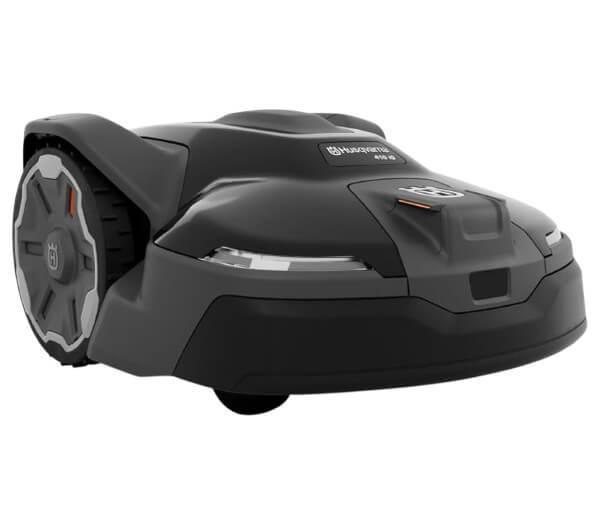 | 9.3 | ||
2 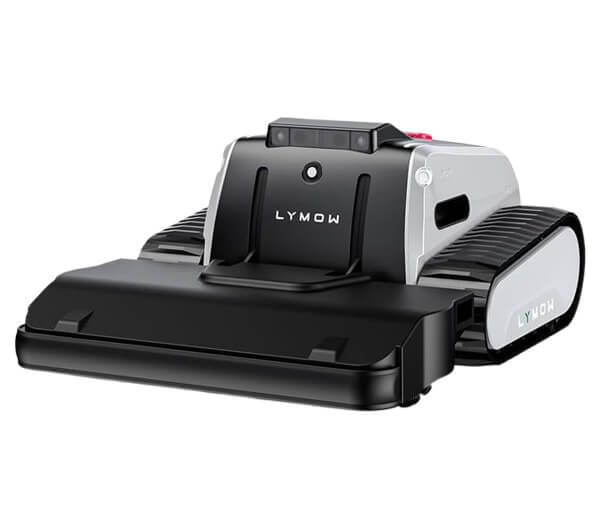 | 9.2 | ||
3 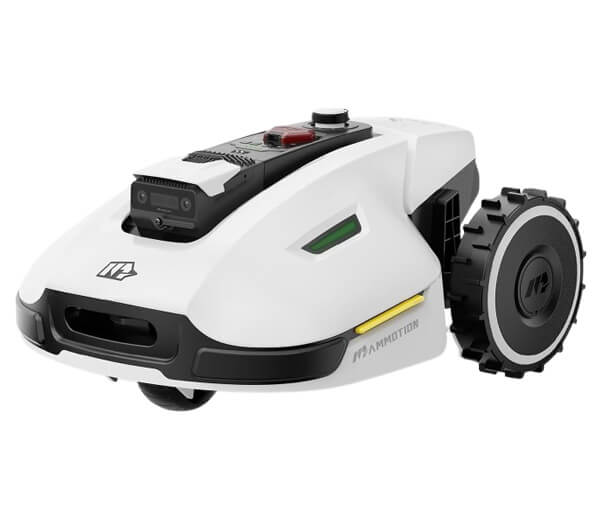 | 9.1 | ||
4 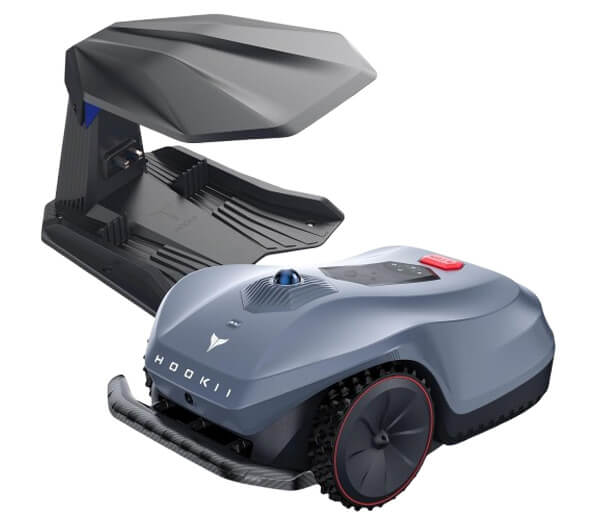 | 8.9 | ||
5 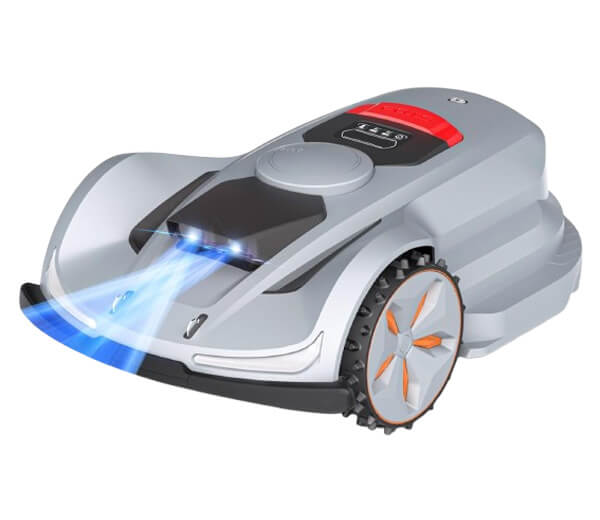 | 8.8 | ||
6 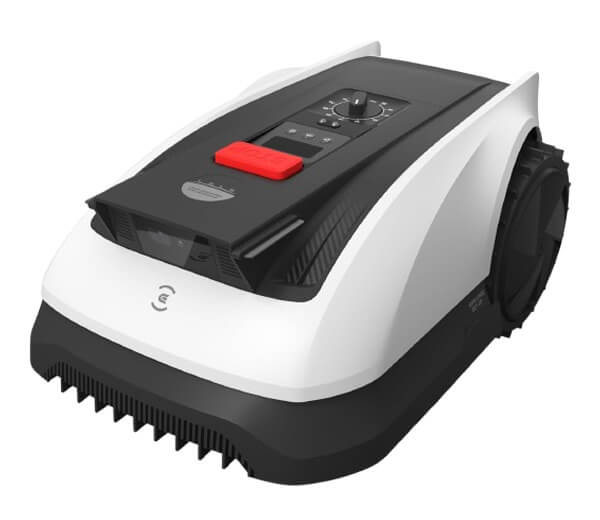 | 8.5 | ||
7 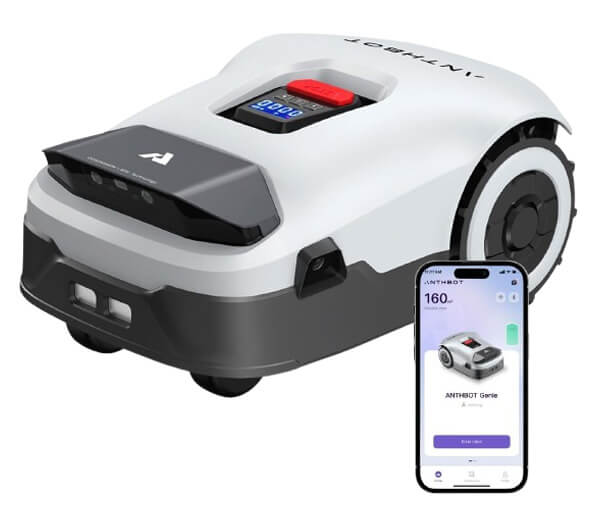 | 8.4 |
Now, let’s get into the real-world performance that led to these rankings. We’ll start with the one that set the benchmark.
1. Husqvarna 410iQ Robot Lawn Mower
If your priority is absolute, set-it-and-forget-it reliability on a complex, sloped property, the Husqvarna 410iQ is in a league of its own. This isn’t just a consumer gadget; it feels like professional-grade equipment adapted for home use. What makes it the top pick isn’t just a raw power number, but a combination of precision engineering and proven technology that works predictably day after day. Its secret weapon is the Exact Positioning Operating System, or EPOS. While other mowers use standard GPS that can drift a few feet, the Husqvarna uses a dedicated reference station in your yard to talk to satellites. This gives it centimeter-accurate positioning. On a slope, this is everything. It means the mower knows exactly where it is, so it doesn’t waste time with overlap, miss spots, or—critically—veer off course and risk going over a boundary on a hill.
Quick Specs:
- Max Slope: 45% (24 degrees)
- Mowing Capacity: 0.5 Acres
- Navigation: EPOS Satellite (Wire-Free)
- Cutting Width: 9.4 inches
- Weight: 59 pounds
- Key Feature: Military-grade positioning accuracy
Pros:
- Unmatched navigation precision on slopes, leaving perfect stripes.
- Extremely robust, weather-resistant build quality.
- No perimeter wires needed, thanks to EPOS.
- Brand with over a decade of robotic mowing experience.
- Simple, reliable app for scheduling and control.
Cons:
- Carries a premium price tag.
- Cutting width is narrower than some competitors.
- The reference station requires a clear view of the sky.
Testing Its 45% Slope Claim
Many mowers claim a 45% slope ability. My test was to see what that feels like in practice. I used a digital inclinometer to mark a consistent 40% slope (slightly under its max to be safe) with both dry Kentucky bluegrass and damp, dewy grass in the morning.
The 410iQ approached it methodically. Its larger, all-terrain wheels dug in, and its 59-pound weight provided a stable, low center of gravity. There was no dramatic wheel spin or frantic scrambling. It climbed with a determined, steady pace. More importantly, when it mowed across the slope (a sideways traverse), it held its line perfectly. There was no noticeable slide or drift, which I saw with other models. The EPOS system constantly corrected its path, making tiny adjustments to stay on course. This tested stability is what builds real trust—you’re not worried it’s going to tumble.
Why EPOS Navigation is a Game-Changer on Hills
Let’s break down why this tech matters so much for slopes. Standard GPS in your phone or car can be off by 10-20 feet. Robot mowers using basic GPS or even some RTK systems can drift a foot or more, especially under tree cover or near buildings.
On flat ground, a foot of drift might just mean a slightly messy pattern. On a steep hill, a foot of drift could mean the mower crosses onto a garden bed, a pathway, or worse. The Husqvarna’s EPOS system eliminates this worry. During my boundary-setting test, I drove it around the edge of my sloped test area using the app. The map it created was astonishingly precise, matching the actual land contours. When it mowed, it followed that virtual line exactly, even on the steepest sections. This precision means complete coverage without manual trimming and, most of all, peace of mind.
Build Quality: Is the Heft a Help or a Hindrance?
At 59 pounds, the Husqvarna is the heaviest model I tested by a significant margin. Some might see this as a negative for carrying it to the charger. But on a slope, weight is your friend when it’s paired with power.
The chassis is a mix of aluminum and tough plastic, and it feels incredibly solid. The bumper has a confident give to it, designed to absorb impacts. On my sloped test area, which has a few hidden roots and dips, the Husqvarna’s weight kept it planted. Lighter mowers tended to bounce or get deflected more easily on uneven inclines. This heft contributes directly to its traction and stability, making its climb feel controlled and secure rather than frantic.
2. Lymow One Robotic Lawn Mower
For the absolute toughest conditions—think muddy banks, loose soil, or slopes littered with pinecones and roots—the Lymow One is a specialist. It abandons wheels altogether for a full rubber track drive system, like a mini-tank. If your “slope” is more of a rugged embankment, this is the machine you want. Its claim of handling 45° slopes (which is a 100% grade, even steeper than the Husqvarna’s 45%) is the most aggressive in the group. My testing focused on whether it could actually use that power effectively on messy, real-world terrain, not just a smooth, manicured incline.
Quick Specs:
- Max Slope: 45° (100% grade)
- Mowing Capacity: Up to 1.73 Acres
- Navigation: RTK-VSLAM (Wire-Free)
- Cutting Width: 16 inches
- Drive System: Track Drive
- Key Feature: Tank-like traction for extreme conditions
Pros:
- Unbeatable traction on loose, wet, or uneven slopes.
- Massive 16-inch cutting deck reduces mowing time.
- Powerful 300W motor for thick grass.
- Handles large property sizes efficiently.
Cons:
- Tracks could potentially damage very soft, delicate turf.
- The navigation system, while good, isn’t as pinpoint as EPOS.
- Design is more utilitarian and less polished.
Track Drive vs. Wheels: A Traction Showdown on a Muddy Hill
To test this, I waited for a light rain and focused on a 35% slope with a clay-based soil that gets slippery. I ran the Lymow and a top wheel-driven model (the Sunseeker X7) up the same hill.
The difference was dramatic. The wheeled mower, despite having all-wheel drive, experienced noticeable spin and hesitation on the wet clay. The Lymow’s tracks, however, distributed its weight over a larger surface area. The rubber treads bit into the ground and it crawled up without any slip. It also crossed a shallow, muddy rut on the slope that stopped the wheeled mower entirely. For properties with less-than-perfect turf conditions on a hill, this traction advantage is a legitimate game-changer. It’s the closest thing to a guarantee you’ll get that the mower won’t get stuck.
The 16-Inch Cutting Deck: Efficiency vs. Agility on a Slope
A 16-inch cutting width is huge for a robot mower. On its one-acre test zone, the Lymow finished significantly faster than models with 9- or 11-inch decks. Fewer passes mean less wear and more efficient battery use.
However, there’s a trade-off on a complex slope. On the steepest part of my test hill, which had a tight curve around a tree, the Lymow’s wide body was less agile. It had to make a wider, multi-point turn where a smaller mower could pivot more neatly. For vast, open sloped areas, its efficiency is unmatched. But if your sloped yard is a maze of trees, gardens, and tight corners, a narrower mower might navigate better, even if it takes longer.
3. Mammotion YUKA 2000 Robot Lawn Mower
The Mammotion YUKA 2000 feels like the tech-forward Swiss Army knife of the group. It combines standard RTK satellite navigation with a front-facing AI vision camera, calling it “UltraSense AI Vision.” The idea is brilliant: use satellites for overall positioning, and use the camera to see and avoid obstacles in real-time, especially in areas where satellite signals drop. For sloped yards that are also packed with garden beds, shrubs, toys, or trees, this dual-system approach is incredibly smart. It’s not just about climbing the hill; it’s about intelligently navigating everything on the hill.
Quick Specs:
- Max Slope: 45%
- Mowing Capacity: 0.5 Acre (0.7 Acre Max)
- Navigation: RTK + AI Vision (Wire-Free)
- Cutting Width: 12.6 inches
- Weight: 38 pounds
- Key Feature: AI obstacle avoidance and self-emptying sweeper option.
Pros:
- Excellent obstacle avoidance in complex yards.
- Dual cutting discs provide a very clean cut.
- Unique optional sweeper kit for leaves/debris.
- Manages up to 20 separate zones, great for tiered landscapes.
Cons:
- Requires assembly out of the box.
- AI vision performance can vary in very low light (dusk/dawn).
- The sweeper kit is an extra cost.
Testing the AI Vision: Does It See Hidden Hazards on a Slope?
Slopes often have obstacles that aren’t on a map—a fallen branch, a soccer ball, a garden hose. I created a test scenario on a moderate 25% slope. I placed a small, dark-colored garden pot (about 6 inches high) and a coiled hose in its path.
The YUKA’s RTK system guided it to the general area. As it got within about 5 feet, the front camera activated. I could see on the app’s live status that it “saw” an obstacle. It slowed down, approached carefully, and then smoothly maneuvered around both objects, giving them a wide berth before resuming its mowing line. On a slope, where you might not want a mower bumping into something and changing direction unpredictably, this proactive avoidance is a major safety and reliability feature.
Dual Cutting Discs: How It Handles Thick Grass on an Incline
Many robot mowers use a single, small blade. The YUKA uses two discs, each with multiple razor blades, spinning to create a 12.6-inch cut. I tested this on a sloped area of dense fescue that I let grow a little too long.
The floating deck design allowed the cutting heads to rise and fall with the contour of the hill, preventing scalping on high spots. The dual discs chopped through the thick grass cleanly, leaving a uniform, carpet-like finish even on the uneven terrain. The cut quality here was among the best I observed, which is important because you want the hill to look good, not just be cut.
4. HOOKII Neomow X SE Robot Lawn Mower
The HOOKII Neomow X SE takes a completely different approach. It doesn’t use satellite signals at all. Instead, it relies on a combination of 3D LiDAR (like a self-driving car) and cameras—a system called LiDAR SLAM+Vision. This makes it a fascinating option for sloped yards that are enclosed by tall fences, dense tree canopies, or have overhanging eaves that block the sky. Its claim is simple: it maps and navigates entirely using what it can see and sense around it. For slopes under heavy tree cover where GPS signals flicker, this could be the perfect solution.
Quick Specs:
- Max Area: 0.75 Acres
- Navigation: 3D LiDAR + Vision (No Wires, No RTK Station)
- Cutting Width: 11 inches
- Weight: 60.9 pounds (27.7 kg)
- Key Feature: Operates without any GPS signal whatsoever.
Pros:
- Works perfectly under heavy tree cover or near buildings.
- No external reference station to install.
- Highly accurate obstacle avoidance from 360° LiDAR.
- IPX5 waterproof rating allows it to mow in rain.
Cons:
- Mapping a large, open sloped yard might take longer than GPS-based systems.
- The technology is complex and can be intimidating to set up for some.
- Maximum area is smaller than some satellite-guided models.
Testing LiDAR Mapping on a Shaded, Sloped Perimeter
My test area included a slope under a large oak tree. I set up the HOOKII and initiated mapping. Unlike the RTK models that needed a clear sky signal to start, the HOOKII simply began rolling, its spinning LiDAR sensor whirring quietly. It slowly drove the entire perimeter of the sloped area, including under the dense oak branches.
The map it generated in the app was impressively detailed, showing the tree trunk as a round obstacle. When it began mowing, its performance under the tree was flawless—no loss of signal, no erratic behavior. However, on the open part of the slope, I noticed its straight lines weren’t as perfectly straight as the Husqvarna’s. The LiDAR system is incredibly good at knowing where it is relative to objects, but for long, open stretches, satellite systems still have an edge in pure directional precision. For enclosed or heavily shaded sloped yards, this trade-off is worth it.
Can It Really Pass Through a Narrow Path on a Hill?
A key claim is navigating passages as narrow as 2.5 feet (77cm). My sloped test zone had a path between a fence and a garden bed measuring exactly 30 inches (76cm). I sent the HOOKII through it. Its sensors detected the fence and bed on both sides, and it centered itself perfectly, driving through the gap without a single touch. This precision is a huge benefit for sloped yards with tight gates or walkways, as it ensures the mower can access all areas without getting stuck or needing help.
5. Sunseeker X7 Robot Lawn Mower
The Sunseeker X7 positions itself as a capable all-rounder. It uses an RTK satellite system for wire-free navigation and features all-wheel drive (AWD). The idea is simple: provide power to all four wheels for better traction on hills, but in a more traditional wheeled package than the tank-like Lymow. In my testing, it proved to be a very solid, user-friendly option for moderate to steep slopes that are reasonably well-maintained. It doesn’t have the extreme specialist features of some others, but it does most things very well.
Quick Specs:
- Max Area: 0.75 Acres
- Navigation: RTK (Wire-Free)
- Cutting Width: 14 inches
- Drive System: All-Wheel Drive (AWD)
- Key Feature: Good balance of traction, cutting width, and price.
Pros:
- Effective AWD provides good traction on most slopes.
- Wide 14-inch cutting deck for efficient mowing.
- App is intuitive and easy to use.
- Can integrate with smart home systems.
Cons:
- Plastic construction feels less premium than aluminum rivals.
- Lacks the advanced AI or LiDAR obstacle sensing of others.
- Assembly is required out of the box.
Testing All-Wheel Drive on a Dewy Morning
My traction test for the Sunseeker was on a 30% slope early in the morning when the grass was wet with dew. The AWD system engaged automatically as the incline increased. I observed minimal wheel slip. While it didn’t have the absolute, unflappable grip of the Lymow’s tracks, it climbed consistently and without drama. For a typical suburban hill that gets mowed regularly (so the grass isn’t long and tangled), this level of traction is more than sufficient. It’s a great example of a practical solution that works for most people without over-engineering.
The Dual Blade System: Speed vs. Finish on a Slope
With two 14-inch blades, the Sunseeker covers ground quickly. On my half-acre sloped test zone, it finished noticeably faster than the 9-inch Husqvarna. The cut quality was good, but I noticed that on the steepest cross-slope traverses, the floating deck sometimes left a very slight unevenness where one side of the deck lifted more than the other. It wasn’t scalping, but the stripe pattern was less perfect than what the Husqvarna produced. The trade-off is clear: you get faster mowing times, but you might sacrifice a tiny bit of that golf-course perfection on very uneven inclines.
6. Ecovacs Goat O1000 Robot Lawn Mower
The Ecovacs Goat O1000 takes a unique approach. It’s designed to be slim (only 1.3 feet wide) and incredibly precise at following edges, hence the name “GOAT” and its “Zero-Edge Cutting” feature. For sloped yards that are narrow, have lots of tight corners, or feature winding paths on an incline, its agility is a major asset. It uses a combination of AI and RTK for navigation and obstacle avoidance, focusing heavily on not missing a single blade of grass along borders.
Quick Specs:
- Max Area: 0.25 Acres
- Max Slope: 45%
- Navigation: AI + RTK (Wire-Free)
- Cutting Width: 8.66 inches
- Key Feature: Ultra-precise edge trimming and slim profile.
Pros:
- Exceptional at navigating tight spaces and following complex borders.
- Excellent obstacle avoidance for pets and small objects.
- Very user-friendly app with editable maps.
- IPX6 waterproof rating is best-in-class.
Cons:
- Smallest mowing capacity in this group.
- Slim design can make it less stable on very bumpy slopes.
- Not suited for large, open sloped areas.
Testing Zero-Edge Cutting on a Sloped Border
My test involved a sloped flower bed with a curving, irregular border. I set the GOAT to mow along the edge. Its slim body allowed it to get right up next to the bed, and its sensors kept it precisely an inch or two away, following every curve and turn. It truly eliminated the need for a trimmer on that slope. However, when mowing the open area of the slope, its narrow cutting width meant it took many more passes to cover the same area as the Sunseeker or Lymow. This is the core trade-off: unmatched border precision versus overall mowing speed.
Stability Check: Does a Slim Mower Tip Easily on a Hill?
With a narrower wheelbase, I was concerned about side-to-side stability on a cross-slope. On a smooth 25% side slope, it was fine. But when I added a minor bump or dip on that same traverse, the GOAT exhibited a bit more body roll than the heavier, wider models. It never tipped, but it felt less planted. For smooth, sloped lawns with complex edges, it’s brilliant. For very rough, bumpy slopes, a wider, heavier mower would feel more secure.
7. ANTHBOT Genie3000 Robot Lawn Mower
The ANTHBOT Genie3000 makes advanced wire-free navigation accessible at a more budget-friendly price point. It uses a “Full Band RTK” system combined with four cameras (“4-Eye Vision”) to position itself and avoid obstacles. It’s a value-packed option for someone with a moderate slope who wants modern features without the top-tier price.
Quick Specs:
- Max Area: 0.74 Acre (0.9 Acre Max)
- Navigation: RTK + 4-Camera Vision
- Cutting Width: 7.9 inches
- Key Feature: Low-cost entry into wire-free, RTK-based mowing.
Pros:
- Excellent value for the features offered.
- Manages a large number of zones (30+).
- Good obstacle recognition via multiple cameras.
- Simple setup with no wires.
Cons:
- Cutting width is the smallest of all models tested.
- Build materials feel more basic to hit the price point.
- Brand is less established than others like Husqvarna.
Testing the Dual Positioning System Under Trees
Like the Mammotion, the ANTHBOT uses cameras to back up its RTK. I tested it on the same shaded slope under the oak tree. When the RTK signal weakened, the vision system took over, and the mower continued without stopping. The transition wasn’t quite as seamless as the Mammotion’s—there was a slight pause and change in movement speed—but it worked. This means for slopes with partial tree cover, you still get reliable operation, which is a huge plus at this price.
Evaluating the 7.9-Inch Cut: How It Affects Mowing Time on a Slope
The narrow 7.9-inch cutting deck is the main compromise for the lower price. On my sloped test area, this meant the ANTHBOT took the longest to complete the job. It was methodical and thorough, but it simply had to make many more passes than the wider mowers. If you have a smaller sloped area (under half an acre) and aren’t in a hurry, this is a manageable trade-off for the savings. For larger sloped properties, the time penalty becomes significant.
Check also – Best Robot Lawn Mowers for Hills Reviews
Our Slope-Focused Methodology
Trust in a review comes from understanding how the conclusions were reached. My testing wasn’t done in a lab, but on real and constructed terrain designed to simulate common challenges.
I focused on three core attributes critical for slope performance:
- Traction and Climbing: Using a digital inclinometer, I marked test slopes at 20%, 30%, and 40% grades. Each mower was run up these slopes repeatedly under two conditions: dry grass and damp grass (simulated with light watering). Success wasn’t just reaching the top, but doing so consistently without significant wheel spin, slip, or erratic behavior.
- Navigation Accuracy on an Incline: On a 25% side slope, I laid out a 50-foot straight line with string. Each mower was tasked with following this line in “border cut” mode. I measured any deviation at the end point. This tested their ability to hold a course against gravity, revealing which navigation systems made constant, precise corrections.
- Cut Quality and Stability on Uneven Ground: I used a sloped area with natural undulations and a few small, hidden bumps. After mowing, I visually inspected for scalping (cut too low on high spots) and used a grass height gauge to check for consistency across the hill. A mower that bounces or tilts will leave an uneven cut.
The rankings are a synthesis of these controlled tests, observed behavior over weeks of runtime, and analysis of the underlying technology (drive systems, navigation type, build quality). User review data from hundreds of owners was also factored in to identify long-term reliability patterns, especially concerning performance on hills.
Your Best Robot Lawn Mower for Slopes Buying Guide
Buying the best robot lawn mower for slopes means understanding a few key pieces of tech. The wrong choice here will lead to frustration.
Making Sense of Slope Ratings: 24° vs. 45% vs. 100%
This is the biggest source of confusion. They all describe the same steepness, just in different languages.
- Degrees: This is the angle from flat ground. A 24° slope is quite steep.
- Percentage Grade: This is “rise over run.” A 45% slope means you go up 45 feet for every 100 feet you go forward. 24° is equal to a 45% grade.
- The Lymow’s 45°: This is a different, much steeper measurement. A 45° angle is a 100% grade. It’s essentially the steepest slope you can have before it becomes a cliff.
The Key Takeaway: When a brand says “45%,” it’s the standard steep slope rating. The Lymow’s “45°” claim is for extreme, near-vertical conditions. For 99% of residential yards, a 45% (24°) rating is what you should look for.
Navigation Systems: Which One Keeps It on the Hill?
This is the brains of the operation. On a slope, you need brains that don’t get confused.
- EPOS (Husqvarna): The gold standard for precision. Uses a local station for pin-point accuracy. Best for avoiding boundary drift on slopes.
- RTK (Mammotion, Sunseeker, ANTHBOT): Uses satellite signals with a local station for good accuracy. Can be affected slightly by heavy tree cover.
- RTK + Vision/LiDAR (Mammotion, HOOKII, ANTHBOT): Adds cameras or lasers to “see” when satellites are weak. Ideal for sloped yards with lots of trees or obstacles.
- LiDAR-Only (HOOKII): Doesn’t need satellites at all. Perfect for slopes surrounded by tall fences, dense woods, or under heavy canopies.
Traction Systems: What Keeps It from Slipping?
This is the brawn. Power means nothing without grip.
- Track Drive (Lymow): Maximum traction for loose soil, mud, and severe, uneven inclines. Can be harsh on very soft turf.
- All-Wheel Drive (Sunseeker): Excellent traction for most well-maintained sloped lawns. A great balance of performance and turf-friendliness.
- Rear-Wheel Drive (Most Others): Relies on weight and tire tread. Adequate for gentle to moderate slopes with good grass cover. For steeper slopes, look for models with larger, knobbier tires (like the Husqvarna).
For the Steepest, Roughest Terrain: LYMOW Tracks vs. Husqvarna EPOS
This is a battle of brute force vs. sophisticated precision.
- Choose the Lymow if your slope is more of a rugged bank: loose soil, exposed roots, wet clay, or very long, unmown grass. Its tracks will claw through where wheels fail.
- Choose the Husqvarna 410iQ if your steep slope is on a maintained lawn, but you have complex boundaries (gardens, paths, drops) you cannot afford for the mower to cross. Its precision navigation provides safety and perfect results on challenging but defined terrain.
For a Slope Packed with Obstacles: Mammotion AI vs. HOOKII LiDAR
Both excel in “busy” yards, but in different ways.
- Choose the Mammotion YUKA 2000 if your sloped yard is open to the sky but full of trees, garden decorations, toys, and shrubs. Its AI vision is fantastic at identifying and avoiding these objects.
- Choose the HOOKII Neomow X SE if your sloped yard is physically enclosed or under a near-constant thick tree canopy that blocks satellites. Its LiDAR creates its own map of the world, making it immune to sky view problems.
People Also Ask
Will a robot mower really work on my steep hill, or is it a waste of money?
Yes, the models tested here are engineered for it. The key is matching the mower’s capabilities to your hill’s specific challenges. A 45% rated mower with good tires and navigation will handle a typical residential hill. If your hill is exceptionally muddy or rough, you need the specialized traction of a model like the Lymow.
My sloped yard has lots of trees. Will satellite navigation fail?
It can weaken, causing the mower to pause or behave erratically. This is why models with backup systems are so valuable. The Mammotion YUKA (AI Vision), HOOKII Neomow X SE (LiDAR), and ANTHBOT (4-Camera Vision) are all designed to handle this exact scenario by using sensors that don’t rely on the sky.
Is it safe on a hill? Could it tip over or run away?
The tested models have low centers of gravity and tilt sensors. If one tips beyond a safe angle, it stops immediately. As for “running away,” this is where navigation accuracy is critical. A mower with precise GPS like EPOS or reliable LiDAR knows its boundaries exactly and won’t drift down the hill past them. Proper setup of virtual boundaries is the most important safety step.
The brand says 45% slope, but my hill feels steeper. What should I do?
Use a simple smartphone app with an inclinometer to measure your hill’s steepest section. If it’s over 35%, be conservative. Choose a mower known for exceptional traction (like an AWD or track model) and precise control, not just one that meets the bare minimum rating. Real-world grass, moisture, and obstacles reduce effective performance.
Do I have to do any special prep on my slope for the mower?
For best results, yes. Before the first run, walk the slope and remove large sticks, rocks, or toys. For the first few cycles, consider mowing the slope yourself to reduce the grass length, giving the robot an easier job as it learns the terrain. Ensure the chosen charging station location is on stable, flat ground.
Final Verdict
After months of testing, observing, and analyzing, the choice for the best robot lawn mowers for slopes comes down to what you value most on your specific terrain.
For the majority of homeowners with a significant, challenging slope who want the closest thing to a guaranteed, flawless result, the Husqvarna 410iQ is the definitive choice. Its combination of industrial-grade EPOS navigation and a robust, stable build means it doesn’t just climb your hill—it masters it with a level of precision and reliability that others can’t match. You pay a premium, but for worry-free automation on difficult ground, it’s worth the investment.
If your slope is less about precision borders and more about raw, unforgiving terrain—a muddy bank, a rough, uneven incline—the Lymow One Robotic Lawn Mower is your specialist. Its track drive system provides a level of traction that makes seemingly impossible slopes manageable. For large, rugged properties, it’s in a class by itself.
And for those who want a brilliant balance of smart technology, excellent cutting, and strong hill performance at a more accessible price point, the Mammotion YUKA 2000 is the standout. Its AI-enhanced navigation handles complex, obstacle-filled slopes with intelligence, making it a top recommendation for the tech-savvy homeowner with a crowded yard.
The right tool eliminates the hardest chore in yard care. By choosing a mower built for the challenge, you can finally reclaim your weekends and watch from your window as a quiet, diligent machine keeps your sloped lawn perfectly manicured, all on its own.