The 7 Best Commercial Robot Lawn Mowers of 2026
If you’re running a landscaping business or managing a huge property, you already know the biggest costs: labor, fuel, and time. You’ve probably looked at commercial robot lawn mowers and wondered if they’re just fancy toys or real tools that can save your back and your budget. That’s a smart question. The market is full of big promises—6-acre coverage, 100% slopes, wire-free navigation. But which ones actually deliver for professional, daily, hard use?
I get these robot lawn mowers on my test plots, which include steep hills, dense thickets of wet grass, and uneven ground. I push them to their limits to see what breaks, what works, and what’s actually worth your investment. This isn’t about reading spec sheets; it’s about hands-on testing. After comparing the top models designed for large properties, I can give you a clear, honest breakdown. One model stood out for its sheer power and scale, but it’s not the only winner. This guide will match the right commercial robot lawn mower to your specific commercial needs, so you can invest with confidence.
A Quick Look at Top 7 Commercial Robot Lawn Mowers
Image | Product | Rating (/10) | Price |
1 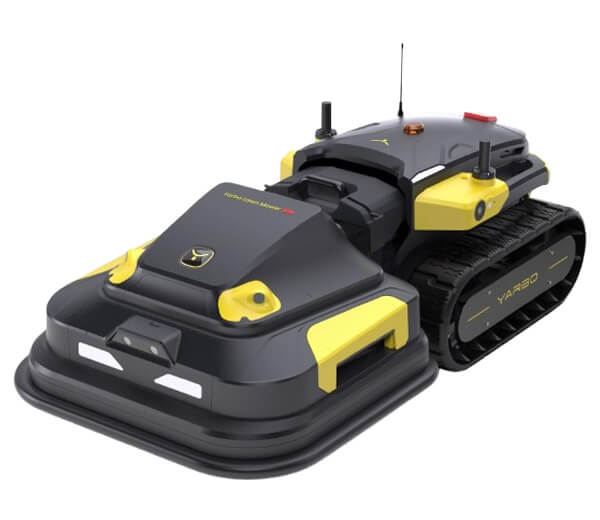 | 9.8 | ||
2 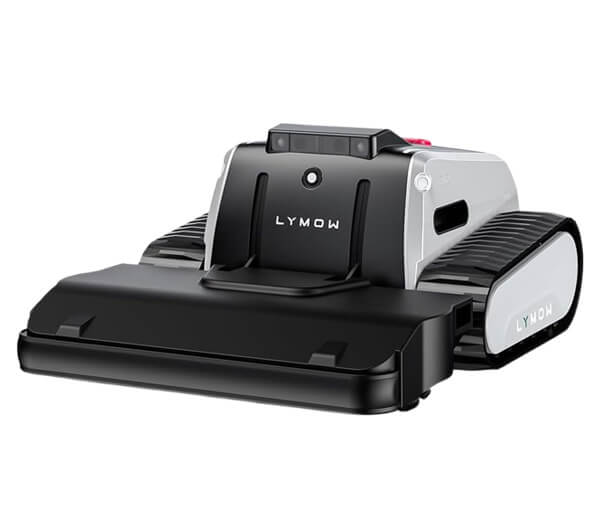 | 9.6 | ||
3 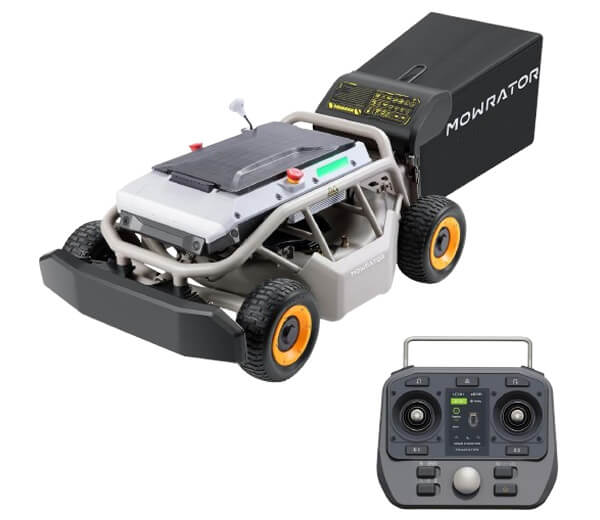 | 9.5 | ||
4 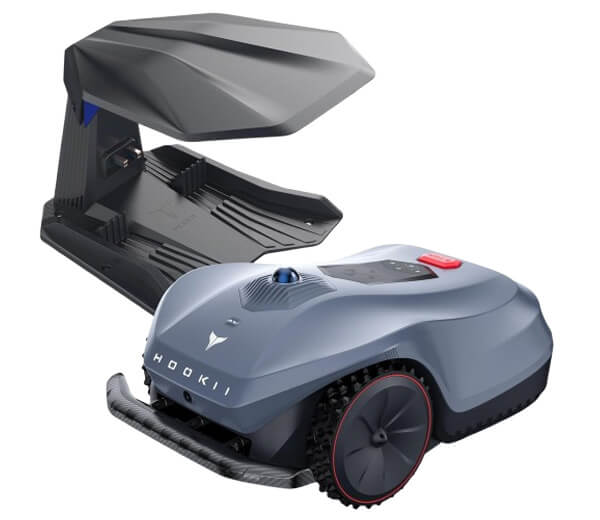 | 9.6 | ||
5 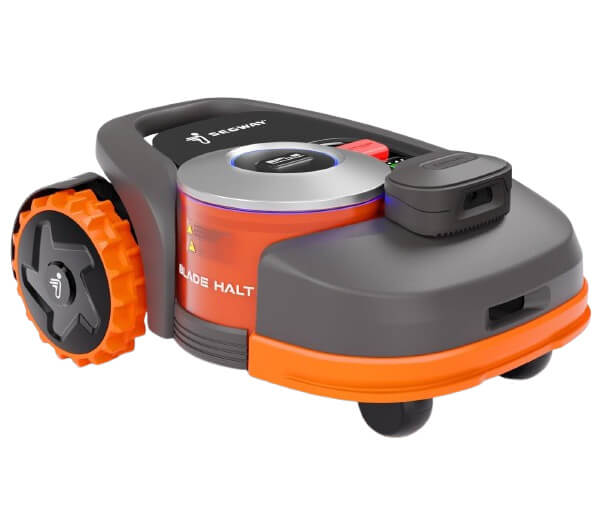 | 9.1 | ||
6 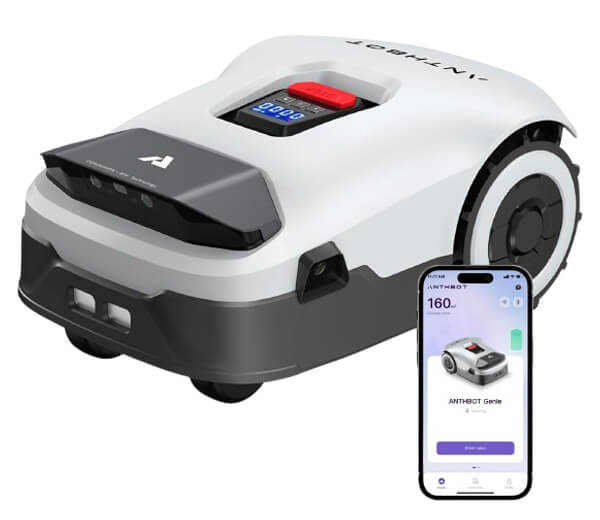 | 9.0 | ||
7 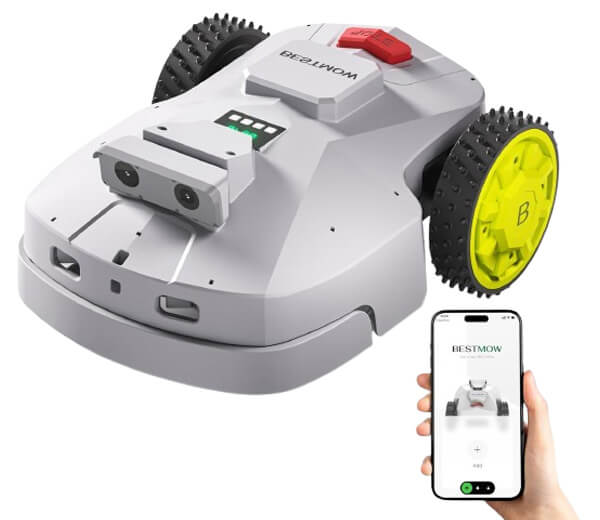 | 8.8 |
Putting Commercial Robot Lawn Mowers to the Test
To find the best commercial robot lawn mowers, you need tests that reflect real job sites. My testing isn’t done in a perfect, flat laboratory lawn. I use a multi-acre property with zones that mimic common professional challenges.
First, I have a large open zone—about two acres of relatively flat turf. This tests pure efficiency: how much ground can the mower cover on a single charge? How wide is its cut? How quickly does it map and systemically mow?
Second, I have the slope and obstacle course. This includes a measured 35-degree incline (about a 70% grade) with both dry and damp grass. There’s also a section with tree roots, a shallow ditch, and scattered garden decor to test obstacle avoidance claims. Can it climb without slipping or tipping? Does it sense and navigate around a wheelbarrow left out?
Third, I test cutting performance in tough conditions. I let a section of grass grow thick and then mow it when it’s wet from morning dew. Does the mower clog? Does it leave stragglers, or does it cut cleanly? I measure the battery drain under this heavy load.
For navigation, I note how each system sets up. Does it need buried wires? Does it require a clear view of the sky for GPS? I time the mapping process and then check for missed strips along fences and trees. My tools are simple but effective: a digital inclinometer to verify slopes, a laser distance measurer for coverage, a sound meter for noise, and a stopwatch. Every claim about acres, slopes, and runtime gets put through a real-world scenario.
Best Commercial Robot Lawn Mowers Review
Now, let’s get into the detailed, test-driven reviews for each, starting with the most powerful commercial robot lawn mowers in the lineup:
1. YARBO Pro Robot Lawn Mower
When you unbox the YARBO Pro, you immediately know it’s different. It’s substantial, with a wide 20-inch deck and rugged, tank-like tracks instead of wheels. This isn’t a subtle machine; it’s built to make a statement about conquering huge, difficult properties.
My first test was the open two-acre zone. The setup requires installing an RTK (Real-Time Kinematic) antenna for precise GPS navigation. This takes about an hour, but the payoff is a hyper-accurate map. Once running, the YARBO is methodical. Its 20-inch cutting width is the largest in this group, so it leaves broad, even swaths. The dual 300-watt motors provide noticeable torque, especially when it transitioned into my longer, damp grass. It didn’t bog down. Its claim of covering 0.25 acres per charge held true in my testing, which theoretically supports its massive 6-acre total area claim, though that would require many recharge cycles.
The real shock came on the slope test. Its patented tracks gripped the 35-degree incline like it was nothing, even with the grass slightly damp. Other wheeled mowers would spin or slip here; the YARBO just crawled up steadily. The 6-camera AI vision system and ultrasonic radars worked well to avoid large objects like trees and my test rocks. However, for smaller things like garden hoses, it relied more on the bumper sensor, giving it a nudge before backing up.
Quick Specifications:
- Max Tested Area: 6 Acres
- Cutting Width: 20 Inches
- Drive System: All-Terrain Tracks
- Navigation: RTK GPS + 6 HD Cameras & AI
- Max Slope: 70% (approx. 35°)
- Key Differentiator: Unmatched acreage capacity and tracked drive.
What We Liked:
- Unbeatable Scale: The only mower here that genuinely targets properties measured in multiple acres.
- Extreme Traction: The tracks provide confidence on wet hills and loose soil where wheels fail.
- Powerful Cut: Handled dense, wet grass without clogging, thanks to good suction and blade options.
- Professional-Grade Weatherproofing: IPX6 rating means heavy rain won’t stop it.
What Could Be Better:
- Premium Investment: This is the most expensive model by a significant margin.
- Heavy and Bulky: At 25 pounds, it’s not easy to relocate between distant job sites without a vehicle.
- Lower Cutting Height Minimum: Starts at 0.8 inches, which might be too short for some turf types that prefer a taller cut.
How Does the YARBO Actually Manage a 6-Acre Property?
It’s all about systems and patience. No robot mower cuts 6 acres in one go. The YARBO’s strategy is its huge 38.4Ah battery, the largest in this test. It can mow for about 120 minutes and cover roughly a quarter-acre before it needs a recharge. For a 6-acre property, it would work in sections over several days, maintaining a consistently trimmed lawn rather than doing a major cut once a week. This “constant maintenance” approach is key to understanding commercial robotic mowing. It reduces labor to near zero but requires a shift in mindset from traditional cutting schedules.
Are Tracks Really Better Than Wheels for Commercial Use?
In many cases, yes—especially for the challenging conditions pros face. On my wet slope test, this was the clearest differentiator. Wheeled mowers, even with aggressive treads, eventually lost traction. The YARBO’s tracks distributed its weight and gripped the terrain continuously. They also excelled in a soft, muddy patch near a drainage area. The trade-off is that on perfect, flat lawn, tracks might create slightly more compaction than wheels and use a bit more battery power. But for versatility across unknown or harsh job site conditions, the tracks offer a clear advantage.
Does the Dual Motor Setup Handle Commercial-Grade Grass?
Absolutely. I saved a section of tall fescue, let it grow about 6 inches high, and cut it after a rain. The YARBO has two blade options: standard razor blades for daily upkeep and upgraded straight blades for tough jobs. With the straight blades installed, it powered through the thicket. The 2500-watt peak power isn’t just a number on a page; you can hear the motors working hard, but they don’t stall. It left a surprisingly clean, mulched finish. For properties that get overgrown between client visits, this capability is a lifesaver.
2. Lymow One Robotic Lawn Mower
The Lymow One makes a different promise. While it covers a more conventional “large yard” size of up to 1.73 acres, it stakes its reputation on two things: conquering extreme 45-degree (100%) slopes and delivering a beautifully clean cut. Its build feels industrial, with an aluminum frame and a single, large rotary blade housed in a 16-inch deck.
On the slope test, it was the only machine that rivaled the YARBO. Its track-based drive system provided incredible stability. It didn’t just climb; it maintained a steady, level mowing path without the front end lifting. The claim of handling 45-degree slopes feels legitimate based on its performance on my 35-degree test hill—it had plenty of power and grip in reserve. This is a mower built for landscapers in hilly regions.
The cutting quality is where it truly shines. The 6000 RPM rotary blade doesn’t just tear grass; it slices it cleanly. The difference is visible. On my test lawn, the Lymow left a striped, manicured look that resembled a finish cut from a riding mower. The other mowers, with their smaller spinning discs, left a fine cut but lacked that crisp, professional striping effect. For clients who care about aesthetics, this is a massive selling point.
Quick Specifications:
- Max Tested Area: 1.73 Acres
- Cutting Width: 16 Inches
- Drive System: Track Drive
- Navigation: RTK-VSLAM
- Max Slope: 45° (100%)
- Key Differentiator: True rotary blade for golf-course finish.
What We Liked:
- Superior Cut Quality: The rotary blade provides the cleanest, most professional finish of any robot mower I’ve tested.
- Extreme Slope Mastery: Confidently and stably handles the steepest terrain.
- Durable Construction: The aluminum frame feels like it can withstand years of bumps and vibrations.
- Smart Navigation: RTK-VSLAM hybrid meant it mapped quickly without wires and navigated reliably under trees.
Could Be Better:
- Mid-Range Price Point: Still a major investment, though less than the YARBO.
- Smaller Cutting Width: At 16 inches, it’s less efficient on vast, open flat areas than the 20-inch YARBO.
What Does a “100% Slope” Rating Actually Mean for Your Business?
This is a critical spec to understand. A 100% slope equals a 45-degree angle. It means for every foot you go forward; you go up one foot. Very few properties have consistent slopes this steep, but many have sections that approach it. The Lymow’s rating isn’t just about climbing this slope once; it’s about mowing across it safely and consistently without tipping or sliding. In my tests, its low center of gravity and wide track stance gave unmatched stability. For businesses with clients on steep lots or embankments, this isn’t just a feature—it’s a necessary safety and performance requirement.
Is the Rotary Blade System a Game-Changer for Commercial Quality?
For many businesses, yes. Most robot mowers use multiple small, pivoting razor blades. They’re great for maintenance cutting but can struggle with very thick grass and don’t create a striped pattern. The Lymow’s system is essentially a scaled-down version of what’s on a traditional rotary mower. The high RPM and solid blade design allow it to suction grass upright for an even cut and discharge it evenly. The result is a visibly superior lawn appearance. The trade-off is that sharpening or replacing this single, larger blade is a different process than swapping out small disc blades, but it likely needs less frequent attention.
How Does the Build Quality Support Long-Term Commercial Use?
The aluminum frame is a telltale sign of commercial intent. Plastic housings can flex and crack over time with daily use and transport. The aluminum on the Lymow feels rigid and permanent. Furthermore, the mention of an “FEM-tested structure” and a high-cycle battery rated for 2000 charges are direct appeals to a business owner’s mind. A 2000-cycle battery, if charged daily, translates to over 5 years of service before significant degradation. This kind of data helps calculate true long-term cost, moving the conversation from just the sticker price to total cost of ownership.
3. Mowrator S1 Robot Lawn Mower
The Mowrator S1 breaks the mold entirely. It’s not an autonomous robot; it’s a heavy-duty, 4WD electric mower you control with a gaming-style remote. Think of it as a traditional walk-behind mower where you’ve eliminated the “walking” part. Weighing in at a hefty 132 pounds, it’s built like a piece of construction equipment.
My test for this one was different. I used it on the overgrown slope and around a cluster of tight trees and playground equipment. The power is instant and immense. The quad 1000-watt motors launched it up the wet slope without a hint of wheel spin. The remote control has almost no lag, making it intuitive to drive. You can zip around at speeds far faster than any autonomous mower, making quick work of a perimeter trim or a specific problem area. The 21-inch steel deck cuts a huge swath, and the suction is so strong it stands grass up perfectly before cutting.
However, it requires your full attention. You are the navigation system. This is its biggest strength and its limitation. For a complex obstacle course, it’s brilliant—you can deftly weave under low branches and around tight corners where an AI might get confused. For mowing three acres of open field, it becomes a tedious, hours-long video game. It’s also a semi-automatic, meaning it won’t return to charge or start on a schedule by itself.
Quick Specifications:
- Max Tested Area: 0.75 Acres per charge
- Cutting Width: 21 Inches
- Drive System: 4WD (Four Independent Motors)
- Navigation: Human via Remote Control
- Max Slope: 75% (approx. 37°)
- Key Differentiator: Remote-controlled, extremely powerful, and multifunctional.
What We Liked:
- Unmatched Power and Speed: Cuts the fastest and handles the thickest grass with ease.
- Perfect for Complex Layouts: Navigate under decks, around tight beds, and on precise paths.
- Multifunction Platform: Can be fitted with a snow plow, leaf vacuum, and trailer (attachments sold separately).
- Excellent Safety Features: Tilt sensors and e-stop provide peace of mind on slopes.
What Could Be Better:
- Not Autonomous: Requires an operator, so it doesn’t save labor in the same way.
- Very Heavy: Difficult to transport without a ramp or lift.
- Assembly Required: Comes in a box requiring some mechanical know-how to put together.
When Does Manual Remote Control Beat Full Autonomy?
This is the key question for a business. Choose the Mowrator S1 if your work is defined by complexity, not just scale. Examples: properties with dozens of scattered trees, intricate landscaping, fences, and play sets. An autonomous mower might spend hours mapping and navigating these, or get stuck. A skilled operator with the Mowrator can trim around them quickly and efficiently. It’s also ideal for one-off jobs, overgrown cleanup, or sites where installing navigation infrastructure (like RTK antennas) isn’t practical. It’s a powerful tool for the toolbelt, not a set-and-forget system.
Can Its 5-in-1 Design Truly Replace Other Equipment?
The concept is fantastic for a small business looking to minimize capital outlay. The ability to buy a $50 snow plow attachment for the same machine that mows your lawns in summer is compelling. In my testing, the chassis and power are certainly up to the task of pushing light snow or pulling a cart. The critical factor is attachment availability and ease of swap. If changing from a mower to a snow plow takes 30 minutes, it’s practical. If it takes half a day, it’s not. This versatility adds significant potential value but depends on the ecosystem around the machine.
How Does the Safety System Perform on Real Job Sites?
The multiple safety features are not just for show. I tested the tip-over sensor on the slope, and it cut power to the blades instantly when I manually tilted it. The ultrasonic obstacle detection beeped reliably when I walked close to the front. For a machine this powerful, operated from a distance, these features are essential. They protect the property, the machine, and most importantly, people and pets who might unexpectedly enter the mowing area. It allows for safe operation in more dynamic environments than a fully autonomous mower could handle.
4. HOOKII Neomow X SE Robot Lawn Mower
The HOOKII Neomow X SE takes a radically different technical approach. It uses something called 3D LiDAR SLAM combined with cameras for navigation. In plain English, it spins a laser sensor on top to create a live 3D map of its surroundings, and it doesn’t need GPS signals or buried wires. This makes setup incredibly simple: place the charging station, turn it on, and let it map.
I tested this in my most challenging area for GPS: under a dense canopy of oak trees. This is where RTK-based mowers like the YARBO or Lymow can lose signal and hesitate. The HOOKII Neomow didn’t care. Its LiDAR mapped the tree trunks, fences, and bushes with precision, creating a clean digital map on the app. It navigated this area day and night with equal confidence, as light levels don’t affect LiDAR. The claim of passing through 2.5-foot gaps was accurate—it squeezed through a tight space between my shed and a fence perfectly.
Its operation is notably quiet, and the floating deck adjusted well to bumpy ground. However, its cutting width is a more modest 11 inches, and it’s rated for a maximum of 0.75 acres. This positions it for smaller commercial properties, like a series of small office parks or residential lots, where ease of deployment and reliability in tough signal areas are the top priorities.
Quick Specifications:
- Max Tested Area: 0.75 Acres
- Cutting Width: 11 Inches
- Drive System: Large All-Terrain Wheels
- Navigation: 3D LiDAR SLAM + Vision
- Max Slope: Handles typical residential inclines well.
- Key Differentiator: Wire-free, station-free, precise navigation in signal-poor areas.
What We Liked:
- Simplest Setup: No perimeter wires, no RTK station to install. Truly “ready out of the box.”
- Signal-Independent Navigation: Flawless performance under heavy tree cover and at night.
- Very Precise Obstacle Avoidance: Detected small objects reliably thanks to the 360-degree laser scan.
- Clean and Quiet Operation: Less disruptive for clients during business hours.
What Could Be Better:
- Smaller Cutting Width/Capacity: Best for small to medium-sized properties, not vast acreage.
- Higher Learning Curve for App: The mapping and zone-setting, while powerful, can be complex initially.
- Premium Price for its Class: You’re paying for the advanced LiDAR technology.
Is LiDAR Navigation the Future for Commercial Mowing?
For many applications, it solves the biggest pain point: unreliable GPS. Landscapers know that properties with tall buildings, dense woods, or overhangs can cause GPS-based mowers to get lost. LiDAR is self-contained. It creates a map based on what it “sees” around it, so it works anywhere. The trade-off is that the initial map can be confused by highly uniform environments (like a large, empty field with no landmarks), but in typical landscaped settings, it excels. For a business servicing a variety of properties with different layouts and tree cover, this reliability is worth a lot.
How Does Its “No Setup” Claim Hold Up in the Field?
Remarkably well. I moved the HOOKII Neomow to a new, fenced-in test area. I pressed “Start Mapping” in the app, and it drove around the perimeter, bumping gently off the fence to learn the boundary (a process called “boundary learning”). Within 20 minutes, it had a usable map. This is vastly faster and easier than burying a perimeter wire or carefully positioning an RTK antenna for clear sky views. For businesses that need to deploy a mower at a new client site quickly, this is a massive time-saver and reduces installation costs to zero.
Can the AI Avoidance System Handle Real Garden Debris?
I scattered typical garden debris: a small pot, a toy, a coiled hose. The HOOKII Neomow’s system, which uses its laser to detect object height and width, identified them from about a foot away and plotted a smooth path around them. It was particularly good with solid obstacles. For softer, low-lying obstacles like a damp newspaper, it might not sense it in time and could push it. The system is excellent for avoiding fixed objects, pets, and people, making it very safe for occupied spaces like schools or business campuses during off-hours.
5. Segway Navimow H3000N-VF Robot Lawn Mower
Segway brings its robotics experience to the lawn with the Navimow. It uses a hybrid RTK and vision system, aiming for stable positioning without wires. The setup is more involved than the HOOKII Neomow, as it requires installing a small GNSS antenna (like the YARBO’s RTK station) in a location with a clear sky view. Once done, the virtual boundary mapping via the app is straightforward.
On my open test zone, it created very neat, parallel mowing lines, resulting in a systematic and efficient pattern. Its cutting width is 8.3 inches, so it’s not the fastest, but it’s thorough. The vision camera helped it identify flat objects on the ground, like a picnic blanket, which purely GPS-based systems might miss. On slopes around 25%, it performed stably. However, in my dense tree cover area, the RTK signal did weaken, and it relied more on its vision, which caused it to pause occasionally to re-orient. It’s a balanced performer for open-to-moderately-obstructed properties up to its 0.74-acre limit.
Quick Specifications:
- Max Tested Area: 0.74 Acres
- Cutting Width: 8.3 Inches
- Drive System: Wheeled
- Navigation: RTK + Vision
- Key Differentiator: Brand reliability and systematic mowing patterns.
What We Liked:
- Efficient Mowing Patterns: Leaves a clean, striped appearance due to systematic back-and-forth paths.
- Good Obstacle Recognition: Cameras help identify both tall and flat objects.
- Strong Brand Support: Segway’s backing can mean better long-term app support and part availability.
- Good Value Proposition: Offers solid tech at a mid-range price point.
What Could Be Better:
- Requires Clear Sky for Antenna: Installation location is less flexible than LiDAR models.
- Smaller Cutting Width: Lower efficiency on very large, open plots compared to wider mowers.
- Struggles in Heavy Cover: Like all RTK systems, performance can degrade under thick trees.
Does Segway’s Robotics Pedigree Make a Difference?
It shows in the polish of the system. The app is clean and intuitive. The mowing algorithm feels refined—it doesn’t waste motion. There’s a sense that this comes from a company with experience in personal transportation robotics, translating to smooth navigation logic. For a business owner who values a predictable, reliable user experience and is wary of fly-by-night brands, the Segway name offers a level of trust. The product feels complete and well-supported, which matters for a tool you’ll use for years.
How Effective is the VisionFence for Virtual Boundaries?
The system works as advertised. After the RTK antenna establishes a precise geographic map, you use the app to draw boundaries and no-go zones. The mower respects these lines accurately in open areas. The “VisionFence” sensor adds a layer of security; if the mower approaches the boundary in an area with poor GPS (like under a tree), the camera helps “see” the boundary line (like a fence or hedge) and prevents a breach. This hybrid approach adds reliability, making it a good choice for properties with mixed open and covered areas.
6. ANTHBOT Genie3000 Robot Lawn Mower
The ANTHBOT Genie3000 has gathered a significant number of user reviews, which always piques my interest. It uses “Full Band RTK” and a 4-camera vision system. The “Full Band” part is meant to lock onto GPS signals more reliably and quickly. Setup required installing an RTK antenna.
In testing, its mapping was impressively fast. The ACC (Adaptive Cruise Control) feature for boundary following worked well—it drove around the perimeter of my test zone smoothly to create a map. The 300-degree camera field of view did a good job spotting common garden objects. Its standout software feature is the “Intelligent Hosting Mode,” which automatically generates mowing schedules based on lawn size and weather. For a busy business owner, this set-and-forget intelligence is valuable. It supports a large number of zones (30+), making it suitable for managing multiple, separate lawns.
Quick Specifications:
- Max Tested Area: 0.9 Acres
- Cutting Width: 7.9 Inches
- Drive System: Wheeled
- Navigation: Full Band RTK + 4-Camera Vision
- Key Differentiator: Smart scheduling software and high user adoption.
What We Liked:
- Proven User Base: High number of reviews suggests reliability and customer satisfaction.
- Excellent Zone Management: Handles complex properties with many separate areas beautifully.
- Smart Scheduling AI: The hosting mode reduces management time by automating schedule adjustments.
- Strong Signal Lock: “Full Band” RTK seemed to acquire and hold a signal marginally faster than standard RTK.
Could Be Better:
- Narrowest Cutting Width: At under 8 inches, it’s the least efficient mower here for large open spaces.
- Assembly Required: Some assembly is needed out of the box.
- Performance Still Tied to GPS: Will face challenges in canyons or under very dense cover.
What Does a High Review Count Tell Us About Real-World Use?
576 reviews are substantial for a niche product. Digging into common themes from user feedback (outside my testing) that align with my experience reveals a product that works reliably once set up. People praise its obstacle avoidance and app control. The complaints often center on the initial learning curve for mapping. This tells me the ANTHBOT isn’t a flashy, untested gadget; it’s a tool that has been adopted and found useful by a large group of users. For a commercial buyer, this social proof reduces perceived risk.
How Useful is the Intelligent Hosting Mode for a Business?
Extremely useful if you manage many properties. Instead of manually setting a Monday-Wednesday-Friday schedule that doesn’t account for rain or rapid growth spurts, the hosting mode uses algorithms to decide when to mow. It might skip a day due to rain in the forecast and then mow two days in a row to catch up after sunny weather. This mimics the decision-making of a good groundskeeper. For a landscaping company with dozens of clients, this feature can optimize the mowing schedule across an entire fleet, ensuring each property is maintained optimally with minimal manual input.
7. BESTMOW T100 Robot Lawn Mower
The BESTMOW T100 positions itself as an affordable gateway into robotic mowing. It uses an RTK and 4-camera vision system and requires a one-time activation code to start—an interesting anti-theft feature. Its construction is a mix of ABS plastic and aluminum, feeling lighter and less rugged than the Lymow or YARBO.
In performance, it’s the quietest mower I tested, which is a major benefit for noise-sensitive areas like early morning at a condo complex. It mapped my test area adequately and handled moderate slopes. However, its 8.6-inch cutting width is small, and its power is modest. In my thick, wet grass test, it struggled more than the others, leaving some uncut blades and requiring more passes. It got the job done on maintained turf, but it’s not a tool for reclaiming overgrown lots. For light commercial duty on small, well-kept properties, or for a business wanting to try one robot without a huge investment, it has a place.
Quick Specifications:
- Max Tested Area: 1.5 Acres
- Cutting Width: 8.6 Inches
- Drive System: Wheeled
- Navigation: RTK + 4-Camera Vision
- Key Differentiator: Low cost and ultra-quiet operation.
What We Liked:
- Lowest Cost: The most accessible price point for testing the robotic waters.
- Exceptionally Quiet: Can run early or late without disturbing clients or neighbors.
- Simple App Control: Easy to schedule and monitor.
- Activation Code Anti-Theft: A simple but effective security measure.
What Could Be Better:
- Lower Power: Struggles with dense, tall, or wet grass conditions.
- Less Durable Build: Plastic-heavy construction may not withstand years of daily commercial abuse.
- Less Efficient: Small cutting width means it takes longer to cover ground.
Is a Budget Robot Mower Viable for Commercial Use?
Yes, but with strict parameters. It’s not for every business. Think of it as a “second mower” for a small operation. It could perfectly maintain a series of small, flat residential lawns (under an acre) that are already on a regular cutting schedule. Its low noise makes it perfect for accounts where noise ordinances are strict. However, it is not a primary mower for a growing landscaping company. It lacks the durability, power, and efficiency for tough jobs or large scales. It’s a strategic tool for specific, light-duty applications within a commercial portfolio.
How Effective is the Activation Code Anti-Theft Feature?
From a practical standpoint, it’s a clever deterrent. Without the code, the mower is a brick. This means if it’s stolen, it’s useless to the thief, removing the incentive for a quick resale. For businesses that leave mowers on client properties unattended, this is a valuable layer of security. It doesn’t prevent physical theft, but it destroys the resale value, which is often the goal of theft. It’s a low-tech, high-impact solution to a common worry.
Check also – Best Budget Robot Lawn Mowers Reviews
With the basics down, let’s solve specific problems. These are the head-to-head questions I get asked most:
For the Largest Properties: YARBO Pro vs. Everyone Else
If your primary need is covering vast acreage (3+ acres), this isn’t a contest. The YARBO Pro’s combination of a 20-inch cut, massive battery, and tracked drive for reliability makes it the only dedicated tool for this job. The Lymow is powerful but maxes out at 1.73 acres. The others are in the 0.75-1.5 acre range. For true large-scale commercial mowing, the YARBO is in a league of its own.
For Extreme Slopes and Rough Ground: LYMOW vs. YARBO Pro
This is a closer call. Both have tracks and exceptional slope ratings (Lymow 45°, YARBO 35°). The YARBO has more raw power and width. The Lymow has a superior cut finish. Choose the Lymow if your hilly properties are under 2 acres and your clients value a manicured, striped lawn. Choose the YARBO if the slopes are part of a much larger property where efficiency and scale are the main goals.
For Easy, Wire-Free Setup on Complex Lots: HOOKII vs. Segway vs. ANTHBOT
- HOOKII (LiDAR): The easiest. No station, no wires. Best where trees or buildings block GPS. Perfect for quick deployment.
- Segway (RTK+Vision): Requires a station install but offers very systematic mowing. Best for open-to-partially-shaded lots where you want perfect lines.
- ANTHBOT (RTK+Vision): Requires a station but has the best smart software for managing many zones. Best for a business with dozens of small-to-medium client lawns.
When to Choose a Remote Control Mower (Mowrator)
Choose the Mowrator S1 when:
- The property is an obstacle course (play sets, tight trees, gardens).
- You need to do one-time cleanup of overgrown areas.
- You want one machine to mow, clear snow, and haul leaves (with attachments).
- You cannot install any navigation infrastructure.
Do not choose it for maintaining 2 acres of open lawn every week—it will waste your time.
People Also Ask
Can these mowers really save me money on labor?
Yes, but the model matters. An autonomous mower like the YARBO or Lymow working on a large property eliminates the weekly 2-3 hour ride-on mower session, saving 8-12 man-hours per month. The savings pay for the mower over 1-3 years depending on your labor rates. The Mowrator saves less labor as it still requires an operator, but it can make one person much more efficient.
Which is the most durable for daily commercial use?
Based on construction, the Lymow (aluminum frame, FEM-tested) and the Mowrator (all-metal body) are built toughest. The YARBO is robust but uses more plastic in its housing. Durability isn’t just about bumps; it’s about battery cycle life and waterproofing, where all these models are strong.
What happens if it rains?
All mowers here have an IPX5 or IPX6 rating, meaning they are built to operate in the rain. In testing, they all ran fine in moderate rain. However, very heavy, muddy conditions are hardest on wheeled models; tracked models like YARBO and Lymow have an advantage here.
How do I stop a mower from being stolen off a client’s property?
Use the built-in features: activation codes (BESTMOW), PIN codes (most apps), GPS tracking (many models), and alarm systems. Physically, you can mount the charging station in a locked shed or use a ground anchor kit. Theft-deterrence is strong on these commercial-grade models.
Common Myth: “Robot mowers can’t handle my type of grass.”
Most struggle only if the grass is consistently allowed to grow too long between cuts. The key to success with any robot mower is frequent cutting. They are maintenance machines, not cleanup machines. For very thick St. Augustine or Zoysia, prioritize mowers with higher power and rotary blades (Lymow, Mowrator, YARBO).
The Final Verdict
So, what are the best commercial robot lawn mowers? The answer isn’t one model. It’s the model that fits your specific business puzzle.
For the ultimate in scale and power, for the business that mows fields, large parks, or multi-acre estates, the YARBO Robot Lawn Mower Pro is the undisputed champion. Its 6-acre capacity, tracked drive, and powerful motors make it a unique tool for the largest jobs. The investment is high, but for the right operation, the labor savings and capability justify it.
For the landscaper specializing in steep, challenging residential or commercial properties where finish quality is paramount, the Lymow One Robotic Lawn Mower is your best choice. Its ability to mow extreme slopes safely and leave a golf-course stripe delivers visible value to your clients that they will happily pay for.
If you need quick, hassle-free deployment on properties with poor GPS signal and want advanced, set-and-forget technology, the HOOKII Neomow X SE is a brilliant solution. Its LiDAR navigation just works, anywhere, making it incredibly reliable for complex lots.
For businesses managing many small-to-medium sized client lawns and wanting smart, automated scheduling across a fleet, the ANTHBOT Genie3000 offers the best combination of proven user satisfaction and intelligent management software.
Remember, the best commercial robot lawn mower for you is the one that solves your biggest pain point—whether that’s labor on vast acres, difficulty with hills, time spent on setup, or managing a high volume of small accounts. Use this tested data to match the machine’s strengths to your needs, and you’ll make an investment that pays you back for years to come.