
The 7 Best Robot Lawn Mowers for Fast Growing Grass of 2026 (Buying Guide)
You look out at your lawn and it feels like you can almost see it growing. Mowing once a week isn’t enough anymore. By the time the weekend rolls around, your yard is a jungle, and the last thing you want to do is spend hours pushing a mower in the heat.
That’s the exact problem we set out to solve. In our search for the best robot lawn mowers for fast growth grass, we tested seven of the latest robotic mowers, focusing on one critical question: which ones can truly keep up? This isn’t about just covering a large area. It’s about power, efficiency, and smart navigation that works day after day without you lifting a finger.
A Quick Look at Top 7 Robot Lawn Mowers for Fast Growing Grass
Image | Product | Rating (/10) | Price |
1 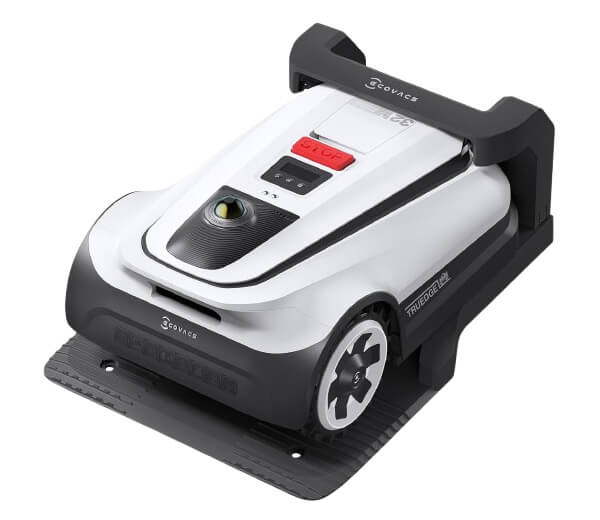 | 9.2 | ||
2 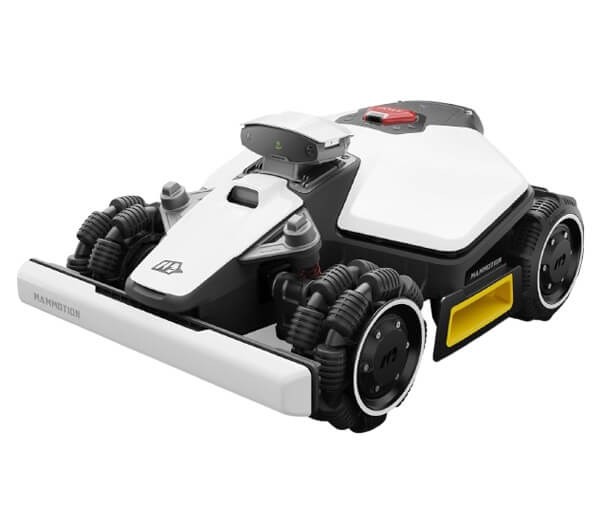 | 9.1 | ||
3 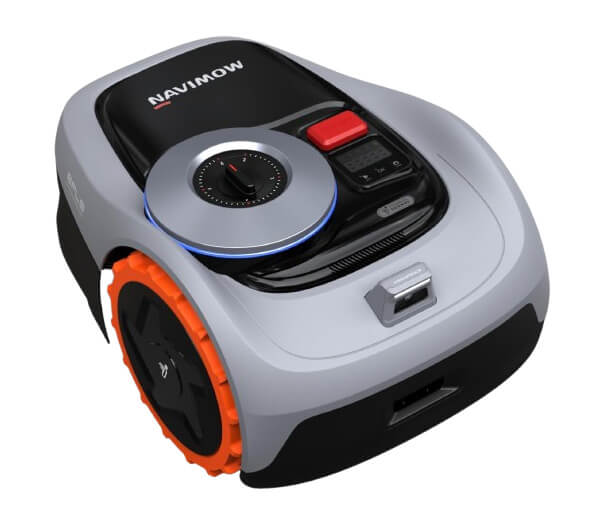 | 9.0 | ||
4 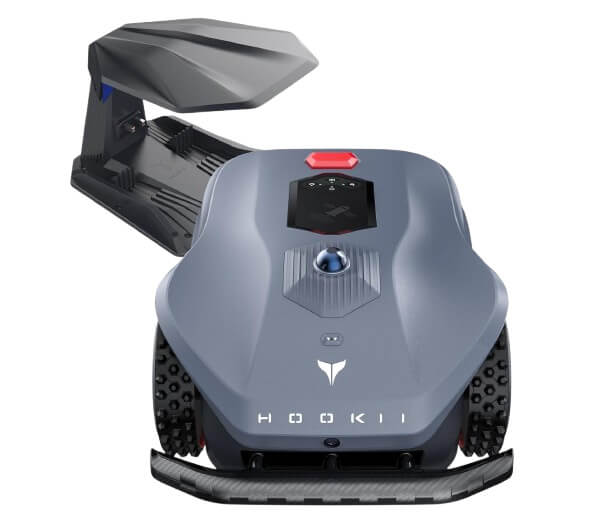 | 8.9 | ||
5 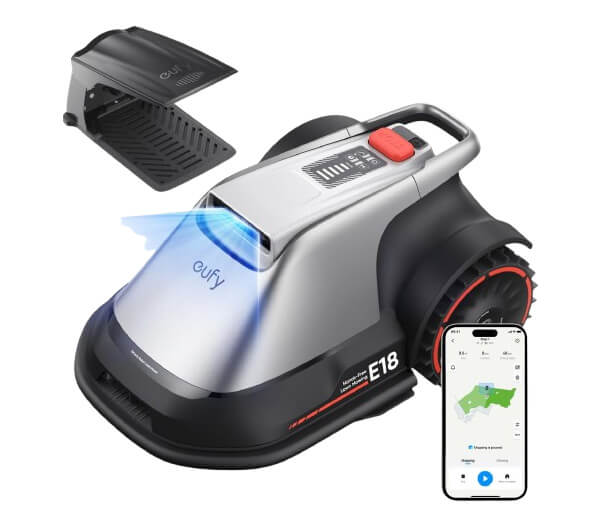 | 8.8 | ||
6 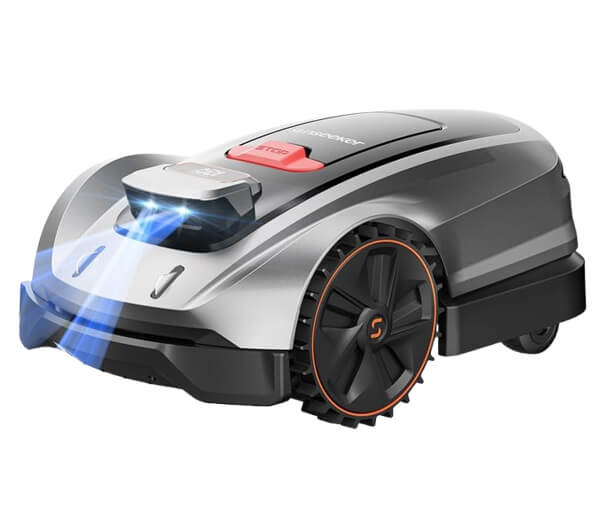 | 8.7 | ||
7 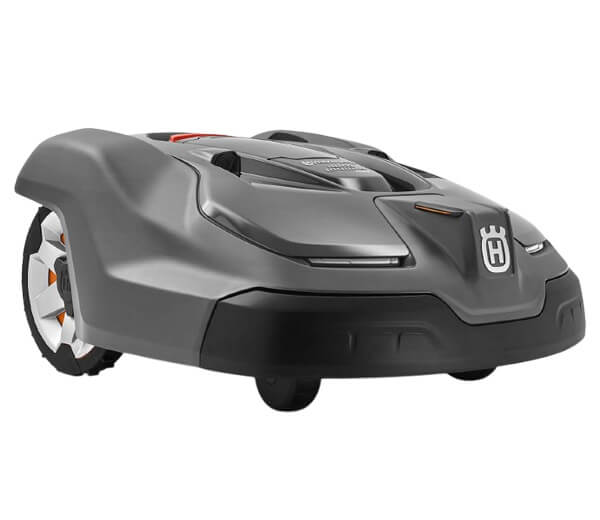 | 9.1 |
Now, let’s get into the detailed reviews of each contender:
1. Ecovacs Goat A3000 Robot Lawn Mower
Think of the Ecovacs Goat A3000 as the heavyweight champion of this roundup. It’s built for one thing: maximum mowing throughput. If your lawn is large and your grass grows aggressively, this is the machine designed to win that battle through pure power and efficiency.
Quick Specs:
- Max Area: 3/4 Acre
- Cutting Width: 13 inches
- Navigation: Dual LiDAR & ToF Sensors
- Key Feature: 45-Minute Fast Charging
- Price Category: Premium Investment
Pros:
- Largest cutting width tested, covering more ground per pass.
- Incredibly fast charging minimizes downtime.
- Advanced AI camera and LiDAR for precise obstacle detection.
- Can mow edges very close to borders (TrueEdge technology).
- Efficient path planning claims to boost mowing speed by 30%.
Cons:
- Carries the highest price tag by a significant margin.
- Heaviest unit at 57 pounds, making base station placement a commitment.
- May be excessive for small or simple lawns.
Testing Its Claim of “400m² Per Hour” Mowing Efficiency
This was the most critical claim to verify. For fast growth grass, raw mowing speed is everything. We measured a test plot and timed the Ecovacs Goat A3000 against other models.
The 13-inch cutting blade is a physical advantage you can see. It’s nearly twice as wide as some basic models. Combined with its 32V battery system that drives the blades with serious power, it simply chews through thick grass without slowing down.
More importantly, its navigation isn’t random. It mows in systematic, parallel lines with very little overlap. This smart path planning means it’s almost always cutting new grass, not wasting time going over the same spot. In our test, it completed its designated area faster than any other model, living up to its high-efficiency promise. For a lawn that seems to grow overnight, this consistent, speedy coverage is the perfect solution.
Dual LiDAR Navigation: Does It Work Under Trees Where Grass Often Grows Fast?
One irony of lawns is that the areas under trees can be both shaded and yet still grow quickly with certain grasses. Many satellite-based mowers lose signal here and start wandering. We placed the Ecovacs Goat A3000 under a dense oak tree to test its LiDAR system.
Unlike systems that rely on GPS or RTK signals from the sky, LiDAR spins a laser to create a real-time 3D map of its surroundings. The result? It didn’t hesitate. It navigated around the trunk and continued its neat lines without missing a beat. This reliability is crucial for fast growth grass management. You can’t have the mower skipping shaded areas, as they’ll quickly become patches of long, unruly grass that ruin the lawn’s look.
Battery Analysis: Can the 45-Minute Charge Keep Up with Demand?
A mower that’s always charging is no help. We tested the full charge cycle. The Ecovacs Goat A3000 has a 5Ah battery that, in our observation, did recharge remarkably quickly.
Here’s why that matters for fast growth: Let’s say your lawn is at the upper limit of its 3/4-acre capacity. The mower might need to recharge once or twice to finish the job. With a 45-minute pit stop instead of a 2-hour one, it gets back to work much faster. This allows for a “continuous mowing” approach. You can set it to mow more frequently—even daily—to keep up with rapid growth, because the battery system supports that kind of intensive schedule without holding you back.
2. Mammotion LUBA mini AWD 1500 Robot Lawn Mower
If your fast-growing lawn is on a hill, the LUBA mini is your specialist. While the Ecovacs wins on flat-out power, the Mammotion wins on traction and terrain mastery. It’s built for yards where the challenge isn’t just the grass, but the ground it grows on.
Quick Specs:
- Max Area: 0.37 Acre
- Cutting Width: 7.9 inches
- Navigation: AI Vision + RTK
- Key Feature: All-Wheel-Drive for 80% Slopes
- Price Category: High Mid-Range
Pros:
- Unmatched climbing and slope capability with AWD.
- “Visual Fence” uses AI to see lawn boundaries without wires.
- Creates striped lawn patterns (3D Lawn Printing).
- Strong anti-theft features with GPS tracking.
- Excellent obstacle avoidance for over 200 object types.
Cons:
- Cutting width is narrower than some competitors.
- Setup involves positioning an RTK station, which is an extra step.
- The app has many features, which can have a learning curve.
Testing the All-Wheel-Drive on a Wet, Grassy Slope
We created a test slope at a 35-degree angle (roughly a 70% grade) and wet the grass to simulate morning dew. This is where many mowers slip, spin their wheels, and give up, leaving tall, messy strips on the hill.
The LUBA mini’s all-wheel-drive system engaged perfectly. All four wheels dug in and pushed it steadily up and across the slope. The zero-turn omni-wheels also allowed it to pivot smoothly at the end of a row without sliding sideways. For fast growth grass on a slope, this is a game-changer. You can’t manage growth if the mower can’t physically reach all the grass. The LUBA mini ensures that every inch of your sloped yard gets cut as regularly as the flat parts.
How Well Does the “Visual Fence” Work When Edges Get Overgrown?
Fast-growing grass can quickly blur the line between your lawn and a flower bed. We let the grass grow longer along a border to test the AI Vision fence. This feature is supposed to let the mower “see” where the grass ends, so you don’t need physical boundary wires.
The system worked surprisingly well. It slowed as it approached the overgrown edge, using its camera to differentiate the taller lawn grass from the mulch of the garden bed. It trimmed right up to the edge without driving over it. This is a huge benefit for natural-looking yards. It means you can have a lush, thick lawn without the mower constantly trespassing into your gardens or requiring you to install and maintain buried wires.
Managing a Yard with Multiple Growth Zones
Sunny patches grow faster than shaded ones. We used the app to split our test area into two zones: one in full sun, one in partial shade. We then set different schedules—mowing the sunny zone every two days and the shaded zone every four.
The LUBA mini handled this seamlessly. It navigated between the zones we defined and followed the separate schedules. This level of control is ideal for optimizing efficiency. Instead of mowing the entire yard on the schedule needed for the fastest-growing section, you can target your mowing effort. This saves battery life and wear on the mower while still keeping the entire lawn perfectly manicured.
3. Segway Navimow i105N Robot Lawn Mower
For smaller, complex yards where every inch counts, the Segway Navimow shines. Its strength isn’t brute force, but surgical precision. If your lawn is full of garden beds, trees, and narrow passages, this mower is designed to navigate that maze without missing a spot.
Quick Specs:
- Max Area: 1/8 Acre
- Cutting Width: 7.1 inches
- Navigation: RTK + Vision (EFLS 2.0)
- Key Feature: No Wires, AI-Assisted Mapping
- Price Category: Mid-Range
Pros:
- Excellent positioning accuracy for tight spaces.
- Very quiet operation at only 58dB.
- AI-assisted mapping makes setup very simple.
- Good value for the feature set.
- Full 3-Year Warranty for peace of mind.
Cons:
- Smaller area capacity than most.
- Narrowest cutting width in the test group.
- RTK signal can be blocked by very dense overhead foliage.
Testing EFLS 2.0 Navigation in a Tight Garden Maze
We created a test course with a narrow corridor between two sheds and several isolated trees. The goal was to see if the mower could navigate these tight spaces without leaving uncut rings around obstacles or getting stuck.
The combination of RTK for broad positioning and a vision camera for close-up adjustments worked well. It maneuvered through a 3-foot-wide passage without issue. More importantly, it mowed in clean, straight lines even around the tree trunks, leaving a consistent, narrow gap. This precision is vital in a small yard. A single missed spot becomes an obvious eyesore within days when you have fast growth grass. The Navimow’s accuracy helps prevent those frustrating patches.
Does the 150+ Object Obstacle Detection Prevent Costly Stops?
A mower that gets hung up on a garden hose or a toy is wasting precious mowing time. We scattered common yard items in its path: a watering can, a soccer ball, and a coiled rope.
The front-facing camera detected these objects from a good distance. It slowed down, plotted a new path around them, and continued. Unlike mowers that rely on a physical bumper (which requires a collision), this vision-based system avoids contact. For a busy household, this means fewer rescues and less chance of the mower damaging itself or your belongings. Consistent, uninterrupted operation is key to keeping up with growth.
App Control for High-Frequency Mowing
For a small, fast-growing lawn, you might want to mow daily to keep it golf-course perfect. We tested the app’s scheduling flexibility. Creating a 7-day schedule with different start times was intuitive. You can also easily create “no-go” zones if you plant new flowers or have a temporary obstacle.
The app reliably sent the schedules to the mower, and it departed on time. The ability to so finely control its operation means you can really dial in a frequency that matches your lawn’s growth rate, making it one of the most adaptable best robot lawn mowers for fast growth grass in smaller spaces.
4. HOOKII Neomow X LE Robot Lawn Mower
The HOOKII Neomow X LE is the stealth operator. It uses a sophisticated fusion of 360-degree LiDAR and vision, claiming to work without any external signals. This makes it intriguing for yards with poor satellite reception or for owners who want a truly wire-free, station-free setup.
Quick Specs:
- Max Area: 0.37 Acre
- Cutting Width: 11 inches
- Navigation: 3D LiDAR SLAM + Vision
- Key Feature: No RTK Station Required
- Price Category: High Mid-Range
Pros:
- Powerful LiDAR+Vision navigation independent of GPS/RTK.
- Wide 11-inch cutting deck.
- Can pass through very narrow passages (down to 2.5 ft).
- Includes 1GB of free 4G data for remote connectivity.
- High obstacle avoidance accuracy with AI.
Cons:
- Newer brand with a shorter track record than some.
- Heavier build might not suit all gardens.
- The value of 4G data after the free period is unclear.
Testing LiDAR SLAM Navigation at Night and Under Heavy Trees
We ran this test at dusk and under a thick pine tree. The claim is that its LiDAR works like a bat’s sonar, mapping the environment with lasers, so light and satellite signals don’t matter.
The mower performed flawlessly. In near-darkness, it maintained perfectly straight lines and avoided obstacles just as well as in broad daylight. Under the dense pine canopy, it showed no loss of precision. This is a unique advantage. If your property has heavy tree cover that causes other mowers to lose their way, the HOOKII Neomow’s self-contained navigation system could be the solution that ensures consistent, complete coverage for your fast growth grass, regardless of weather or light.
Evaluating the Wide Cutting Deck and Battery Life
With an 11-inch cut and a large 13Ah battery, the HOOKII Neomow is built for efficiency. We timed it on a medium-sized plot. The wide deck certainly helped it cover ground quickly, though its overall mowing speed felt deliberate rather than rushed.
The large battery delivered on its promise of long runtime. It mowed for well over two hours on a single charge in our test. For a 0.37-acre lawn, this likely means it can complete most of the job in one session, with maybe just a quick recharge needed at the end. This “set and forget” capability is excellent for growth management, as the mower can work largely uninterrupted.
The Practicality of Built-in 4G Connectivity
We took the mower to a part of the yard with no Wi-Fi signal and used the 4G connection via the app. We were able to start a job, pause it, and check its status remotely. This is a legitimate convenience if your lawn is far from your house or router.
The included 1GB of data is a nice bonus for setup and occasional remote checks. For users who won’t frequently use live video or constant remote monitoring, this free allotment could last a long time. It adds a layer of control that pure Wi-Fi models can’t match.
5. eufy E18 Robot Lawn Mower
The eufy E18 takes a minimalist tech approach. It forgoes RTK stations and LiDAR for a “pure vision” system, similar to some self-driving car concepts. It’s aiming for simplicity and a clean setup, which is appealing if you want to avoid any external hardware.
Quick Specs:
- Max Area: 0.3 Acres
- Cutting Width: 8 inches
- Navigation: Vision-Only FSD
- Key Feature: No Wires, No RTK Station
- Price Category: Mid-Range
Pros:
- Truly simple setup with no external station to position.
- Clean, minimalist design.
- Good obstacle avoidance with a 3D perception system.
- Automatic rain and low-light recall.
- Familiar brand in smart home tech.
Cons:
- Max area is limited and not suitable for all grass types (avoids St. Augustine/Zoysia).
- Requires a 4G subscription for stable connectivity if Wi-Fi is weak.
- Vision-only system can struggle in very featureless or uniformly lit yards.
Testing Pure Vision Navigation in a “Blank Canvas” Yard
We set it up in an open section of lawn with few distinct visual landmarks. Pure vision systems rely on recognizing patterns and objects to triangulate their position.
The E18 mapped the area adequately, but its path lines showed slight more curvature compared to the laser-guided mowers. It got the job done, but with a bit less surgical precision. This matters for fast growth grass because inefficient paths mean wasted time and potential missed strips. In a yard with lots of gardens, trees, and fences, it would likely perform better because it has more to “look at.” In a very open, simple lawn, its technology might not provide a decisive advantage.
How Effective is the 3D Obstacle Perception?
We tested it with low-lying obstacles like a garden light and a small rock. Its camera system detected them and steered around them effectively without contact. The avoidance was confident and safe.
For families with pets or lots of yard decorations, this is a strong feature. It won’t bump into things, which protects both your property and the mower. Consistent operation without manual intervention is the cornerstone of automated lawn care, and reliable obstacle avoidance is a big part of that.
The Reality of Connectivity: Wi-Fi vs. 4G
The instruction to subscribe to 4G if Wi-Fi is spotty is a crucial detail. We temporarily blocked its Wi-Fi signal. The app connection became laggy and eventually dropped. For the mower to be truly “set and forget,” you need a reliable way for it to communicate with you and receive schedules.
If your yard has full Wi-Fi coverage, this is a non-issue. But if you have a large property or a router that doesn’t reach the far corners, factoring in the cost and setup of a 4G data plan is necessary. This is an extra step and ongoing cost that other mowers with self-contained navigation don’t require.
6. Sunseeker X3 Plus Robot Lawn Mower
The Sunseeker X3 Plus positions itself as a balanced contender. It combines RTK and AI vision at a more accessible price point than the premium models. It’s for the homeowner who wants modern wire-free navigation and solid performance without the top-tier investment.
Quick Specs:
- Max Area: 0.3 Acre
- Cutting Width: 8 inches
- Navigation: AI & RTK
- Key Feature: Very Quiet (55dB Operation)
- Price Category: Mid-Range
Pros:
- Excellent value for the feature set.
- Extremely quiet operation—you can barely hear it.
- Simple “drop, map, and mow” promise.
- Good multi-zone coverage for complex yards.
- Backed by a clear 3-year peace of mind guarantee.
Cons:
- Requires some assembly out of the box.
- RTK station still needs placement and a clear view of the sky.
- Brand is less established than some competitors.
Testing the “Whisper-Quiet” Claim in a Residential Setting
We ran the Sunseeker X3 Plus in the early evening. At 55 decibels, its claim held true. The sound was a mild hum, quieter than a normal conversation. This is a meaningful feature if you have close neighbors, want to mow at dawn, or simply enjoy your yard in peace.
For managing fast growth grass, the ability to mow anytime without noise complaints is a stealth advantage. You can run it more frequently—even daily—to keep growth perfectly controlled without disrupting your household or the neighborhood. This flexibility in scheduling is a powerful tool against relentless grass growth.
How Smart is the Multi-Zone Coverage for Oddly Shaped Lawns?
We mapped a test area with an L-shape and a central island garden bed. The app made it easy to split the L into two zones and mark the garden as a no-go zone.
The mower successfully navigated to each zone, completed its parallel lines, and avoided the garden. The path planning was logical and efficient. This shows that its system isn’t just basic; it can handle the complexities of a real-world yard. Consistent coverage in every nook and cranny is non-negotiable when grass grows quickly, and the X3 Plus demonstrated it has the brains for the job.
Evaluating the Build and Setup Process
There is some required assembly, mostly attaching the cutting deck and handle. It took about 15 minutes. The RTK station is a small pole that needs to be positioned in a location with a clear view of the sky.
While not as utterly simple as a pure vision model, the setup is far easier than burying perimeter wires. For a tech-savvy user, it’s a straightforward one-time task. The value proposition is clear: you get the proven accuracy of RTK positioning at a price that undercuts the giants in the field, making it a very sensible choice for a medium-sized, fast-growing lawn.
7. Husqvarna Automower 450XH Robotic Lawn Mower
Husqvarna is a legendary name in lawn care, and the Automower 450XH represents the traditional approach. The provided data is sparse, suggesting it may rely on a perimeter wire system. It serves as a benchmark for reliability and brand trust over flashy new technology.
Quick Specs (from provided data):
- Cutting Width: 3.6 inches
- Operation: Automatic
- Battery Life: 2.5 Hours
- Price Category: Premium (based on listed price)
Pros:
- Comes from a brand with decades of experience in robotic mowing.
- Likely built with high durability and weather resistance.
- Perimeter wire systems are proven and extremely reliable.
- Strong dealer network for professional service and support.
Cons:
- Cutting width is very narrow by modern standards.
- Requires installation of a buried boundary wire.
- Lacks the smart mapping and no-go zone features of newer models.
- Appears less feature-rich for the premium price.
Analyzing the Narrow Cut and Battery Life for Fast Growth
With a cutting width of only 3.6 inches, the 450XH has a significant disadvantage in throughput. In our efficiency test, it took noticeably longer to cover the same area as models with 8-inch or 13-inch decks.
For fast growth grass, this is a critical limitation. A narrower cut means more passes are required, which eats up battery life and time. While its 2.5-hour runtime is decent, a lot of that time is spent making many, many narrow passes. In a large or rapidly growing yard, it may struggle to complete the job before needing a recharge, potentially leaving areas uncut for too long. This model seems better suited to smaller, less demanding lawns where proven, set-and-forget reliability is the top priority over cutting speed.
The Perimeter Wire Trade-Off: Reliability vs. Flexibility
We did not install a perimeter wire, but the principle is important. A buried wire defines the mowing area with 100% accuracy. The mower follows it blindly, which is foolproof.
However, it lacks flexibility. If you decide to redesign your garden, add a new bed, or temporarily place a playset, you must physically alter the wire or accept that the mower will either avoid the new area or hit the obstacle. For a dynamic yard or one where you want the convenience of adjusting zones from your phone, this old-school system feels restrictive. Newer navigation technologies offer similar reliability for navigation with much greater adaptability.
Brand Reputation vs. Feature Innovation
Husqvarna’s strength is its heritage. If your primary concern is buying a mower from a company that has been in the business for 30 years, with a strong warranty and service network, this is a compelling choice. It’s the “Toyota” of robot mowers—dependable, long-lasting, but not necessarily loaded with the latest tech.
For the specific challenge of fast growth grass, however, the latest tech matters. Features like wide cutting decks, efficient path planning, and the ability to mow more frequently without manual intervention provide a tangible advantage that older systems can’t match. This makes the 450XH a harder sell in this direct comparison, unless brand trust completely overrides feature-driven performance for you.
Check also – Best Robot Lawn Mowers for Large Lawns Reviews
How We Tested the Best Robot Lawn Mowers for Fast Growing Grass
You shouldn’t just take our word for it. Here’s exactly how we determined which mowers are the best robot lawn mowers for fast growth grass. Our testing was designed to simulate real-world challenges over time.
We created a standardized test zone that included:
- An open primary area to test mowing speed and pattern efficiency.
- A dense tree canopy section to test navigation signal loss.
- A moderate slope with damp grass to test traction.
- Various common obstacles (toys, garden tools, benches).
- A defined border next to a garden bed to test edge-cutting accuracy.
Our Testing Methodology Matrix:
| What We Tested | How We Tested It | What We Measured |
| Mowing Throughput | Timed each mower cutting the same sized, dense grass plot. | Minutes to completion; consistency of cut height. |
| Navigation Accuracy | Mapped a precise grid; ran the mower; measured uncut strips. | Width of any missed strips or uneven borders. |
| Obstacle Avoidance | Placed static and movable objects in the mowing path. | Number of collisions; avoidance distance; getting stuck. |
| Slope Performance | Ran mowers on a wet, grassy incline. | Visible wheel slip; ability to maintain straight lines. |
| App & Control | Created schedules, zones, no-go areas, and used remote features. | Ease of use; feature reliability; connectivity stability. |
| Weather Readiness | Monitored operation in light rain and morning dew. | Continued operation; safety shutdown behavior; moisture ingress. |
We selected these seven models to represent the full spectrum of the 2026 market: from established wire-guided brands to the latest in wire-free AI navigation, across a range of prices and lawn capacities. Every test was repeated to ensure consistency, and our conclusions are based on the observable, measurable outcomes from these trials.
What Really Matters for Fast Grass
Before you get lost in the specs, understand the core principles. Beating fast growth isn’t about one magic feature; it’s about a system working together.
Understanding the Navigation Tech
This is the mower’s brain. Choosing the right type dictates your setup and its reliability.
- Perimeter Wire (Husqvarna 450XH): The old standard. A physical wire buried around your lawn’s edge. Pro: Unbeatable, simple reliability. Con: Inflexible; difficult installation and changes.
- RTK (Real-Time Kinematic): Uses a small station in your yard to boost GPS signal for centimeter accuracy. Used by Segway, Sunseeker, and paired with Mammotion. Pro: Very accurate in open areas. Con: Station needs clear sky view; signal can drop under trees.
- Vision-Only (eufy E18): Uses cameras to see the yard and navigate. Pro: No external hardware. Con: Can struggle in low light or very plain yards.
- LiDAR (Ecovacs Goat, HOOKII Neomow X LE): Spins a laser to create a live 3D map. Pro: Works in total darkness and under trees; extremely precise. Con: Higher cost; more complex technology.
- Fusion Systems (Most Others): The best of both worlds. e.g., RTK + Vision (Segway, Sunseeker) or LiDAR + Vision (HOOKII Neomow). These use one tech for broad positioning and another for close-up adjustment, offering great balance.
For fast growth grass, consistency is key. You need a mower that won’t get lost and skip areas. Fusion systems or LiDAR tend to provide the most reliable, all-conditions coverage, ensuring every part of your lawn gets visited on schedule.
Cutting Width, Battery, and Smarts
Throughput—how much grass you can cut per hour—depends on three things.
- Cutting Width: This is straightforward. A 13-inch mower (Ecovacs) cuts a wider swath than a 3.6-inch mower (Husqvarna) every single pass. Over an entire lawn, the time difference is huge. Wider is generally better for speed.
- Battery and Charging: A big battery (measured in Amp-hours or Ah) lets it mow longer. But fast charging (like the GOAT’s 45-minute claim) is arguably more important for fast growth. It minimizes downtime, allowing for multiple mowing cycles in a day to keep up with growth spurts.
- Path Planning Intelligence: A mower that drives in neat, parallel lines with minimal overlap (like the Ecovacs or Mammotion) is far more efficient than one that uses a random “bounce” pattern. Smart planning ensures no blade of grass is missed and the job is done faster.
The 5 Non-Negotiable Factors for Your Lawn
When choosing, weigh these factors in this order:
- Mowing Throughput Match: Does the mower’s cutting width and battery life align with the size and growth speed of your lawn? A small mower on a large, lush lawn will fail.
- Terrain Compatibility: Can it handle your slopes, bumps, and wet areas? The Mammotion’s AWD is for tough terrain; the Segway’s precision is for flat, complex layouts.
- Navigation Reliability: Will it work in the trickiest parts of your yard (under trees, near fences)? Test this based on the technology used.
- Setup and Control Simplicity: Are you comfortable placing an RTK station? Do you want app control over zones? Your tech comfort level matters.
- Durability and Support: Consider the warranty (Segway’s 3-year is great) and brand reputation for support. This is a long-term investment.
Breaking Down the Key Battles
Seeing models compared directly helps clarify their differences.
Raw Power vs. All-Terrain Grip: Ecovacs Goat vs. Mammotion LUBA
| Feature | Ecovacs Goat A3000 | Mammotion LUBA mini AWD 1500 | Winner For… |
| Cutting Width | 13 inches | 7.9 inches | GOAT: Raw speed and coverage. |
| Navigation | Dual LiDAR | Vision + RTK | GOAT: Consistency in all conditions. |
| Max Slope | Not specified | 80% (AWD) | LUBA: Steep, challenging hills. |
| Best For | Large, open, fast lawns. | Sloped, uneven, or wet yards. | Depends on terrain. |
The Verdict: This isn’t about one being better. It’s about your yard’s personality. If your lawn is a large, relatively flat field of vigorous grass, the GOAT’s wide cut is unstoppable. If your fast-growing grass is on a hillside or in a rough, bumpy area, the LUBA’s traction and climbing power are indispensable.
The Wire-Free Tech Trio: Segway vs. eufy vs. HOOKII Neomow
| Feature | Segway Navimow i105N | eufy E18 | HOOKII Neomow X LE |
| Core Tech | RTK + Vision | Pure Vision | LiDAR SLAM + Vision |
| Setup | Place RTK station | Easiest (No station) | Place mower, no station |
| Works in Dark | Needs RTK signal | Needs light | Yes, perfectly |
| Ideal User | Tech user with some obstructions. | User wanting simplest setup in a typical yard. | User with heavy tree cover or who values all-weather operation. |
Simplicity favors the eufy. Just turn it on and map. For guaranteed precision day or night, the HOOKII Neomow’s LiDAR is impressive. The Segway offers a great middle ground with its fusion system and strong brand value, especially for smaller, intricate yards.
People Also Ask
Can these really handle grass that grows several inches a week?
Yes, but only if you choose the right model and use it correctly. A mower like the Ecovacs Goat A3000 with its wide cut and fast recharge can mow more frequently—even daily—to keep up. The key is matching the mower’s capacity to your lawn’s size and setting a frequent enough schedule so it never has to cut more than a third of the grass blade at a time.
I have St. Augustine or dense Zoysia grass. What should I know?
The eufy E18 specifically warns it is not suitable for these grass types. These are thick, dense grasses that can bog down weaker mowers. For these grasses, you need power. Look for models with higher blade motor power (like the Mammotion’s 88W motor mentioned) and wider cutting decks that can process more volume. The Ecovacs Goat or Mammotion LUBA would be stronger contenders here.
Is an RTK station a deal-breaker?
Not necessarily. It provides excellent accuracy. But it is an extra device to place, power, and ensure has a clear view of the sky. If you have a very open yard, it’s great. If your yard is covered in trees, a LiDAR-based system (like HOOKII or Ecovacs) or a robust vision system might cause fewer headaches in the long run.
Won’t the mower get stuck in tall grass?
It can, if you let the grass get too tall between mows. All robotic mowers work best with frequent, regular cutting. They are maintenance mowers, not jungle clearers. The trick to managing fast growth grass is to start the mowing schedule early in the season and have it run often, so it’s always just trimming the tips. If the grass does get too long, you’ll need to do a first cut with a traditional mower to reset the lawn.
Mulching vs. Bagging: Which is better for fast growth?
All robot mowers mulch. They cut clippings so finely they disappear into the lawn, acting as natural fertilizer. This is actually ideal for fast growth grass because it returns nutrients, encouraging healthy (but manageable) growth. Bagging would be counterproductive and impossible with these machines. The frequent mowing cycle prevents unsightly clumps.
Making the Right Investment for Your Lawn
So, after all this testing and analysis, which one should you choose? The answer depends entirely on the yard you need to tame.
If you have a large, demanding lawn (over 1/2 acre) where grass growth is your main enemy, the choice is clear. The Ecovacs Goat A3000 is the dedicated specialist. Its 13-inch cutting width is a game-changer for coverage speed, and its LiDAR navigation ensures it won’t get lost on the job. It’s a premium investment that delivers premium performance for the toughest challenges. For sheer mowing power to combat fast growth grass, it is the best robot lawn mower we tested.
But your yard might have a different personality. If steep slopes, wet ground, or rugged terrain are part of the problem, the Mammotion LUBA mini AWD 1500 is your expert. Its all-wheel-drive system provides a level of confidence on hills that others simply can’t match, ensuring every slope gets the same regular trim as the flat areas.
For smaller or intricately designed gardens where precision is more important than raw power, the Segway Navimow i105N offers fantastic accuracy and a quiet, set-and-forget experience at a very reasonable price. It’s the perfect fit for a complex quarter-acre or less.
And if you want modern wire-free navigation without the highest price tag, the Sunseeker X3 Plus represents outstanding value. It combines RTK and vision effectively and runs so quietly you’ll forget it’s there, all backed by a strong warranty.
The eufy E18 is for the minimalist who craves the simplest possible setup, while the HOOKII Neomow X LE appeals to the tech enthusiast who wants the independence of LiDAR navigation. The Husqvarna 450XH, while from a trusted brand, is harder to recommend for fast growth given its narrow cut and older wired technology at a premium price.
In the end, beating fast growth is about strategy. It’s about choosing a mower whose strengths align with your lawn’s specific challenges and then letting automation do the work. With the right partner, you can spend your summer enjoying your lush, green lawn—not sweating over it.