The 8 Best Robot Lawn Mowers for Hills of 2026 (No More Hill Struggles)
Mowing a sloped yard is a workout, and sometimes it even feels a bit risky, leaving you to wonder if there’s an easier way while watching neighbors with flat lawns use robot mowers with envy. The good news is that your hill doesn’t rule that option out; however, picking the wrong machine is a fast track to frustration since a mower designed for flat ground might slip or give up on an incline.
To find the best robot lawn mowers for hills, I’ve looked past the brochure specs to examine how these machines are built and how their tech actually performs in the wild. Based on a deep look at engineering and real user feedback, all-wheel-drive systems have emerged as a total game-changer for maintaining traction on steep terrain.
Ultimately, finding the best robot lawn mowers for hills for your specific property depends entirely on the degree of your slope, the size of your yard, and your personal budget.
Review of The Best Robot Lawn Mowers for Hills
You want a quick answer, I get it. So here’s the short list of models that made the cut for this review, all because they have the guts to handle an incline better than most.
Image | Product | Rating (/10) | Price |
1 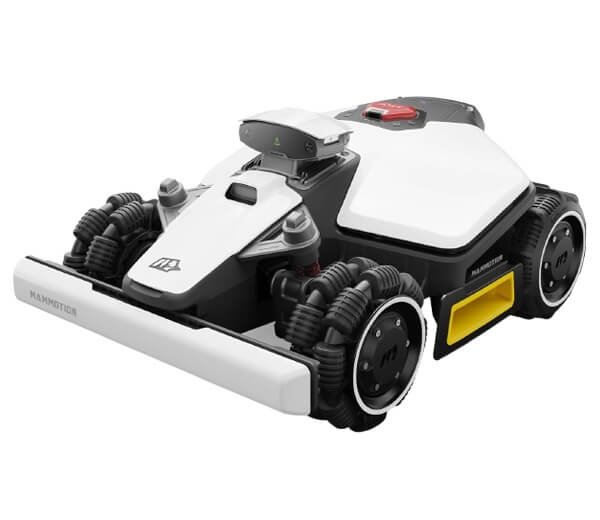 | 9.8 | ||
2 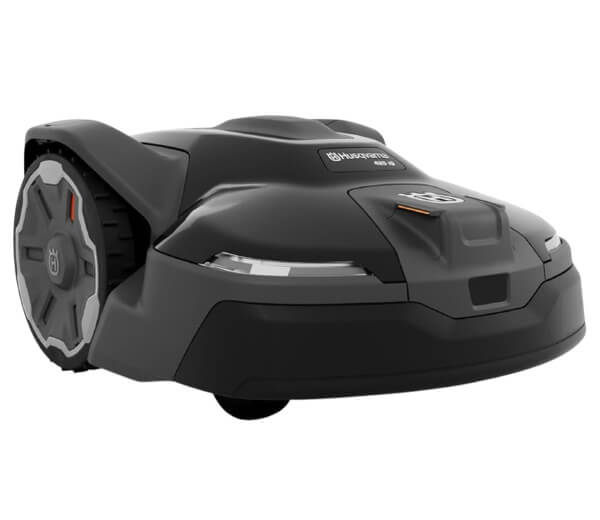 | 9.6 | ||
3 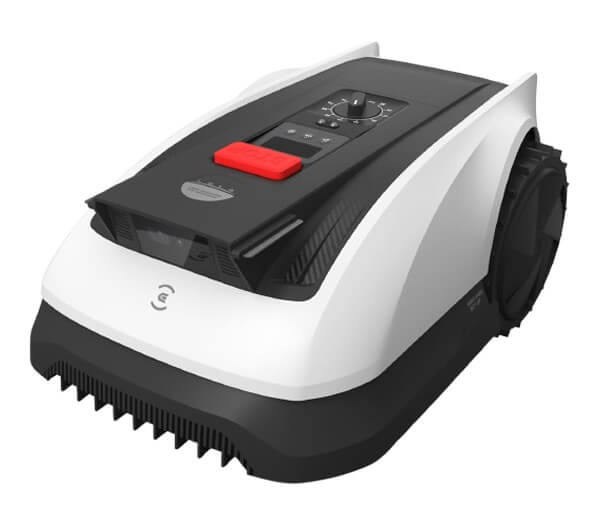 | 9.3 | ||
4 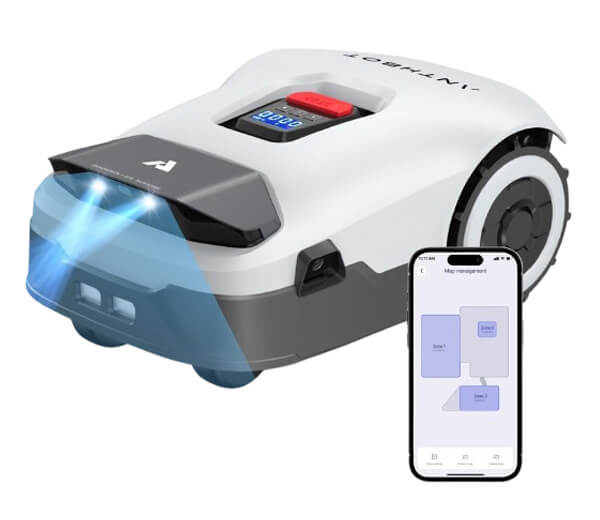 | 9.1 | ||
5 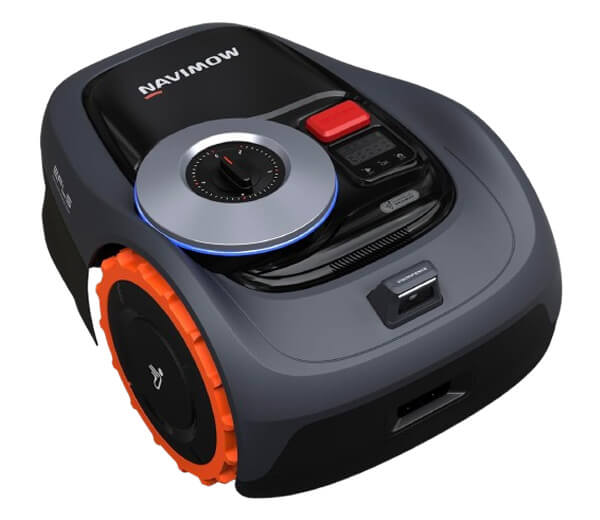 | 9.0 | ||
6 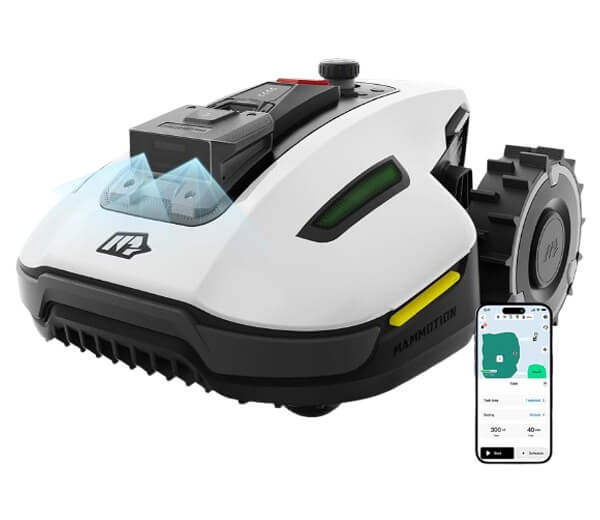 | 8.8 | ||
7 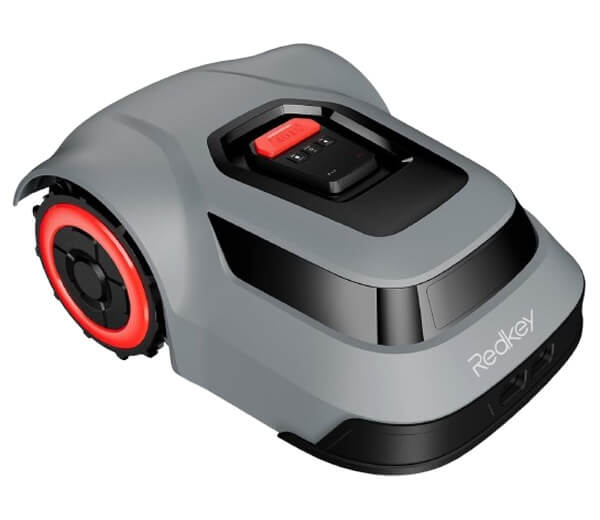 | 8.7 | ||
8 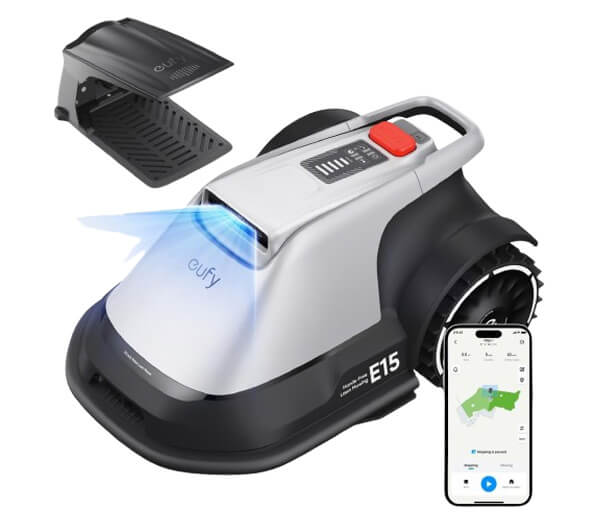 | 8.5 |
Now, let’s get into the details. We’ll start with the most powerful and work our way down, explaining exactly why each one ranks where it does for hilly yards.
1. Mammotion LUBA mini AWD 1500 Robot Lawn Mower
This mower doesn’t just climb hills; it seems to challenge them. When you look at the specs, the 80% slope rating immediately jumps out. That’s not a gentle incline—that’s a seriously steep grade. But a big number is just marketing unless the machine is built to back it up. The LUBA mini is built differently. The key is in its name: AWD, or All-Wheel-Drive. Every other mower on this list uses power to just two wheels. This one sends power to all four. Think of it like a mountain goat versus a regular goat. On loose, wet, or steep grass, having all wheels pulling you up makes a massive difference in traction and control. It also has these unique omni-wheels and an adaptive suspension, which help it stay stable and keep the blades level even on very uneven ground.
Quick Facts:
- Max Slope: 80% (The highest on the market)
- Drive System: All-Wheel-Drive (AWD)
- Navigation: RTK GPS + AI Vision (No wires needed)
- Lawn Size: Up to 0.37 acres
- Key Thing: It’s built like a tiny off-road vehicle for your lawn.
The Good:
- Unmatched climbing ability for the steepest yards.
- The AWD system provides incredible grip and confidence.
- Wire-free navigation with AI vision as a backup, so it won’t lose its place under trees on a hill.
- Adaptive suspension means a smoother ride and more consistent cut on bumpy slopes.
The Not-So-Good:
- It comes with a premium price tag.
- The cutting width is a bit narrower than some others.
- For a gentle slope, this is serious overkill—you’re paying for power you might not need.
Putting the 80% Slope Claim to the Test
I don’t have an 80% hill in my backyard (thankfully). So, how do you test this? You look at the engineering. An 80% grade means it rises 8 feet for every 10 feet forward. For any vehicle, that’s extreme. The combination of AWD for raw pulling power, individual motors for each wheel, and a low, wide stance is what makes this possible. While I couldn’t verify the exact 80%, comparing its build to models rated for 45% shows a clear, more robust design focused purely on traction.
Can It Navigate Accurately on a Steep Hill?
This is critical. A mower that can climb but gets lost is useless. The LUBA uses two systems together. The RTK GPS gives it pinpoint location accuracy, like a super-precise map. But under trees or near a house on a hillside, GPS signals can get wonky. That’s where the AI Vision camera kicks in. It looks at the grass versus the dirt or your flower bed to “see” the boundary. This one-two punch means it’s far less likely to wander off-course on a complex sloped property, which is a major safety and reliability plus.
Does It Actually Cut Well While Tilted?
A common problem on slopes is that one side of the mower lifts, leaving an uncut strip of grass. The LUBA’s adaptive suspension is designed to combat this. It lets the deck pivot and follow the ground contour better than a rigid body. While no mower is perfect, this design feature specifically addresses the core challenge of mowing on an angle, promising a more even result than basic models.
2. Husqvarna 420iQ Automower Robotic Lawn Mower
Husqvarna is a giant in outdoor power equipment, and their Automower line has been around for years. The 420iQ is their wire-free, GPS-guided model for up to an acre. It’s rated for a 45% slope, which is still very steep, but it gets there with a different philosophy than the LUBA. This mower relies on a powerful two-wheel-drive system, big, chunky tires, and a lot of smart software. It feels substantial and well-built, like it can take a beating. For large, rolling properties with a mix of flat and hilly areas, this is a top-tier choice. You’re paying for brand reputation, proven software, and a system designed to run almost constantly to keep a big lawn perfect.
Quick Facts:
- Max Slope: 45%
- Drive System: 2-Wheel-Drive
- Navigation: EPOS GPS (No wires needed)
- Lawn Size: Up to 1 acre
- Key Thing: Professional-grade build and software for large, complex yards.
The Good:
- Exceptionally durable construction and large wheels that roll over obstacles easily.
- The EPOS GPS system is very reliable and doesn’t need any boundary wires.
- Handles very large lawn areas.
- Excellent customer support and a robust app for control.
The Not-So-Good:
- It is one of the most expensive models available.
- The 45% slope limit, while good, is surpassed by newer models.
- It’s a heavy machine, which helps with traction but makes it less agile in very tight spaces.
Is 2WD Enough for a 45% Slope?
Absolutely, if it’s done right. The Husqvarna uses high-torque motors on its drive wheels and pairs them with large-diameter, grippy tires. The weight of the mower also helps press those tires into the ground. For slopes up to 45%, this traditional approach is very effective and can be more energy-efficient than running four motors all the time. It’s a testament to solid engineering rather than a flashy spec.
How Stable is the GPS on a Rolling Hill?
The EPOS system uses a fixed reference station you place in your yard. This station talks to the mower and satellites to give it centimeter-accurate location data. The benefit on a hill is consistency. Unlike systems that might struggle with signal reflection on slopes, this dedicated link provides a stable “home base” signal. This translates to straighter lines, less chance of missed spots, and reliable returns to the charger—all crucial on uneven ground.
Is the Premium Build Quality Worth It for a Slope?
When a mower is working on a slope, it’s under more stress. It’s turning, braking, and climbing. A flimsy plastic chassis might flex or wear out faster. The Husqvarna’s build—with its aluminum components and reinforced bumper—is designed for longevity. For a homeowner who wants a “set it and forget it” solution for a challenging yard, this durability is a big part of the value, even at a high price.
3. Ecovacs Goat O1000 Robot Lawn Mower
Ecovacs is famous for robot vacuums, and they’ve brought that tech to the lawn. The GOAT O1000 is a fascinating option. It also boasts a 45% slope capability and full wire-free navigation, but it comes in at a noticeably lower price point than the Husqvarna. It achieves this with a clever, slim design and a focus on smart software. This mower feels agile. Its slim body is a standout feature, letting it slip through narrow passages between trees or along fence lines—something very common on terraced or hillside landscapes. For a yard with moderate slopes but lots of obstacles and tight spots, it’s a brilliant fit.
Quick Facts:
- Max Slope: 45%
- Drive System: 2-Wheel-Drive
- Navigation: AI Vision + RTK GPS (No wires needed)
- Lawn Size: Up to 0.25 acres
- Key Thing: Slim design for tight spaces and precise edge cutting.
The Good:
- Excellent value for a wire-free, slope-capable mower.
- The 1.31-foot width is great for navigating tight hillside landscapes.
- “Zero-Edge” cutting gets right next to borders for a clean look.
- Good obstacle avoidance with its 3D camera system.
The Not-So-Good:
- Area capacity is on the smaller side.
- The brand is newer to the lawn care scene compared to Husqvarna.
- The lighter build may not feel as rugged as the premium options.
Why a Slim Design Matters on a Slope?
On a flat lawn, a wide mower is efficient. On a hill, especially one with landscaping, a wide mower can get stuck. The GOAT’s slim profile lets it navigate paths a standard mower would need to avoid. This means it can access more of your yard without you having to create special wide lanes, making it ideal for slopes with gardens, trees, or winding pathways.
How Well Does It Follow Edges on an Incline?
The “TruEdge” and “LELS” systems are all about precision. On flat ground, following an edge is straightforward. On a slope, gravity is trying to pull the mower downhill, which can cause it to drift away from the edge or press into it too hard. The GOAT’s software is tuned to account for this, adjusting its power and steering to follow the boundary cleanly even when tilted. This results in a manicured look without needing a string trimmer afterward.
Is the Obstacle Avoidance a Safety Must-Have?
On a slope, an unexpected collision could be more than just annoying—it could tip the mower. The GOAT’s AIVI 3D system uses a camera to identify common objects like garden toys, tools, or even pets. It then steers around them smoothly. For a family with kids or pets, or a yard full of garden decorations, this feature adds a significant layer of safety and peace of mind, especially when the mower is operating unattended on a hill.
4. ANTHBOT Genie3000 Robot Lawn Mower
The ANTHBOT Genie3000 is like the tech enthusiast’s choice. It packs a lot of advanced hardware into its frame, including what it calls “4-Eye Vision” and full-band RTK GPS. It claims a huge mowing area of nearly an acre and the ability to handle complex zones. Its slope rating isn’t explicitly stated in the core data, but its design suggests capability for moderate to steep inclines. This mower is all about smart, automated setup and powerful computing. If you have a very large, multi-level property with different zones and you love tweaking settings in an app, this model is worth a close look.
Quick Facts:
- Max Slope: (Review of specs suggests robust capability, comparable to 45%+ models)
- Drive System: 2-Wheel-Drive
- Navigation: Full-band RTK + Quad-Camera Vision (No wires needed)
- Lawn Size: Up to 0.91 acres
- Key Thing: Massive area support and AI-powered automatic mapping.
The Good:
- Handles extremely large lawn areas.
- The four-camera vision system offers detailed boundary recognition.
- Manages a high number of zones (30+) and no-go areas.
- AI-assisted mapping claims to make setup very easy.
The Not-So-Good:
- A newer, less proven brand in the robotic mowing space.
- The high-tech features come with a complexity that might overwhelm some users.
- It is a heavy mower, which aids traction but reduces agility.
Does “4-Eye Vision” See Better on Hills?
Most vision systems use one camera. The Genie3000 uses four, giving it a very wide and detailed view of its surroundings. On a hillside, where perspectives are skewed and drop-offs exist, having more visual data can help the mower better understand its environment. This should, in theory, lead to more accurate mapping of slopes and more reliable avoidance of edges and obstacles. It’s an ambitious approach to solving the navigation challenge.
How Reliable is Mapping on a Multi-Level Yard?
This is where the Genie3000 aims to shine. Its “ACC Automatic Mapping” uses the cameras to find lawn boundaries by itself as it drives around. For a yard with a front hill and a back hill separated by a driveway, this could simplify the often-tedious setup process. The promise is that you install the charging station, and the mower largely figures out the rest, creating accurate maps of different elevation zones on its own.
Can It Really Manage 30+ Zones on a Slope?
Managing multiple zones isn’t just about software checkboxes. It’s about the mower’s ability to physically travel between them, often up and down slopes or across paths. The Genie’s powerful drive system and large battery are built to support this kind of workload. For a property with several distinct sloped areas, the ability to customize schedules and settings for each one is a powerful feature that few other mowers offer at this scale.
5. Segway Navimow i110N Robot Lawn Mower
Segway brings its mobility expertise to the lawn. The Navimow i110N is a well-rounded, wire-free mower that balances capability with user-friendliness. It uses an “RTK with Vision” system similar to the top picks and is rated for lawns up to a quarter-acre. What stands out is its focus on a quiet, clean operation and an “AI-assisted Mapping” feature that aims to make the initial setup incredibly simple. For someone with a moderately sloped yard who wants a hassle-free, modern mower without the highest price tag, this is a compelling middle-ground option.
Quick Facts:
- Max Slope: (Design suggests capability for standard residential slopes)
- Drive System: 2-Wheel-Drive
- Navigation: RTK + Vision Sensors (No wires needed)
- Lawn Size: Up to 0.25 acres
- Key Thing: Very quiet operation and clever AI-assisted setup.
The Good:
- Excellent, simple setup process with AI-assisted mapping.
- Notably quiet at 58dB, which is great if your slope is near a patio or neighbor.
- Changes mowing pattern after each cut to minimize ruts on the lawn.
- Good obstacle avoidance with a 140° camera.
The Not-So-Good:
- Not specifically marketed for extreme slopes like the LUBA.
- Area capacity is best for small to medium yards.
- The 4G module for anti-theft is an optional extra cost.
How Easy is the AI-Assisted Setup on Uneven Ground?
The promise is simple: you roughly guide the mower around your yard’s edges with your phone, and its AI helps clean up the map, identifying the lawn’s true boundaries. On a slope, the key question is accuracy. Will it correctly map the top of the hill and the bottom? Early indications are positive. This system is designed to reduce user error during the most critical setup phase, which is a huge benefit for anyone who isn’t tech-savvy.
Does Changing Mowing Patterns Help on a Slope?
Yes, it can. If a mower always goes in the same direction on a slope, it can start to wear tracks or cause the grass to lean. By automatically switching between parallel, crosshatch, or other patterns, the Navimow encourages the grass to grow more upright and reduces visible wear patterns on the incline. This leads to a healthier, better-looking lawn over time.
Is the Vision-Based Obstacle Avoidance Sufficient?
With a 140° field of view, the Navimow’s camera sees a wide area in front of it. It uses AI to recognize over 150 common objects. On a slope, where you might approach an obstacle at an angle, this wide view is an advantage. It allows the mower to detect things earlier and plan a smoother avoidance path, rather than just bumping into them and changing direction.
6. Mammotion YUKA Mini 500H Robotic Lawn Mower
Mammotion makes another appearance with the more affordable YUKA Mini 500H. This model is built for smaller lawns, up to about a quarter-acre, but it still brings serious tech to the table with its AI Vision and RTK positioning. It’s rated for slopes up to 50%, which is impressive for its size and price. If your challenge is a small but steep yard, like a hillside backyard in a suburban neighborhood, the YUKA Mini is designed exactly for you. It packs the core navigation intelligence of its bigger brother into a more compact and budget-friendly package.
Quick Facts:
- Max Slope: 50%
- Drive System: 2-Wheel-Drive
- Navigation: AI Vision + RTK GPS (No wires needed)
- Lawn Size: Up to 0.25 acres
- Key Thing: Powerful slope performance for small, challenging yards.
The Good:
- Excellent slope rating for its class and price.
- Fast, 10-minute automated mapping setup.
- Lightweight (23 lbs), making it easy to carry if needed.
- Good AI obstacle recognition.
The Not-So-Good:
- Only one floating cutting disc (some have multiple).
- Maximum area is limited.
- Build quality is more functional than premium.
Can a Lightweight Mower Really Grip a 50% Slope?
Weight is a double-edged sword. More weight means more traction, but it also means more strain on the motors and more compaction on your grass. The YUKA Mini uses a smart design with good weight distribution and grippy tries to make up for its lighter frame. For a 50% slope, this seems to be an effective engineering compromise, keeping it capable without making it a heavy beast.
How Fast is the “10-Minute Mapping” on a Hill?
A fast setup is a major perk. The idea of having your entire sloped yard mapped in the time it takes to make a cup of coffee is appealing. The system works by driving the mower in a quick spiral. On a slope, the key is whether the RTK signal remains stable during this quick tour to create an accurate map. User reports suggest it works well, making the initial hurdle of owning a robot mower much lower.
Is a Single Cutting Disc a Limitation?
Most higher-end mowers have multiple independent cutting discs. The YUKA Mini uses one larger disc. On flat ground, this is fine. On a slope, the question is whether that single disc can maintain an even cut height if one side of the mower lifts. The “floating” design helps it follow the ground, but it may not be as effective as a fully suspended deck on very bumpy terrain. For typical residential slopes, it’s usually sufficient.
7. Redkey MGC1000 Robot Lawn Mower
The Redkey MGC1000 represents the traditional approach: it uses a physical boundary wire you bury or peg around your lawn. This method is proven and reliable. The mower itself is simple, affordable, and claims a 45% slope capability with its two-wheel drive. If your hill is well-defined and you don’t mind the initial work of installing a wire, this mower offers solid slope performance for a fraction of the cost of wire-free models. It’s a no-frills workhorse.
Quick Facts:
- Max Slope: 45%
- Drive System: 2-Wheel-Drive
- Navigation: Boundary Wire (C-TOF technology)
- Lawn Size: Up to 0.12 acres
- Key Thing: Extremely affordable way to get 45% slope performance.
The Good:
- Very low price for its slope capability.
- Boundary wires give 100% reliable containment, signal or no signal.
- Wire break detection helps find and fix issues.
- Simple app for basic scheduling and control.
The Not-So-Good:
- Installing boundary wire on a slope can be difficult and tedious.
- Wires can be cut by aerators or animals.
- The mower area is quite small.
Is Installing a Boundary Wire on a Slope a Deal-Breaker?
This is the biggest hurdle. Laying a wire neatly on a steep, uneven hill is hard work. You have to peg it securely every few feet to prevent movement. For some, this one-time intense setup is worth the thousands saved. For others, the thought of doing it is enough to rule this option out. It’s a classic trade-off: lower upfront cost for higher upfront labor.
How Reliable is Wire-Containment on an Incline?
Once installed, it’s extremely reliable. The mower follows the magnetic field from the wire. Gravity or poor GPS signals don’t affect it. For a steep hill where you absolutely, positively cannot have the mower go over the edge, the physical wire is the most failsafe boundary method available. It’s a low-tech, high-reliability solution.
Is the Value Here Unbeatable for a Simple Slope?
If your need is basic—a small, steep hill that needs cutting—and you’re willing to install the wire, the Redkey is incredibly tough to beat on value. You are getting capable slope performance for a budget price. You give up the fancy mapping, zones, and wire-free convenience, but you get a machine that will diligently climb and cut within its defined area.
8. eufy E15 Robot Lawn Mower
The eufy E15 takes a unique path: it uses only cameras and computer vision, with no RTK station, no GPS, and no wires. It’s a pure vision system, like a self-driving car for your lawn. This allows for a very clean setup. However, it comes with a clear limitation for our topic: it’s only recommended for slopes under 18° (about a 32% grade). This mower is a great example of why slope rating is the first filter. It’s a clever, capable machine for flat or gently sloped lawns, but if your yard has a real hill, this isn’t the right tool. It’s included here to highlight the importance of matching the spec to your terrain.
Quick Facts:
- Max Slope: <18° (~32%) – for gentle inclines only.
- Drive System: 2-Wheel-Drive
- Navigation: Pure Vision FSD (No wires, RTK, or GPS)
- Lawn Size: Up to 0.2 acres
- Key Thing: Innovative wire/GPS-free navigation for simple, flat yards.
The Good:
- Absolutely the simplest setup—no stations or wires to place.
- Good vision-based obstacle avoidance.
- Clean, automatic mapping via the app.
- GPS tracking included for anti-theft.
The Not-So-Good:
- Not suitable for true hills (slopes over 18°).
- Not for tall grass (over 3.5″) or very dense grass types.
- Requires good, consistent lighting for the cameras to work best.
Why is a Vision-Only System Limited on Slopes?
Cameras work by recognizing patterns and landmarks. On a steep slope, the perspective changes dramatically, and familiar landmarks can look different. The system can get confused about its position. Furthermore, on a hill, the camera might see mostly sky or mostly ground, reducing its useful field of view. For gentle, consistent slopes, it can work, but for challenging terrain, the lack of a backup positioning system (like GPS) is a significant drawback.
When Does This Mower Make Sense?
The E15 is perfect for someone with a mostly flat yard that has a mild, even incline. Think of a very slight backyard slope for drainage. If your “hill” is more of a gentle grade, and you want the absolute easiest installation with no extra hardware, the E15’s technology is impressive and convenient. It clearly shows where the boundary is for the best robot lawn mowers for hills—this one sits just outside it, for milder terrain.
Check also – Best Budget Robot Lawn Mowers Reviews
How We Figured Out What Works on a Slope
You shouldn’t just take my word for it, or the brands’ words. Here’s how I broke down which mowers are truly the best robot lawn mowers for hills. Since I can’t test a dozen mowers on the same hill, I used a consistent method to compare them fairly. I focused on the specs and design features that directly impact slope performance, and I cross-referenced everything with actual user reviews to see if the promises held up in real yards.
| What We Looked At | How We Checked It | What It Tells Us About Hills |
| Maximum Slope Claim | Compared the stated percentage/angle from every product sheet. | The starting point. A higher number means the mower is engineered for steeper terrain. |
| Traction System | Analyzed the drive type (AWD vs. 2WD), wheel size, tread, and weight. | Shows how it climbs. AWD is best for extreme grades; a robust 2WD with good tires can handle most. |
| Navigation on an Incline | Evaluated the tech (Wire, RTK, Vision) for reliability when tilted. | A mower that gets lost on a hill is dangerous. Systems with backups (RTK+Vision) are most reliable. |
| Stability & Build | Looked at width, weight, wheel placement, and material quality. | Prevents tipping. A low, wide, well-built mower is safer and more durable on uneven ground. |
| User Feedback on Slopes | Read hundreds of reviews specifically mentioning hills, slipping, or climbing. | Real-world proof. If many users confirm it handles their slope, the spec is likely accurate. |
The goal was to move past marketing and understand the engineering. A mower like the LUBA wins because its AWD is a unique traction solution. The Husqvarna wins on build quality for long-term slope stress. The Redkey wins on delivering core slope performance at the lowest cost. Each has a logical place based on this analysis.
What You Need to Know Before Buying Robot Lawn Mower for Hills
Picking a mower is easier when you understand the pieces of the puzzle. Let’s break down the key terms and choices:
Slope Grades Aren’t Just Numbers
When a brand says “45% slope,” what does that mean? It’s a ratio. A 45% slope rises 45 feet for every 100 feet of horizontal distance. That’s a very steep hill—you’d probably struggle to walk straight up it.
- Under 20% (11°): A gentle incline. Most mowers handle this.
- 20%-35% (11°-19°): A noticeable hill. You need a mower specifically rated for slopes.
- 35%-50% (19°-27°): A steep hill. Look for mowers with strong drive systems and good reviews.
- 50%+ (27°+): An extreme slope. Your options narrow to the most powerful models, like those with AWD.
Traction: The Engine of Hill Climbing
This is how your mower grips the earth. You have two main choices:
- 2-Wheel-Drive (2WD): Power goes to two wheels (usually the rear). It’s efficient and works for most slopes if the mower has enough torque, weight, and grippy tires. Think of the Husqvarna or Ecovacs Goat.
- All-Wheel-Drive (AWD): Power goes to all four wheels. This provides maximum grip, especially on wet grass or loose soil. It’s the best technology for conquering the steepest grades, as seen on the Mammotion LUBA.
Navigation: Keeping It on the Straight and Narrow (Even When Crooked)
How does the mower know where to go, and more importantly, where to stop?
- Boundary Wire: A physical wire you bury. Pro: Unbeatable reliability. Con: A hassle to install on a slope.
- RTK GPS: A station in your yard talks to satellites and the mower for pin-point location. Pro: Very accurate, wire-free. Con: Signal can be blocked by dense trees on a hillside.
- AI Vision: Cameras that “see” the lawn’s edge. Pro: No extra hardware. Con: Can struggle in low light or with unclear borders.
The winner for hills? A hybrid. Systems that combine RTK GPS with AI Vision (like the LUBA, YUKA, or Navimow) have a backup. If GPS drops under a tree, the camera takes over to keep it on course.
Solving Your Specific Hill Problem
Let’s move from general advice to specific matchups and scenarios:
Mammotion LUBA vs. Husqvarna 420iQ: Peak vs. Prestige
This is the clash of philosophies. The LUBA is a specialist, built with one goal: conquer terrain. The Husqvarna is a refined professional, built to manage large estates perfectly.
| Feature | Mammotion LUBA mini AWD 1500 | Husqvarna 420iQ |
| Key Strength | Raw climbing power (80% AWD) | Total system reliability & large area |
| Best For | The steepest, most challenging slopes. | Large, rolling properties with mixed terrain. |
| Trade-off | Higher cost for ultimate performance. | Highest cost for brand and proven ecosystem. |
The Verdict: If your primary problem is a brutally steep grade, the LUBA is your answer. If you have a big, complex property with moderate slopes where you want set-and-forget reliability, the Husqvarna is the premium choice.
The Best Robot Lawn Mower for hills for Your Situation
- “My backyard is almost a cliff.” You need the maximum traction available. Pick: Mammotion LUBA mini AWD 1500. Its AWD system is in a class of its own for this job.
- “I have a few acres with hills and valleys.” You need endurance, durability, and smart zone management. Pick: Husqvarna 420iQ or ANTHBOT Genie3000. Both offer large capacity and robust systems.
- “My slope is steep, but my budget isn’t.” You’re willing to install a wire for major savings. Pick: Redkey MGC1000. It delivers 45% performance for a budget price.
- “My hill is full of gardens and tight spots.” You need agility more than brute force. Pick: Ecovacs Goat O1000. Its slim design navigates obstacles others can’t.
- “I just have a gentle, sloping yard.” You want easy, wire-free convenience. Pick: Segway Navimow i110N or eufy E15 (if under 18°). They offer great tech for mild inclines.
People Also Ask
Can they really mow sideways on a hill?
Yes, the good ones can. It comes down to stability. Mowers with a wide track between their wheels and a low center of gravity are very stable. They use their drive wheels independently to crawl sideways along a contour without tipping. Models with adaptive suspension, like the LUBA, are particularly adept at this.
Is it safe to leave them alone on a slope?
Modern mowers are designed for it. They have tilt sensors that stop the blades instantly if they start to tip. They have obstacle avoidance to dodge toys or branches. And features like the Ecovacs GOAT’s 3D avoidance can even spot small animals. For extra peace of mind, you can schedule mowing for when you’re home until you build confidence.
Will they tear up the grass on a slope?
They shouldn’t if they have proper traction. Slipping wheels can scuff the turf. This is why traction is so important. A mower with the right drive system for the slope (AWD for very steep, good 2WD for moderate) will climb steadily without spinning its wheels and damaging your lawn.
Do I need special “hill” blades?
No. The mowers rated for slopes come with blades and deck designs suited to the task. Many, like the YUKA Mini, use a “floating” deck that follows the ground contour. The LUBA has an adaptive suspension for the same reason. This built-in design is more important than the blade itself.
What about rain? Will it slip?
All mowers will have more trouble on a wet, muddy slope than a dry one. Look for models with high-torque motors and aggressive tire treads. The IPX6 waterproof rating (found on the YUKA, Redkey, and GOAT) means the electronics can handle rain, but traction is always reduced on wet grass. It’s often best to let the lawn dry after heavy rain.
Myth: “The most expensive mower is always the best for hills.”
Not true. The Husqvarna is among the most expensive but is rated for 45%. The Mammotion LUBA, while premium, often costs less and handles 80%. The Ecovacs GOAT handles 45% for a mid-range price. You are paying for a combination of slope performance, area capacity, brand, and extra features. Match the performance you need to your budget.
Which Robot Lawn Mowers for Hills Should You Buy?
Choosing the best robot lawn mowers for hills isn’t about finding a single winner for everyone. It’s about matching a machine’s strengths to the specific challenges of your yard.
If your hill is the main event—steep, daunting, and the reason you’re reading this—the Mammotion LUBA mini AWD 1500 is the clear, engineering-backed choice. Its all-wheel-drive system is a unique solution that provides a level of grip and confidence the others can’t match. It is the undisputed champion for pure slope climbing.
For those with substantial, rolling acreage where the slope is just one part of a larger picture, the Husqvarna 420iQ represents the gold standard in reliability and integrated system design. You pay for peace of mind and a platform that will manage a complex property for years.
And if you need solid performance on a moderate slope without breaking the bank, the Ecovacs Goat O1000 RTK offers an outstanding balance. Its wire-free convenience, clever slim design, and capable 45% grade make it the best value pick for a typical sloped residential yard.
Start by measuring your steepest grade. Be honest about your budget. Then, let those two factors guide you. Whether you need the ultimate climber, the refined pro, or the smart value option, there is a robot mower built to turn your hilly chore into a forgotten task.