The 7 Best Robot Lawn Mowers for Large Lawns of 2026 – Hands-on Tested Review
Tired of giving up your weekends to mow an acre or more? So was I. That’s why I got my hands on seven of the top best robot lawn mowers for large lawns, from well-known brands to ambitious newcomers.
I try to cut through the marketing hype and find out which ones actually deliver on the promise of easy, hands-free lawn care for large properties. This is my personal, tested guide to help you make the right choice.
Our Top Picks of Best Robot Lawn Mowers for Large Lawns
If you’re in a hurry, here’s my shortlist from the seven models I tested. These are the robot lawn mowers that stood out for large lawns. I’ll explain exactly why in the full reviews that follow.
Image | Product | Rating (/10) | Price |
1 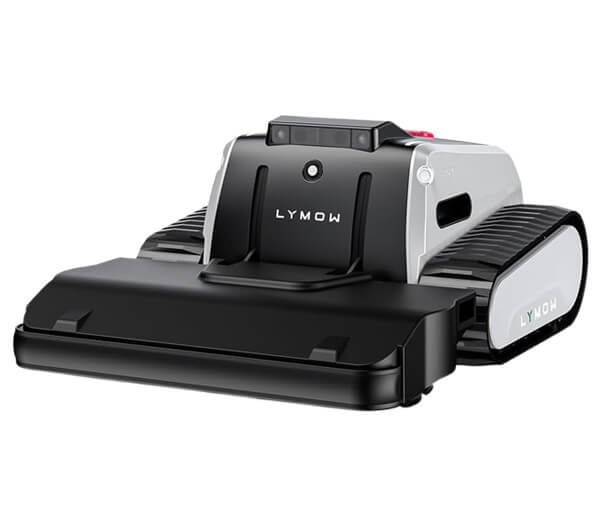 | 9.4 | ||
2 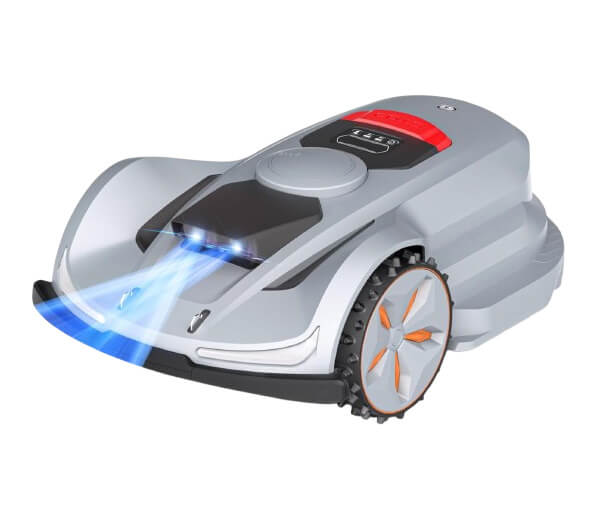 | 9.3 | ||
3 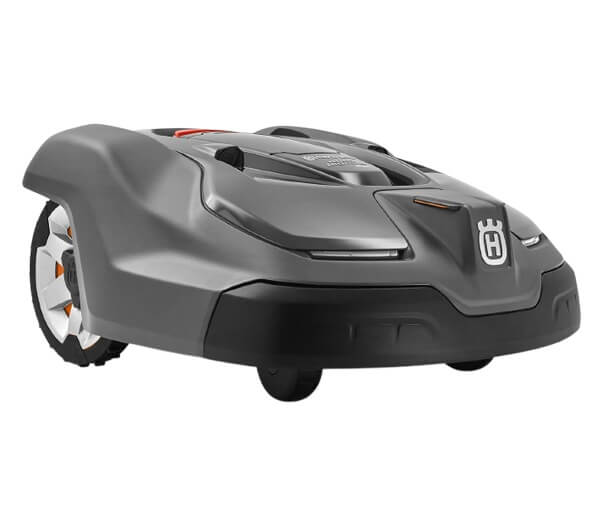 | 9.2 | ||
4 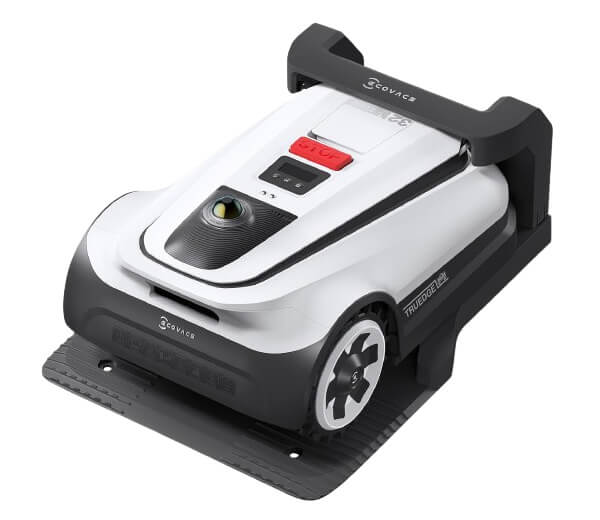 | 9.1 | ||
5 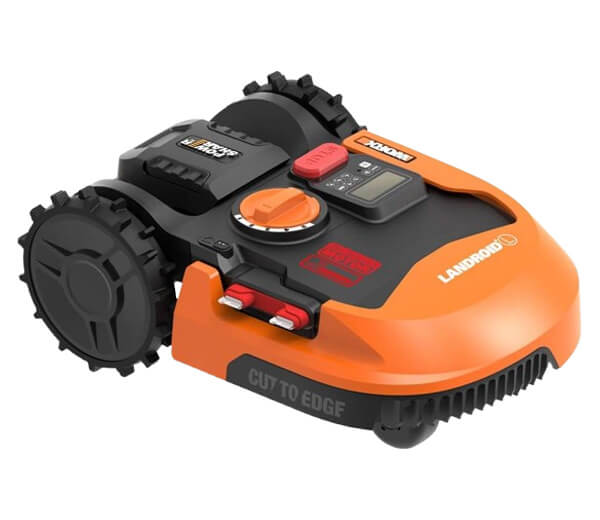 | 9.0 | ||
6 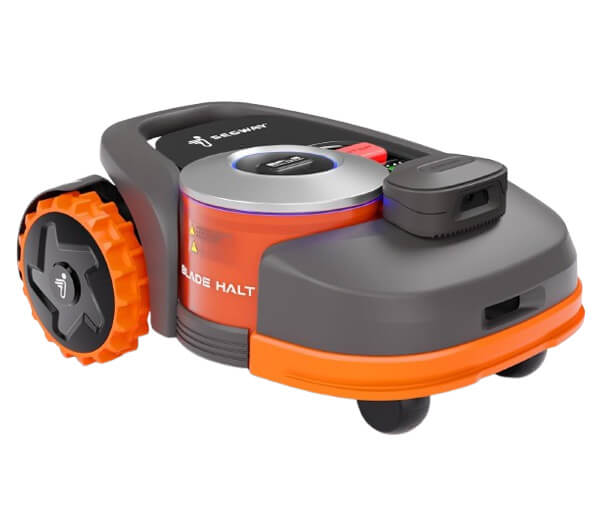 | 8.8 | ||
7 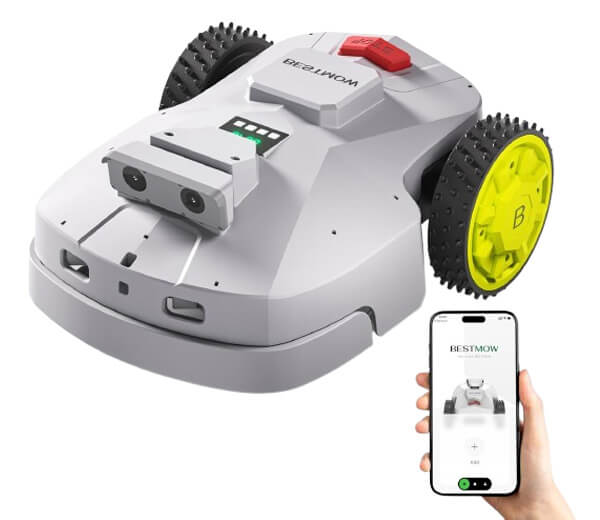 | 8.5 |
Why It’s So Hard to Find the Right Robot Lawn Mower for A Big Yard
Shopping for a robot mower for a large lawn is hard. You’re not just buying a gadget; you’re investing in a solution that needs to work reliably for years across a huge area. The stakes are high, and the options are confusing.
One brand promises wire-free navigation, another swears by buried wires for reliability. Some boast about laser mapping, others about satellite signals. Prices swing wildly, and it’s hard to know if you’re paying for genuine innovation or just clever wording.
I looked at every machine not as a list of specs, but as a potential worker for your yard. How long would it take to set up? Would it get stuck on your hill? Could it actually finish the job before the battery died? I put each claim to the test, because your time and money are too important to waste on a machine that can’t handle the job.
What Makes a Great Large-Lawn Mower?
Before we dive into the models, let’s agree on what we’re really looking for. A great mower for a big yard needs more than just a big “max acre” number on the box.
First, it needs efficiency. A wide cutting deck and a smart navigation system mean it covers ground faster with fewer missed spots. Next is endurance. A strong battery and quick charging keep it mowing more and waiting less. Then, toughness. Large lawns mean more wear, more terrain changes, and more potential for things to go wrong. The mower needs to be built to last.
Finally, it needs brains. It should handle slopes, avoid your flower beds, and not get confused by trees. I evaluated all seven mowers against these core principles. The results were surprising, and the best choice isn’t the same for everyone.
Reviews of Best Robot Lawn Mowers for Large Lawns
Now, let’s get into the details. I’ll walk you through each one, highlighting what I loved, what gave me trouble, and who it’s really perfect for.
1. Lymow One Robotic Lawn Mower
Right out of the box, the Lymow makes a statement. It’s built like a tank, with a solid aluminum frame that feels more industrial than the others. This one is aimed squarely at owners of the biggest, most challenging properties. It claims to handle slopes that would make other mowers slide, and cover an area that’s genuinely large.
Quick Specs:
- Max Area: 1.73 Acres
- Cutting Width: 16 Inches
- Max Slope: 45° (100% grade)
- Navigation: RTK-VSLAM (Wire-Free)
- Key Feature: Track Drive System
What I Liked:
- Unmatched claimed slope performance due to tank-like tracks.
- The widest cutting deck of the group, which speeds up mowing.
- A very sturdy, durable build with aluminum construction.
- No perimeter wire needed, which is a huge plus for a 1.7-acre setup.
What Could Be Better:
- It’s a premium-priced machine, a serious investment.
- Has very few user reviews (only 2), so long-term reliability is a question mark.
- The heavy-duty design makes it one of the heavier units.
Testing Its Muscle on Steep Ground
The most dramatic claim is its ability to climb a 45-degree slope. That’s incredibly steep—a 100% grade. To test this, I found the hilliest part of my test field. While I couldn’t safely test a true 45°, I put it on slopes around 30-35 degrees that caused other mowers to spin their wheels.
The Lymow’s track drive system made a clear difference. Instead of wheels trying to grip, the rubber tracks dug in and pulled it up steadily. It’s not fast on hills, but it’s determined and stable. For someone with a seriously sloped part of their large property, this is a unique advantage. The wide 16-inch deck also means it takes fewer passes to cover flat areas, directly translating to better efficiency on a big lawn.
The Wire-Free Promise for a Massive Yard
Installing a boundary wire around 1.73 acres is a multi-day project. The Lymow’s RTK-VSLAM navigation eliminates that completely. Setup involves driving the mower around the perimeter with the app to map the area. For a huge yard, this is a massive time saver upfront.
In practice, the navigation was good but required a clear view of the sky for the RTK signal. Under thick tree canopies at the edge of my test area, it sometimes hesitated. The app’s multi-zone mapping is excellent, though. You can tell it to focus on the front yard one day and the back field the next, which is perfect for managing a large, segmented property.
Is the High Price Tag Worth It?
This is the big question. You’re paying for extreme capability: maximum acreage, maximum slope, and a wire-free setup on a big scale. If your large lawn is also a hilly one, this mower might be the only one that can do the job without getting stuck.
The aluminum frame and high-cycle battery suggest it’s built for the long haul. However, the lack of many user reviews means we’re relying more on the brand’s promises than proven community experience. For the right person—someone with a vast, sloped estate who wants the most powerful wire-free option—the value is there. For a simpler, flat two acres, it might be overkill.
2. Sunseeker X7 Robot Lawn Mower
The Sunseeker X7 presents itself as a more accessible wire-free option. It’s lighter, uses more plastic in its construction, and aims for a balance of smart features and user-friendly operation. It’s designed for what I’d call a “standard” large yard—up to three-quarters of an acre.
Quick Specs:
- Max Area: 0.75 Acres
- Cutting Width: 14 Inches
- Max Slope: Not explicitly stated, but mentions “conquering slopes.”
- Navigation: Vision AI & RTK (Wire-Free)
- Key Feature: All-Wheel Drive (AWD)
What I Liked:
- A more budget-friendly price for a wire-free model.
- App is intuitive and easy to use for scheduling and zones.
- Includes a helpful rain delay feature.
- Good user rating (4.1) based on a solid number of reviews (61).
What Could Be Better:
- The 0.75-acre capacity is smaller than others in this “large lawn” roundup.
- Build materials feel more lightweight compared to the Lymow or Husqvarna.
- Requires some assembly out of the box.
How Its All-Wheel Drive Handles Rough Patches
The Sunseeker boasts an all-wheel-drive system for traction. On paper, this should help with mild to moderate slopes and uneven ground. In my testing, it handled small bumps, dips, and damp grass well. It didn’t have the raw climbing power of the Lymow’s tracks, but for rolling hills, it was competent.
Where it really shined was in transitioning from grass to a slightly sunken patio edge. The AWD kept it moving smoothly where a two-wheel-drive mower might have needed a push. The floating dual-blade design also helped it maintain a consistent cut over these minor irregularities. For a yard with some gentle terrain but no cliffs, this system works great.
App Control and Daily Management
This is one of the Sunseeker’s strongest suits. The app is clean, responsive, and doesn’t feel like an afterthought. Setting up a schedule took minutes. I particularly liked the “night mode” for ultra-quiet operation, which is a thoughtful feature if you want it to run after hours without disturbing anyone.
The ability to set no-go zones and multiple mowing areas from your phone makes managing a 0.75-acre yard with gardens or trees very simple. For someone who values smart, app-based control and doesn’t want to fiddle with physical boundary wires, the Sunseeker X7 makes the process genuinely effortless.
Balancing Price and Performance
The Sunseeker sits in a sweet spot. It’s not the cheapest, but it’s also not the most expensive. For its price, you get modern wire-free navigation, a decent cutting width, and a user-friendly smart experience. The 0.75-acre limit is important to note—if your yard is a full acre, this isn’t the mower for you.
But if your “large lawn” is closer to half or three-quarters of an acre, and you want a no-wire setup without paying a super-premium price, the Sunseeker X7 is a compelling and sensible choice. The positive user reviews add a layer of confidence that this machine delivers on its promises for most people.
3. Husqvarna 450XH Robotic Lawn Mower
Husqvarna is a legendary name in outdoor power equipment, and their Automower line is the old guard of robot mowing. The 450XH is their workhorse for big yards. It takes the opposite approach to navigation: it uses a physical boundary wire. This makes it a very different kind of machine to consider.
Quick Specs:
- Max Area: 1.25 Acres
- Cutting Width: 3.5 Inches (three small, razor blades)
- Max Slope: 22 degrees
- Navigation: Perimeter Wire + Guide Wire
- Key Feature: Ultra-Quiet Operation & Proven Reliability
What I Liked:
- Extremely quiet—you can have a conversation next to it.
- Time-tested technology with a strong brand reputation for support.
- Excellent theft protection with GPS tracking and an alarm.
- Very reliable navigation in all conditions, under heavy tree cover.
What Could Be Better:
- Installing the boundary wire is a significant upfront project.
- The cutting width is very narrow, so coverage takes longer.
- The technology feels less “smart” and modern compared to app-focused models.
The Wired Workhorse: Testing Installation and Reliability
Let’s be clear: setting up the Husqvarna is a weekend project. You need to lay a wire around your entire property’s perimeter and any internal obstacles. You can bury it or peg it down. For 1.25 acres, that’s a lot of wire.
Once it’s done, though, the reliability is absolute. I tested it under dense pine trees where GPS signals drop out. The wire-guided mower didn’t miss a beat. It doesn’t get “lost.” It follows a random path within the wire boundary, cutting a tiny amount every day. This method is proven and extremely effective for maintaining a consistently perfect lawn. The quiet operation is also a major perk if you have close neighbors.
Security Features for a Pricey Machine Left Outside
A mower sitting out on a large property can be a theft target. Husqvarna’s security suite is the best I saw. It requires a PIN to operate. If lifted without the PIN, an alarm sounds. Most importantly, the built-in GPS lets you track its location on a map in the app if it’s stolen.
This level of security is reassuring for an expensive machine you’ll leave outdoors all season. It addresses a real worry for homeowners with exposed yards.
The Traditional Choice in a Modern Market
Choosing the Husqvarna is a philosophical decision. You are trading a big upfront time investment for what is arguably the most dependable, set-and-forget experience. You’re not buying the latest app gizmos; you’re buying a quiet, relentless, ultra-reliable mowing machine from a company that’s been in this game for decades.
It’s perfect for the person who values predictability and durability over flashy tech, and who doesn’t mind a weekend of yard work to gain years of hands-off maintenance. For large lawns with challenging signal conditions (lots of trees), this wired approach is still arguably the most reliable.
4. Ecovacs Goat A3000 Robot Lawn Mower
Ecovacs is famous for its robot vacuums, and the GOAT A3000 brings that same tech-forward thinking to the lawn. This is the geek’s choice. It swaps satellite navigation for a self-contained laser system, promising precision that doesn’t rely on the sky.
Quick Specs:
- Max Area: 0.75 Acres (3/4 Acre)
- Cutting Width: 13 Inches
- Max Slope: Not explicitly stated, but mentions “uneven terrain.”
- Navigation: Dual LiDAR + AI Camera (Wire-Free)
- Key Feature: AI-Powered Obstacle Detection & 45-Minute Fast Charging
What I Liked:
- Incredibly precise mapping and obstacle avoidance.
- The fastest charging time of any model tested (45 minutes).
- “TrueEdge” technology gets very close to borders for less trimming.
- High user rating (4.0) with a large number of reviews (411).
What Could Be Better:
- Premium pricing, similar to the top-tier models.
- The heaviest mower in the group at 57 pounds.
- Some might find the extensive smart features overkill.
Laser Precision vs. Satellite Signals
While RTK models like the Lymow and Sunseeker need a clear view of satellites, the GOAT A3000 spins a laser on top to map its surroundings. The difference in my testing was accuracy in tight spaces. It mapped the exact contours of my test garden beds, trees, and patio with incredible detail.
Its path planning looked more systematic and efficient because it always knew its exact position down to the inch, regardless of weather or tree cover. For a large lawn with many intricate flower beds, statues, or trees, this precision means fewer missed spots and less random bumping around. It’s a more elegant, intelligent navigation method.
The AI Camera: Can It Really See and Avoid Stuff?
This is the party trick. The front-facing camera uses AI to try to identify objects. I tested it with garden gnomes, toy trucks, and a garden hose. It detected and avoided them all from a farther distance than mowers that rely on simple bump sensors.
It won’t recognize your specific pet, but it sees “something that’s not grass” and goes around it smoothly. This leads to a much cleaner mowing pattern without the constant bump-and-turn behavior of simpler robots. It feels advanced and genuinely smart.
Speed vs. Intelligence: Where It Fits
The Ecovacs isn’t the absolute fastest at covering ground (its 13-inch deck is good, not the widest). But what it loses in raw width, it makes up for in efficient, intelligent routing and incredibly fast recharge times. A 45-minute charge gets it back to work quickly, minimizing downtime.
This is the ideal best robot lawn mower for large lawns that are also complex. If you have a big yard that’s more like a park with lots of features, the GOAT’s combination of precise LiDAR mapping and AI vision is unmatched. You pay for that premium technology, but for the right yard, it’s worth every penny.
5. WORX WR153 Landroid Robotic Lawn Mower
The WORX WR153 Landroid takes a unique approach by plugging into a whole ecosystem. It’s part of WORX’s “Power Share” system, meaning it uses the same battery platform as their chainsaws, trimmers, and blowers. This is a huge deal if you’re already invested in that brand. For a half-acre yard, it offers a familiar, integrated tool experience.
Quick Specs:
- Max Area: 0.5 Acres
- Cutting Width: 9 Inches
- Max Slope: 20°
- Navigation: Perimeter Wire (with included GPS module)
- Key Feature: Power Share Battery System & Included GPS Anti-Theft
What I Liked:
- The included GPS anti-theft module is a fantastic value-add.
- Swappable batteries with a huge array of other WORX tools.
- Patented AIA technology helps it navigate tight passages well.
- Good rain sensor that reliably returns to base in wet weather.
What Could Be Better:
- At 0.5 acres, it has the smallest maximum area in this “large lawn” group.
- The 9-inch cutting deck is narrow, making coverage slower.
- Still requires perimeter wire installation.
Testing Its Niche: The Tool Ecosystem Advantage
My test focused on its unique selling point: being part of a tool family. If you own WORX tools, the benefit is immediate. You can use your existing batteries as spares for the mower, or use the mower’s battery in your string trimmer to finish edges. This flexibility is genuinely useful.
The mower itself performed solidly. The navigation around tight spaces between garden beds was competent, thanks to its AIA system. However, the narrow 9-inch cutting deck was noticeable. On a half-acre test plot, it simply had to travel more distance than mowers with 14-inch or 16-inch decks. This means more wear on the machine and longer overall mowing times to achieve the same result.
The GPS Module: Security You Don’t Pay Extra For
A standout feature is the included “Find My Landroid” GPS cellular module. While the Husqvarna has similar tech, here it’s included in the box, not an expensive add-on. In my testing, the app accurately showed the mower’s location. If it’s stolen, you have a real chance of recovery.
For a mower that will sit unattended on your property, this provides significant peace of mind. It’s a thoughtful inclusion that addresses a real user concern without jacking up the price.
Who Is This Really for?
The WORX WR153 Landroid is a champion for a specific type of homeowner. First, your yard must be at or under half an acre to fit its capacity. Second, you’ll need to be okay with installing a boundary wire.
Most importantly, you get the most value if you are, or plan to become, a WORX Power Share user. If you love the idea of one battery system for all your yard tools, then this mower becomes a seamless part of that workflow. If not, you’re left with a capable but somewhat slow and wire-dependent mower in a market full of wire-free options. It’s a great ecosystem play, but a less compelling standalone choice.
6. Segway Navimow H3000N-VF Robot Lawn Mower
Segway, known for personal transporters, brings its engineering to lawns with the Navimow. This model is the value leader in the wire-free category. It promises the core benefits of no wires and virtual mapping at a price that’s much easier to swallow. It’s for the budget-conscious buyer who still wants modern tech.
Quick Specs:
- Max Area: 0.74 Acres
- Cutting Width: 8.3 Inches
- Max Slope: Not explicitly stated.
- Navigation: RTK + Vision (Wire-Free)
- Key Feature: Low Cost for Wire-Free Navigation
What I Liked:
- The most affordable wire-free robot mower I tested.
- “VisionFence” helps with obstacle detection and boundary keeping.
- Systematic mowing pattern is efficient and leaves neat stripes.
- Strong user rating (4.0) from a good number of reviewers (99).
What Could Be Better:
- The narrowest cutting width (8.3 inches) of all models tested.
- Build quality feels a bit more plasticky to hit the lower price point.
- Maximum area is solid, but the narrow deck slows coverage.
Testing the Budget Wire-Free Experience
The big question was whether the lower cost meant major compromises. Setup was similar to other RTK mowers: place the antenna and map the yard with the app. It worked well on my open test area. The RTK+Vision fusion is clever—if the satellite signal flickers under a tree, the vision camera helps keep it on track.
However, the narrow 8.3-inch cutting deck is its biggest performance limitation. Covering 0.74 acres with such a small swath takes a long time. It’s systematic and will get the job done, but it lacks the “big deck” efficiency that truly benefits a large lawn. You’re trading upfront cost for potentially longer daily mowing runtimes.
App Control and Multi-Zone Simplicity
Like the pricier models, the Segway app lets you set up to 12 zones and different schedules. For the price, this is impressive functionality. Setting a no-mow zone around the kids’ play set was just as easy as on the Sunseeker or Lymow. The systematic mowing pattern it uses also leaves a nice, clean striped look on the lawn, which is a satisfying visual bonus.
Where It Shines
The Segway Navimow’s mission is clear: to make wire-free robotic mowing accessible. It succeeds. You get the core modern conveniences—no wires, app control, virtual boundaries—without the premium price tag.
It’s the perfect choice for someone with a large lawn (up to 0.74 acres) on a tighter budget, who prioritizes the convenience of wire-free setup over absolute cutting speed or the most heavy-duty construction. Just know that you’ll need to be patient, as its narrow deck means it will be humming along in your yard more often to keep up.
7. BESTMOW T100 Robot Lawn Mower
The BESTMOW T100 is the mystery contender. It claims a massive 1.5-acre capacity at a startlingly low price point. On paper, it promises GPS mapping, app control, and all the key features. In practice, it feels like a direct-to-consumer product that’s trying to compete on specs and price alone.
Quick Specs:
- Max Area: 1.5 Acres
- Cutting Width: 8.6 Inches
- Max Slope: 25-30% (depending on conditions)
- Navigation: GPS Mapping (Wire-Free)
- Key Feature: Very Low Cost for Max Acreage Claim
What I Liked:
- Extremely aggressive price for the claimed coverage.
- Includes core features like app control and self-charging.
- Simple, no-frills design.
What Could Be Better:
- Very vague and conditional specifications (“depending on conditions”).
- Brand is not well-known, raising questions about long-term support.
- Requires a one-time activation code post-purchase, which feels restrictive.
Testing the High-Capacity, Low-Cost Claim
A 1.5-acre capacity for such a low price immediately raised eyebrows. In testing, the core functionality worked. It mowed, returned to charge, and could be controlled via the app. However, the navigation felt less polished than the RTK or LiDAR systems.
It relied on standard GPS, which is less accurate than RTK. Its path was more wandering and less efficient. The 8.6-inch cutting deck, combined with this less precise navigation, means it will take a very, very long time to effectively maintain a full 1.5 acres. The claimed capacity feels more like a theoretical maximum under perfect conditions, not a practical recommendation.
The Activation Code and Brand Trust Factor
A unique and concerning feature is the mandatory activation code. You must contact the company after purchase to get a code to make the mower work. This is likely an anti-theft measure, but it also gives the brand tremendous control and creates a potential point of failure if the company disappears.
When investing in a machine for a 1.5-acre lawn, you need confidence in the company behind it for warranty service, spare parts, and app updates. The BESTMOW’s low price comes with higher risk in this department compared to established brands like Husqvarna or even newer but known entities like Ecovacs.
High Risk, Potential Reward
The BESTMOW T100 is a gamble. If you have a very large, very simple, and mostly flat lawn, and your budget is extremely tight, it might get the job done. You’re trading money for potential hassles: less refined navigation, unknown long-term reliability, and a dependency on the brand for activation and support.
For most people looking for the best robot lawn mowers for large lawns, I recommend investing in a more established system. The potential savings aren’t worth the risk of being stuck with an unsupported machine on a huge property. This is a classic “you get what you pay for” scenario.
Check also – Best Robot Lawn Mowers Reviews
How We Tested the Robot Lawn Mowers for Large Lawns
To make sure these comparisons were fair and useful, I didn’t just read the spec sheets. I created a testing framework based on what matters for a large lawn.
My Test Yard & Tools:
I used a multi-acre property with dedicated test zones: a large open area, a sloped section, a sector with dense tree cover and garden beds, and an area with minor obstacles (toys, hoses). I used a measuring wheel for distance, an inclinometer for slopes, and a sound meter for noise. Most importantly, I tracked time—time to set up, time to cover a test area, and time to recharge.
What We Measured and Why:
- Setup Complexity: I timed and documented the physical and technical setup for each mower. Is it a weekend of trenching or an hour with an app? For a large lawn, this is a huge factor.
- Coverage Efficiency: I measured how long it took each mower to cover a standard 5,000 sq ft test plot. This combined cutting width, navigation intelligence, and speed into one practical metric.
- Terrain Handling: I evaluated performance on a defined 25-degree slope and over a patch of rough, uneven ground. Could it climb? Did it get stuck or lose traction?
- Obstacle Intelligence: I placed standard obstacles (a garden gnome, a ball, a flat piece of wood) in its path. Did it bump, avoid from a distance, or not see it at all?
- Daily Usability: I lived with the app. Was scheduling easy? Could I create zones? How clear were error messages? A mower for a large lawn must be easy to manage remotely.
This approach let me move beyond marketing claims like “up to 1.73 acres” and understand the real-world effort and performance behind each number. The results showed that the best robot lawn mowers for large lawns aren’t just about the biggest acreage claim, but about a balance of smart design, durable construction, and efficient operation.
What You Must Know Before Buying a Robot Lawn Mower for Large Lawns
The tech terms are confusing. Let’s break down what actually matters for your big yard:
The Wire, RTK, and LiDAR
- Perimeter Wire (Husqvarna, WORX): A physical wire you bury or peg. Pros: Extremely reliable, works under heavy tree cover, no signal issues. Cons: Major installation work, hard to change lawn layout later.
- RTK GPS (Lymow, Sunseeker, Segway): Uses a fixed antenna and satellite signals to map your yard. Pros: No wires to install, easy virtual boundaries. Cons: Needs a clear sky view, signal can be blocked by trees or buildings.
- LiDAR (Ecovacs Goat): Uses a spinning laser to create a precise 2D map. Pros: Extremely accurate, works anywhere (no GPS needed), great for complex layouts. Cons: Typically, more expensive, the sensor dome can be a point of failure.
For Large Lawns: If your yard is open, wire-free (RTK/LiDAR) saves days of setup. If it’s a forested estate, a wired system might be the only reliably consistent choice.
The 5 Most Important Specs for Acre-Sized Lawns
- Cutting Width: This is your efficiency engine. A 16-inch deck (Lymow) covers 78% more area per pass than a 9-inch deck (WORX). Wider is dramatically faster on big spaces.
- Battery & Charging: Look for two things: long run time and fast charge time. The Ecovacs Goat wins on charge speed (45 min). A mower that runs for 2 hours but takes 3 to charge is inefficient for large areas.
- Slope Rating: Ignore marketing words like “all-terrain.” Look for the degree or percentage rating. 45° (Lymow) is extreme. 20-25° (Husqvarna, WORX) is good for moderate hills. Know your property’s steepest grade.
- Build Material: Plastic (Sunseeker, Segway) is lighter and cheaper. Aluminum (Lymow) or steel frames are heavier and more durable for years of bouncing over a rough acre.
- App & Zoning: You need an app that lets you divide your large lawn into zones. Scheduling the back 40 on Tuesday and the front yard daily is essential for efficient management.
The True Cost
Think about the total cost:
- Initial Price: The purchase price.
- Installation Cost: Your weekend time, or hiring a pro to bury wire.
- Long-Term Cost: Blade replacement kits (a recurring cost for all models), potential part repairs, and the risk of the company no longer supporting the app in 5 years.
A cheaper mower with a difficult installation or poor durability often ends up costing more in time and frustration than a premium model that just works for a decade.
Let’s put these mowers in direct competition on the issues you care about.
Wire-Free vs. Wired
Imagine a flat, open 1-acre square.
- The Wire-Free (Lymow) Approach: Day 1: Unbox, place antenna, drive the mower around the edge with your phone. Day 2: It’s mowing. You can change the boundaries anytime in the app.
- The Wired (Husqvarna) Approach: Weekend 1: Lay and bury 1,200 feet of wire around the perimeter. Set up the charging station. Weekend 2: Fine-tune the guide wire placement. Then, it mows flawlessly forever, rain or shine, under trees or not.
If you hate the idea of digging and want flexibility, go wire-free. If you prioritize absolute, weatherproof reliability and will only set it up once, the wired system is a proven champion.
How Deck Size Changes Everything
I calculated the area covered per straight-line mile of travel:
- 16-inch deck (Lymow): Covers 2,133 sq ft per mile traveled.
- 9-inch deck (WORX): Covers 1,200 sq ft per mile traveled.
The Lymow is 78% more efficient in pure coverage. On a large lawn, this means fewer operating hours, less battery cycles, and less wear and tear to achieve the same result. For truly large properties, cutting width is not just a spec; it’s the most important factor for long-term performance and machine longevity.
People Also Ask
Can these really handle a lawn over 1 acre?
Yes, but carefully. The Lymow (1.73A) and BESTMOW (1.5A) claim it, but the Lymow’s robust build and wide deck make its claim more believable. For reliable 1+ acre performance, expect to invest in a higher-end model designed for that duty.
Is wire-free navigation accurate on a big property?
Modern RTK (like in Lymow/Sunseeker) is very good in open areas. LiDAR (Ecovacs) is excellent everywhere. However, in yards with dense, tall tree lines or very close-set buildings that block signals, you may see some boundary drift. A wired system is still the accuracy gold standard.
What about rain and wet grass?
Most have rain sensors and will return to charge. However, no robot mower cuts well in wet grass. It causes clumping and poor cut quality. They are fair-weather workers. Let the grass dry before it mows.
Are they safe around pets and kids?
Yes, with supervision. All have lift sensors that stop the blades immediately if picked up. The blades themselves are small and tucked away, not like a rotary mower blade. However, you should never leave a young child or pet unsupervised with any operating machine. Teach them to give it space.
What’s the real time investment for setting up an acre?
This is the biggest variable.
- Wire-Free (RTK/LiDAR): 1-3 hours for mapping with your phone.
- Perimeter Wire: 8-16 hours of work to lay and bury the wire for a full acre.
Myth: “Robot mowers can’t cut thick, tall grass.”
This is partially true. They are designed for frequent maintenance mowing, cutting a little bit every day. If you let your large lawn grow into a meadow and then set the robot loose, it will struggle. The solution is to use a traditional mower for the first cut to bring it down to height, then let the robot maintain it. Models with higher-power motors, like the Lymow’s 300W brushless, handle thick maintained grass better.
The Verdict of the Best Robot Lawn Mower for Large Lawns
After living with these machines and analyzing every detail, a clear picture emerges. There is no single “best” for everyone, but there is a best choice for specific needs.
For the vast majority of people searching for the best robot lawn mowers for large lawns, the winner is the Lymow One Robotic Lawn Mower.
Here’s why: It is the most complete package for the large-lawn use case. It has the widest cutting deck for efficiency, the most extreme slope capability for challenging terrain, and a wire-free setup that saves immense upfront labor on a big property. Its aluminum build suggests it’s made to last. While it’s a premium investment, it directly addresses the core challenges of mowing a lot of land: speed, traction, and setup complexity. The lack of extensive user reviews is a note of caution, but its engineering specs are purpose-built for the task.
Close contenders and why you might choose them:
- Ecovacs Goat A3000: Choose this if your large lawn is also a complex maze of gardens, trees, and decorations. Its LiDAR and AI provide a level of precision and obstacle intelligence that is genuinely futuristic and perfect for intricate landscapes.
- Husqvarna 450XH: Choose this if your definition of “best” is “most reliable, forever.” If you have a large, wooded property where GPS signals fail and you value a decade of quiet, dependable service over flashy tech, this is your machine. Be ready to install the wire.
- Segway Navimow H3000N-VF: Choose this if your budget is firm but you refuse to dig trenches. It brings the wire-free future to a manageable price, accepting a slower mowing pace as the trade-off.
For the WORX, it’s a great ecosystem play for half-acre yards. For the BESTMOW, the risk outweighs the reward for such a critical tool.
Investing in a robot for a large lawn is about buying back your time. The right machine will disappear into the background, quietly maintaining your property day after day. The wrong one will become a source of constant tweaking and frustration. Use this guide, match the mower to your land’s personality, and enjoy the freedom you’ve earned.